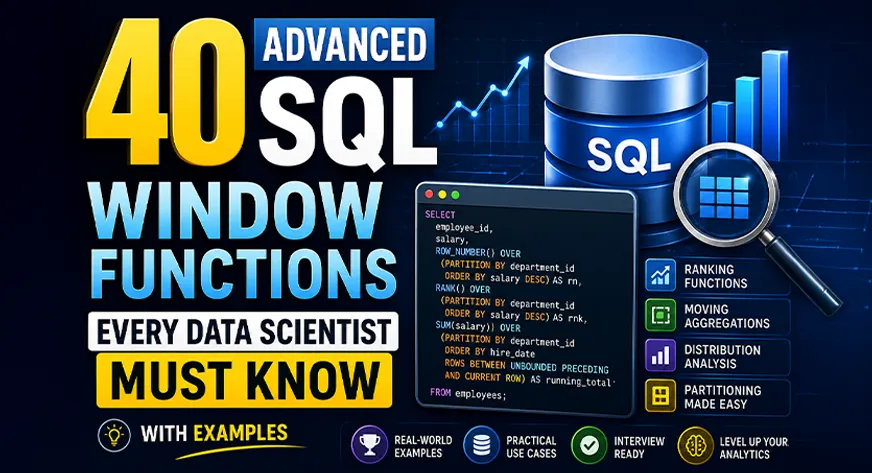
In the ever-evolving landscape of data science, SQL continues to stand as a powerful cornerstone for data manipulation and analysis. As the demand for data-driven insights escalates, proficiency in advanced SQL features, particularly window functions, becomes increasingly essential for data professionals aiming to distinguish themselves from the crowd. The recent article, "40 Advanced SQL Window Functions Every Data Scientist Must Know," underscores this necessity by illuminating the capabilities window functions offer in simplifying complex data operations. Understanding these advanced features not only enhances analytical skills but also transforms how data scientists approach their work.
Window functions serve a unique role in SQL, enabling users to perform calculations across a defined set of rows related to the current row. This allows for more nuanced analysis, such as calculating running totals, moving averages, or ranking data without the need for convoluted subqueries. While basic SQL commands are foundational, mastering advanced functions like these can significantly elevate one's data handling capabilities. For instance, a data scientist who can efficiently calculate cumulative sales over time gains a competitive edge, enhancing their ability to glean actionable insights. Similarly, understanding how to manipulate data in this way is akin to knowing how to leverage the tools available in a spreadsheet to maximize productivity, as seen in our piece on How to make excel subtract a cell based on the text of another cell?.
The significance of mastering these window functions extends beyond mere technical proficiency. As organizations increasingly rely on data to inform decision-making, the ability to extract and present insights clearly and effectively is paramount. Data scientists who can employ these functions are not just performing tasks; they are telling stories with data that can influence strategic directions. This narrative capability is essential in today's data-rich environment where the clarity of insights can determine the success of a project or initiative. Moreover, it aligns with our broader commitment to making advanced data analysis more accessible, as highlighted in our article on Issues with charts in all files, where we tackle the challenges users face when working with complex datasets.
As we navigate this data-centric future, it's crucial to recognize that the landscape will continue to evolve. The advent of AI and machine learning technologies will further deepen the integration of SQL in data science workflows. This intersection of AI with advanced SQL functionalities presents an exciting opportunity for users to not only streamline their processes but also enhance their analytical capabilities. As data scientists embrace these changes, they will need to remain agile, continually adapting to new tools and methodologies that arise.
Looking ahead, the question remains: how will the integration of AI-driven solutions into SQL workflows shape the future of data analysis? As we witness the proliferation of tools designed to simplify and enhance data interactions, the importance of mastering advanced SQL features will only grow. Embracing these advanced techniques today prepares data professionals for the challenges and opportunities of tomorrow, ensuring they remain at the forefront of the data revolution.