Beyond Market Intelligence

Acme AI is the next-generation, AI-powered spreadsheet platform built to replace Excel and redefine how analysts, data scientists, and enterprise teams work with data. Read more

Saudi prince buys 5% stake in Lucid Motors
TechCrunch

Saudi prince buys 5% stake in Lucid Motors

Recent developments indicate a significant shift in the electric vehicle landscape. Saudi Prince, a prominent investor, has acquired a 5% stake in Lucid Motors, signaling considerable confidence in the company's future. This investment follows widespread speculation regarding a potential privatization of Lucid Motors, a prospect the EV maker has officially refuted. The move underscores Saudi Arabia’s growing interest in the EV sector and represents a noteworthy development for Lucid Motors as it navigates current market challenges.

Perspectives on Modern Data

WhatsApp now lets you make calls using its web app
TechCrunch

WhatsApp now lets you make calls using its web app

WhatsApp’s web app now offers a significant upgrade: direct calling capabilities. Mirroring the functionality of its mobile and desktop counterparts, users can now initiate calls, share screens, and utilize reactions directly within the browser. This expansion empowers seamless communication across devices, streamlining workflows and enhancing accessibility. Discover how this feature integrates with WhatsApp's broader ecosystem – similar to OpenAI’s recent voice mode enhancements for ChatGPT, as detailed in our article "OpenAI’s new voice mode makes it to the ChatGPT desktop app."
Elon Musk’s X Money app is rolling out in the US
TechCrunch

Elon Musk’s X Money app is rolling out in the US

X Money, Elon Musk’s new financial app, is now available in the US, offering a significant evolution in digital payments. Users receive an X Visa debit card, immediately enabling integration with Apple Pay for seamless transactions. A key benefit is the elimination of fees and limits on peer-to-peer transfers within the app, streamlining how individuals share funds. Explore this future-focused solution and discover a more accessible way to manage and move your money, empowering a simpler financial experience.
Snowflake launches Cortex AI Gateway to control AI agents and prevent runaway enterprise costs
VentureBeat

Snowflake launches Cortex AI Gateway to control AI agents and prevent runaway enterprise costs

Snowflake introduces Cortex AI Gateway, a centralized control layer designed to govern AI agents accessing enterprise data, tools, and models – even those from competitors like Anthropic. This move positions Snowflake as the control plane for AI activity, ensuring secure agent interoperability. Alongside the gateway, Snowflake unveiled integrations with leading identity vendors, addressing a critical need to manage AI-driven risks and rein in escalating costs. Explore how Cortex AI Gateway empowers organizations to confidently navigate the future of AI.

Field Notes & Updates

GM redesigned its engineering workflows around AI agents — and tripled its merged pull requests
VentureBeat

GM redesigned its engineering workflows around AI agents — and tripled its merged pull requests

General Motors has fundamentally redesigned its autonomous vehicle engineering workflows around AI agents, yielding remarkable results. By shifting focus from simply adding AI coding assistants to automating broader processes—analyzing data, triaging issues, and running experiments—GM engineers now spend just 15% of their time writing code. This strategic shift has tripled merged pull requests, accelerating feature releases and significantly reducing defects.

Granola launches an Apple Watch app
TechCrunch

Granola launches an Apple Watch app

Granola streamlines in-person note-taking with the launch of its new Apple Watch app. Now, capture key ideas and action items directly from your wrist, seamlessly integrating with your Granola workspace. This accessible tool empowers users to stay focused and organized during meetings and events, eliminating the friction of manual transcription. For those tracking device upgrades, you might find parallels in Apple’s recent leasing program partnership with Klarna, as detailed in a recent article. Discover a more intuitive way to manage your data journey with Granola.

Data centers may face temporary power cuts to prevent blackouts on largest US grid
TechCrunch

Data centers may face temporary power cuts to prevent blackouts on largest US grid

The nation's largest power grid is proactively addressing the strain from rapidly expanding data center infrastructure. To prevent potential blackouts, grid operators are implementing temporary power cuts for some data centers. This decisive action highlights the accelerating demand and the need for innovative power solutions. Discover how companies like Antares are exploring alternatives, having recently secured $470 million to develop small modular reactors for military applications. These measures ensure grid stability while data-intensive operations continue to evolve.

PayPal leaves the door open to a higher takeover offer following earnings beat
TechCrunch

PayPal leaves the door open to a higher takeover offer following earnings beat

Following a stronger-than-anticipated Q2 earnings report, PayPal has indicated it will entertain further acquisition offers—leaving the door open for a higher bid. The company maintains its focus on an AI-driven strategic turnaround, but acknowledges the potential for a deal that demonstrably increases shareholder value. This measured approach follows recent market speculation and highlights the evolving landscape of digital payments. For a broader look at AI's impact on data analysis, explore our article, "Grafana Assistant Expands to More Than 30 Data Sources."

Grafana Assistant Expands to More Than 30 Data Sources
InfoQ

Grafana Assistant Expands to More Than 30 Data Sources

Grafana Assistant now empowers users to explore observability insights across a broader landscape, integrating with more than 30 diverse data sources. This expansion allows for natural language queries and correlations, streamlining data analysis and accelerating troubleshooting. Leverage AI to transform how you understand your systems, moving beyond siloed views. For a deeper dive into related AI projects, see our recent article, "Recent project I worked on: End to End Edge ML platform," demonstrating practical applications of AI-driven solutions.

MCP Explained: How Modern AI Agents Connect to the Real World
Towards Data Science

MCP Explained: How Modern AI Agents Connect to the Real World

AI agents are rapidly evolving, but their power hinges on seamless interaction with the real world. That’s where the Modular Connector Protocol (MCP) comes in. MCP establishes a universal standard for AI tool access, moving beyond custom integrations to unlock unprecedented workflow automation. Explore how this framework empowers agents to connect with diverse applications, transforming data management and boosting productivity. Curious about the computational costs involved? See our analysis on "How Much Does a Local LLM Actually Cost to Run?" for further insights.

Don’t Just “Throw Adam at It”: Misunderstanding Adam Will Cost You
Towards Data Science

Don’t Just “Throw Adam at It”: Misunderstanding Adam Will Cost You

Misunderstanding Adam—our AI-powered data optimizer—can lead to frustrating and costly failures. Don't simply "throw Adam at it"; a shallow approach will likely yield suboptimal results. This post dives deep into Adam's optimization dynamics, explaining precisely *why* it sometimes fails spectacularly and, crucially, how to rectify those issues. We’ll equip you with the knowledge to harness Adam’s full potential and avoid common pitfalls in your data workflows. For broader context on AI agent workflows, see "GM redesigned its engineering workflows around AI agents."

An Introductory Guide to Practical Constraint Decoding
KDnuggets

An Introductory Guide to Practical Constraint Decoding

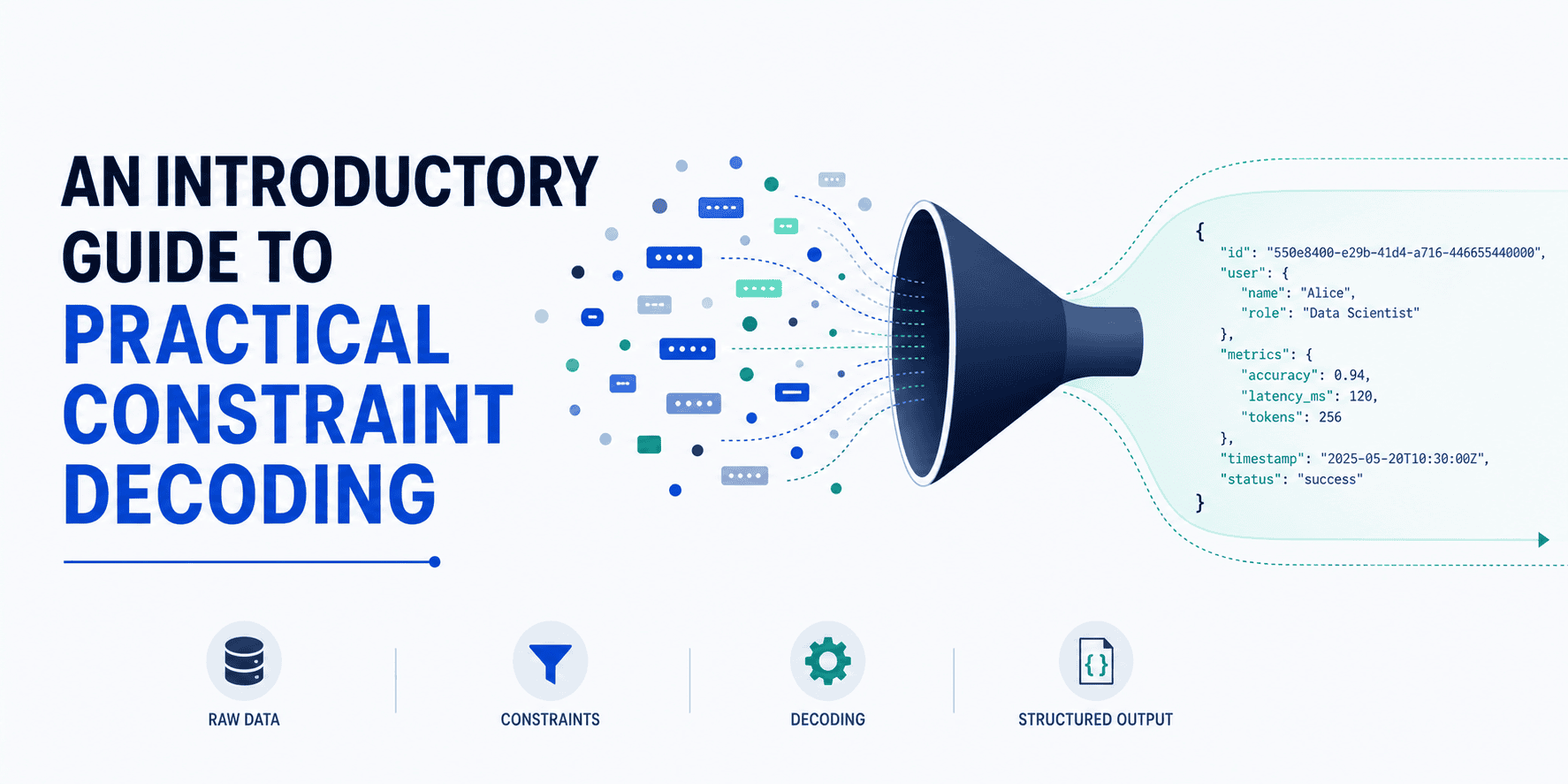
Tired of wrestling with model outputs and chasing valid data formats? This introductory guide to practical constraint decoding equips you with a straightforward approach to ensuring predictable, structured results. You'll learn to move beyond generic prompts and directly guide your models toward desired outputs—no more begging for clean JSON! Discover a powerful technique to enhance data reliability and streamline your workflows. For deeper insights into related visualization techniques, explore "GPT-2 Small’s embedding geometry around “Trump”," available on our site.

Backpropagation Explained for Beginners (Part 2): There Has to Be a Better Way
Towards Data Science

Backpropagation Explained for Beginners (Part 2): There Has to Be a Better Way

Understanding backpropagation is crucial for grasping how neural networks learn, but the underlying concept can feel abstract. This post, "Backpropagation Explained for Beginners (Part 2): There Has to Be a Better Way," clarifies the pivotal idea that makes backpropagation possible – a foundational element for AI advancement. We explore this concept with clarity, building on introductory knowledge.

Fiduciary AI: Agents need to prove trustworthiness, not just ability
VentureBeat

Fiduciary AI: Agents need to prove trustworthiness, not just ability

In today's rapidly evolving digital landscape, ensuring AI agent trustworthiness is no longer a pre-deployment exercise, but a continuous runtime challenge. Traditional benchmark scores often fall short, failing to predict real-world enterprise behavior due to their static nature and imperfect reflection of reality. Vijil, led by Founder and CEO Vin Sharma, proposes a shift towards "fiduciary agents" – those bound by duty of competence, care, and loyalty – assessed not just on capability, but on whether the benefit of delegation exceeds the risk of failure.

Recursive Superintelligence signs $410M compute deal with Amazon
TechCrunch

Recursive Superintelligence signs $410M compute deal with Amazon

Recursive Superintelligence has secured a significant $410 million compute deal with Amazon Web Services, underscoring its unique approach to AI development. Unlike many companies, Recursive prioritizes compute power over traditional operational scaling, channeling a substantial portion of its budget directly into infrastructure. This focus reflects the company’s commitment to building self-improving AI systems and automating its product development lifecycle. This strategy positions Recursive at the forefront of transformative AI innovation—a shift further explored in our recent coverage of Grafana Assistant’s expanded data source capabilities.

HBO Max embraces vertical video with a new ‘Shorts’ feed
TechCrunch

HBO Max embraces vertical video with a new ‘Shorts’ feed

Recognizing the evolving landscape of content consumption, HBO Max is introducing a ‘Shorts’ feed, embracing vertical video to streamline discovery. This innovative approach addresses the challenge of navigating expansive streaming libraries, mirroring the accessibility audiences now expect from platforms like TikTok. Explore bite-sized clips and previews designed to quickly captivate viewers and empower them to find their next favorite show. HBO Max is future-focused, delivering a more intuitive and engaging experience.

More Articles

How Much Does a Local LLM Actually Cost to Run? I Measured Every Watt on Apple Silicon
Towards Data Science

How Much Does a Local LLM Actually Cost to Run? I Measured Every Watt on Apple Silicon

Curious about the true cost of running a local Large Language Model (LLM)? We measured it—every watt—on Apple Silicon, analyzing five models during sustained generation. This deep dive reveals real-world energy consumption at a $0.31/kWh rate, uncovering surprising results that align with RTX-3090 predictions, only amplified. Discover how your hardware choices impact operational expenses and explore the evolving landscape of AI compute. For context on broader industry trends, see “Recursive Superintelligence signs $410M compute deal with Amazon.”
Fish Audio raises $52M seed to build AI voice models for creators and enterprises
TechCrunch

Fish Audio raises $52M seed to build AI voice models for creators and enterprises

Fish Audio has secured $52 million in seed funding to advance its AI voice modeling technology for both creators and enterprises. Having launched just last year, the startup already boasts a substantial user base of over 8 million individuals leveraging its open-source and hosted models, generating $21 million in annual recurring revenue. This investment underscores the growing demand for accessible, AI-powered tools in the audio space.
Runway couldn't fix a bug in its AI video model, so it turned the bug into a feature
VentureBeat

Runway couldn't fix a bug in its AI video model, so it turned the bug into a feature

Runway ML recently demonstrated a valuable lesson for all AI developers: embracing limitations can unlock unexpected innovation. Initially struggling to eliminate a persistent bug causing AI-generated avatars to drift off-center, the company ingeniously transformed the issue into a user-friendly "Optimize for Image Quality" feature.
🐈Machine Learning
Machine Learning

Open-weight 4B models approach o3-level medical question answering in Swedish [P]

Recent experiments demonstrate significant progress in AI-powered medical question answering within the Swedish language. Small, open-weight 4B models are now achieving impressive results on the MedQA-SWE dataset, with Qwen3.5-4B reaching 87% accuracy—surpassing even GPT-4’s 2024 score. Notably, Qwen3.5-4B performs this reasoning entirely in English, suggesting language is less critical than previously assumed. Further insights into bias evaluations across frontier models can be found in our related article, "Evaluated 6 frontier LLMs…”. Explore the implementation and detailed findings here: [https://github.com
I implemented the YOLO26n model inference from scratch using ARM64 Assembly Language (No framework) [P]
Machine Learning

I implemented the YOLO26n model inference from scratch using ARM64 Assembly Language (No framework) [P]

This impressive Bachelor's Final Project delivers a complete, from-scratch YOLO26n inference engine built using ARM64 Assembly Language and C—no frameworks required. The implementation prioritizes edge AI execution on Raspberry Pi 4, incorporating critical optimizations like ARM NEON SIMD, Winograd convolution, and cache-aware tiling. While performance gains didn't fully meet initial expectations, this project offers valuable insights into low-level neural network acceleration. For further exploration of efficient data encoding, consider “Ink & Switch Introduces Bijou64.” Repository: https://github.com/mohammad-ghaderi/YOLO26
🐈Machine Learning
Machine Learning

Pattern Recognition (Elsevier): "With Editor" status date changed, but status didn't. Is this normal? [R]

Many researchers encounter unexpected nuances within Elsevier's Editorial Manager system. A recent query highlights a common observation: the status date updating while the visible status—in this case, "With Editor" for a *Pattern Recognition* manuscript—remains unchanged. While this can be initially perplexing, it’s often a procedural artifact rather than an indication of stalled progress. To understand typical timelines after this stage, and broader considerations within AI research, explore our related article, "NeurIPS 2026 AI-generated reviews," for further insights.
🐈Machine Learning
Machine Learning

Are single GPU research still published in ML/DL and its applications nowadays? Which are the most notable recent ones? [D]

Despite the proliferation of massive compute resources in AI research, impactful work continues to emerge from smaller labs and independent researchers utilizing single GPUs. While frontier labs dominate headlines, innovative solutions, like Alexander Goslin’s InfiniteDiffusion (RTX 3090), demonstrate that quality research isn't solely dependent on scale. These projects often prioritize algorithmic ingenuity over sheer computational power. As explored in "How to pick an AI model in 2026," understanding resource constraints is increasingly crucial for navigating the evolving AI landscape and fostering accessible innovation.
Article: The Hard-Stop Rule: From 3 HCM Monoliths to 120 Domain Microservices
InfoQ

Article: The Hard-Stop Rule: From 3 HCM Monoliths to 120 Domain Microservices

For five years, a payroll and HR software team achieved a remarkable transformation: dismantling three monolithic systems into over 120 domain microservices—all without a dedicated migration budget. This pull-based approach, detailed in Prashanth Pasham’s article "The Hard-Stop Rule," prioritized building new features as independent services, sidestepping legacy modifications. Discover the tools, strategies, and challenges encountered during this ambitious rebuild, and learn how costs were effectively managed. For further insight into AI's evolving role, explore "Microsoft launches AI cybersecurity model," also available on our site.
🐈Machine Learning
Machine Learning

Neurips 2026 Main Track Theory Paper Tracker- Discussion Thread [D]

Navigating NeurIPS 2026 Main Track Theory paper reviews? This discussion thread explores initial review distributions, a topic often generating questions. One submitter reports a 4/3/3 score with corresponding confidence, noting a historical tendency for theory papers to receive more conservative initial evaluations. Given broader reports of potentially lower scores this cycle, the thread invites fellow theory paper authors to share their experiences—scores and confidence levels—to identify potential patterns. For further context on the review process, see our related article on "Editing NeurIPS Rebuttals."
🐈Machine Learning
Machine Learning

Multi-Tenant SaaS: Which Architecture Would You Choose? [D]

Navigating multi-tenant SaaS architectures for sensitive data, particularly with RAG and LLMs, demands careful consideration. For your Sri Lankan document platform, a global RAG layer alongside user-specific RAG (Option 1) presents a compelling starting point. It avoids the complexities and costs of fine-tuning while enabling access to a curated knowledge base for accurate, general responses, supplemented by private document search. Scalability to thousands of users is readily achievable with this design.
🐈Machine Learning
Machine Learning

Understanding GPU Inference Workloads [D]

Delve into the complexities of GPU inference workloads with our latest exploration, sparked by a community discussion on sourcing compute. We're investigating common pain points encountered when utilizing services like RunPod or Vast.ai, seeking to understand your experiences and optimize deployment strategies. Share your insights in the comments or via direct message – your feedback is invaluable. For a deeper dive into related challenges within live streaming deployments, see our discussion on "CICD / KAFKA / KUBERNETES / Interview questions (MLE)."
🐈Machine Learning
Machine Learning

Editing Neurips Rebuttal [D]

Regarding NeurIPS rebuttal edits, a clarification is emerging. The post-rebuttal button will transition to an “official comment” status on July 27th AoE. While we anticipate you'll retain the ability to edit your rebuttal after this change, we advise monitoring closely. For a deeper understanding of the NeurIPS meta-reviewer response process, explore our article, "How exactly does the NeurIPS meta reviewer response work?". Stay informed as these crucial deadlines approach.
🐈Machine Learning
Machine Learning

Built & Trained a Transformer from Scratch in Pure PyTorch for English-to-Tamil Machine Translation [Math + Code Breakdown] [P]

Delve into a comprehensive exploration of Transformer architecture with this practical guide. Developer ImranCoder786 has meticulously built and trained a Transformer model from scratch using pure PyTorch, mirroring the seminal "Attention Is All You Need" paper. Trained on an English-to-Tamil dataset and detailed with a step-by-step mathematical breakdown, this resource empowers users to understand and replicate the process.
🐈Machine Learning
Machine Learning

I still didn't get my NeurIPS meta review [D]

Many researchers are experiencing delays in receiving their NeurIPS meta review assignments, with reports exceeding 36 hours and no updates available on official channels. This widespread issue, as highlighted by /u/Specialist-Manager67, impacts a significant number of participants. We understand the frustration arising from this lack of clarity. We recommend periodically refreshing the NeurIPS website and monitoring community channels for potential updates. If the delay persists beyond 48 hours, consider contacting NeurIPS support directly to inquire about your assignment status.
🐈Machine Learning
Machine Learning

Neurips Position Track Rebuttal and Reviews [R]

Navigating the NeurIPS Position Track rebuttal process can feel unclear, especially for first-time conference paper submitters. Receiving a 3/3/5/7 alongside reviews with actionable feedback suggests a promising opportunity for revision. The rebuttal phase allows you to directly address reviewer concerns; the Area Chair (AC) will evaluate these rebuttals alongside the original reviews to determine if your revisions adequately address the feedback. Consider referencing "Link plots/figures in NeurIPS rebuttal [R]" for practical guidance on presenting supplementary data effectively.
🐈Machine Learning
Machine Learning

Recent project I worked on: End to End Edge ML platform [D]

Exciting progress in the tinyML space! A developer has released SensorForge, an end-to-end edge ML platform designed to streamline the journey from raw sensor data to deployed models on MCUs. This innovative platform addresses a key challenge: data labeling, featuring an auto-labeling tool specifically for time series sensor data. Additionally, SensorForge incorporates a chatbot for direct signal data analysis and insight generation. Explore this free and open-sourced project and contribute to its development; see the discussion surrounding NeurIPS 2026 AI-generated reviews for related insights. [https://sensorforge.dev/app](https://sensorforge.dev/app)
🐈Machine Learning
Machine Learning

Evaluated 6 frontier LLMs (GPT-5.4, Claude Sonnet 4.6, Claude Opus 4.7, Gemini Pro/Flash, Grok 4.3) on political, gender, and racial bias across 8 benchmarks (~20,600 examples) [R]

A recent solo evaluation project rigorously assessed six frontier LLMs—GPT-5.4, Claude Sonnet 4.6, Claude Opus 4.7, Gemini Pro/Flash, and Grok 4.3—across eight established bias benchmarks, encompassing over 20,600 examples. Findings reveal a consistent leftward political leaning among all models except Grok, despite its self-reported right-leaning stance. Notably, GPT-5.4 exhibited the highest refusal rate (20.3%) when addressing race-related inquiries requiring explicit racial identification. For deeper insights into AI memory systems, explore "Context Windows Forget What Matters." Full data and
We compared different LLMs on IMO 2026 [R]
Machine Learning

We compared different LLMs on IMO 2026 [R]

SignalPilot Labs rigorously evaluated leading LLMs against the 2026 International Mathematical Olympiad (IMO), a challenging benchmark reflecting general intelligence. Frontier models like Sol and Fable achieved near-perfect scores, while others benefited significantly from advanced harness engineering, including our AutoFyn system. Notably, even optimized harnesses didn't match frontier performance. Our findings, detailed in a comprehensive report, highlight persistent hallucination issues, exemplified by a recurring failure on a critical problem reduction.
Uber’s Zero Growth Stack: Scaling Services, While Optimising Infrastructure and AI Cost
InfoQ

Uber’s Zero Growth Stack: Scaling Services, While Optimising Infrastructure and AI Cost

Uber’s "Zero Growth Stack" represents a progressive approach to scaling services, decoupling capacity growth from business demand to optimize infrastructure and AI costs. This innovative framework prioritizes scalable architecture, with garbage collection optimization as a core component. Furthermore, generative AI is strategically integrated into the development process, boosting developer productivity while implementing crucial cost management strategies. As Ben Greene explores in "The Future of Engineering," adapting to AI-driven automation is increasingly vital—discover how Uber is leading the way.
Presentation: The Future of Engineering: Mindsets That Matter When Code Isn’t Enough
InfoQ

Presentation: The Future of Engineering: Mindsets That Matter When Code Isn’t Enough

As AI code automation accelerates, how can software engineers not just survive, but thrive? Ben Greene, drawing on his startup experience, tackles this critical question in "The Future of Engineering: Mindsets That Matter When Code Isn’t Enough." Greene identifies key principles—starting simple, maintaining comprehension, prioritizing difficult challenges, and focusing on customer impact—highlighting why human empathy and practical problem-solving remain irreplaceable.
🐈Machine Learning
Machine Learning

How exactly does the NeurIPS meta reviewer response work? [D]

Navigating NeurIPS meta-reviewer responses can be complex, especially with recent updates. Initially, authors were directed to AC confidential comments, but a recent announcement now requires posting answers to initial meta-reviews as comments on the July 28th thread by August 3rd – a shift designed for reviewer visibility. Clarifying whether this new option opens immediately, as the rebuttal period concludes, is crucial. Essentially, the process seems to demand public posting for reviewer access, rather than private AC updates.
🐈Machine Learning
Machine Learning

I want to use AI coding agents for machine learning projects [D]

As a software engineer transitioning to machine learning, you’re seeking a streamlined workflow that combines AI coding agents with cloud GPU power. Many engineers face this challenge. Platforms enabling local development with AI agents like Codex, Claude Code, or OpenCode, while executing code on remote GPUs, are emerging. These solutions bridge the gap between your existing editor and the computational resources needed for ML. Explore options that offer seamless integration, remote debugging, and iterative development—approaches detailed further in our article, "Understanding GPU Inference Workloads."
AWS Launches Amazon GuardDuty Investigation Agent to Automate Threat Triage
InfoQ

AWS Launches Amazon GuardDuty Investigation Agent to Automate Threat Triage

AWS has introduced the Amazon GuardDuty Investigation Agent, a public preview designed to streamline threat triage. This agent correlates GuardDuty findings with activity logs and resource topologies, generating structured reports complete with risk ratings, confidence scores, and MITRE ATT&CK classifications. Accessible through the AWS MCP Server, it enables agentic tooling for investigations. Initial preview quotas limit usage to 10 investigations per account daily, allowing users to explore this innovative approach to security analysis.
5 Best AI Tools for Data Analysis You Should Try in 2026
KDnuggets

5 Best AI Tools for Data Analysis You Should Try in 2026

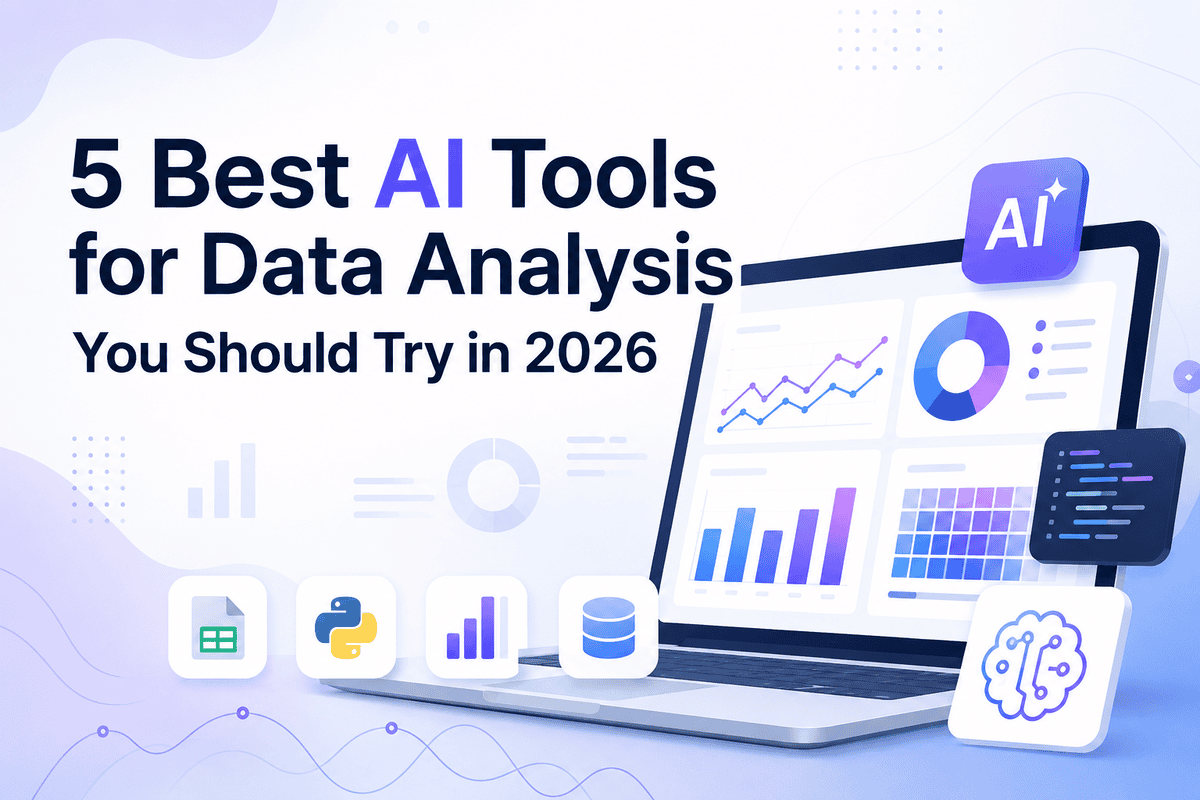
## 5 Best AI Tools for Data Analysis You Should Try in 2026 Unlock unprecedented efficiency in your data workflows. Discover five of the best AI tools for data analysis, designed to streamline cleaning, code generation, visualization, and insight discovery. These tools empower analysts to move beyond tedious tasks and focus on strategic interpretation. From automating complex processes to surfacing hidden patterns, these solutions represent a significant leap forward.
🐈Machine Learning
Machine Learning

I built a compiler that turns computation graphs into the weights of a vanilla transformer — no training anywhere [P]

Explore a novel approach to transformer architecture with TorchWright, a compiler that generates transformer weights directly from Python computation graphs – eliminating the need for any training. This innovative system, detailed in a recent post on ood.dev, allows users to define algorithms independently of the learning process, producing standard Phi-3 checkpoints compatible with vanilla Hugging Face. See how this achieves expressiveness within a transformer, building upon work like RASP while prioritizing accessibility and a stock architecture.
🐈Machine Learning
Machine Learning

NeurIPS 2026 AI-generated reviews [D]

The NeurIPS 2026 paper on AI-generated reviews has sparked considerable debate, particularly regarding the ethics of leveraging LLMs in the peer-review process. Author /u/bricklerex raises a critical point: beyond the study itself, what action is being taken to address potentially problematic AI-assisted reviews? While outright plagiarism is unlikely, concerns exist about superficial engagement with submitted work and the potential for meta-reviewers also utilizing LLMs. For a deeper understanding of the NeurIPS meta-reviewer system, explore "How exactly does the NeurIPS meta reviewer response work?"
How to pick an AI model in 2026
AI News & Strategy Daily | Nate B Jones

How to pick an AI model in 2026

Navigating the AI model landscape in 2026 will demand a strategic approach. Choosing the right model requires prioritizing specific task performance, cost-effectiveness, and integration capabilities. Expect a market saturated with specialized models, making broad, general-purpose options less appealing. Focus on evaluating models based on rigorous benchmarks and real-world application testing. Consider scalability and ongoing maintenance costs as critical factors. For deeper insights into optimizing infrastructure alongside AI investment, explore our article, "Uber’s Zero Growth Stack."
🐈Machine Learning
Machine Learning

Paper lengths, and reasonable assumptions in ML conferences. [D]

Observations regarding paper lengths and reviewer feedback at top ML conferences reveal a concerning trend. While conferences maintain consistent paper lengths – often supplemented by extensive appendices to mitigate reviewer fatigue – theoretical work appears unfairly penalized. Increasingly, rejections cite issues like perceived difficulty or unexplained terminology, rather than addressing the core impact of the research. This echoes experiences where inherent complexity is mistaken for a flaw. As highlighted in "NeurIPS 2026 AI-generated reviews," understanding these dynamics requires careful consideration.
Lyft and Baidu enter London’s robotaxi battleground as testing begins
TechCrunch

Lyft and Baidu enter London’s robotaxi battleground as testing begins

London’s robotaxi landscape is rapidly evolving as both Lyft and Baidu initiate testing, signaling a significant shift in urban mobility. Baidu's Apollo Go autonomous vehicles will soon be accessible via Freenow, the mobility network acquired by Lyft, with full integration anticipated in 2025. This marks a key development, establishing London as a crucial battleground for autonomous driving technology. Users can expect increased accessibility and innovative transportation options as these platforms explore the future of data-driven mobility.
🐈Machine Learning
Machine Learning

CICD / KAFKA / KUBERNETES / Interview questions (MLE) [R]

Preparing for a Machine Learning Engineer interview focused on live streaming deployments? Your friend should prioritize questions around CI/CD pipelines, Kafka for data streaming, and Kubernetes for orchestration. Expect deep dives into topics like schema management, fault tolerance, and scaling strategies within these systems. Understanding how to debug deployment issues and monitor performance in a live environment is also key. For a more detailed look at building end-to-end ML platforms, see our recent article, "Recent project I worked on: End to End Edge ML platform."
🐈Machine Learning
Machine Learning

Link plots/figures in NeurIPS rebuttal [R]

Reviewers at NeurIPS requested additional experiments best visualized through plots and figures, a format often more digestible than tabular data. While OpenReview’s technical guidelines restrict external links, experienced submitters sometimes leverage this for clarity. Proceeding cautiously is advised; a minor infraction is more likely than outright rejection, though outcomes vary. Consider the DONUT text extraction model, as discussed in a related article, for inspiration on effectively presenting complex data. Ultimately, advocate for OpenReview’s adoption of modern markdown to support figure embeds directly.
MCP just got its biggest update ever — here’s what changes for AI agents
VentureBeat

MCP just got its biggest update ever — here’s what changes for AI agents

The Model Context Protocol (MCP), the connective tissue enabling AI agents to interact with software, has undergone its most significant update yet. This sweeping architectural revision, spearheaded by the Agentic AI Foundation (AAIF), a Linux Foundation initiative, introduces a fully stateless architecture, enhanced authentication, and formalized deprecation policies. This unlocks enterprise-grade scalability, allowing organizations to leverage AI agents with greater efficiency and security – a critical step toward wider adoption.