5 Agentic Workflows to Automate Your Data Science Pipeline
Our take
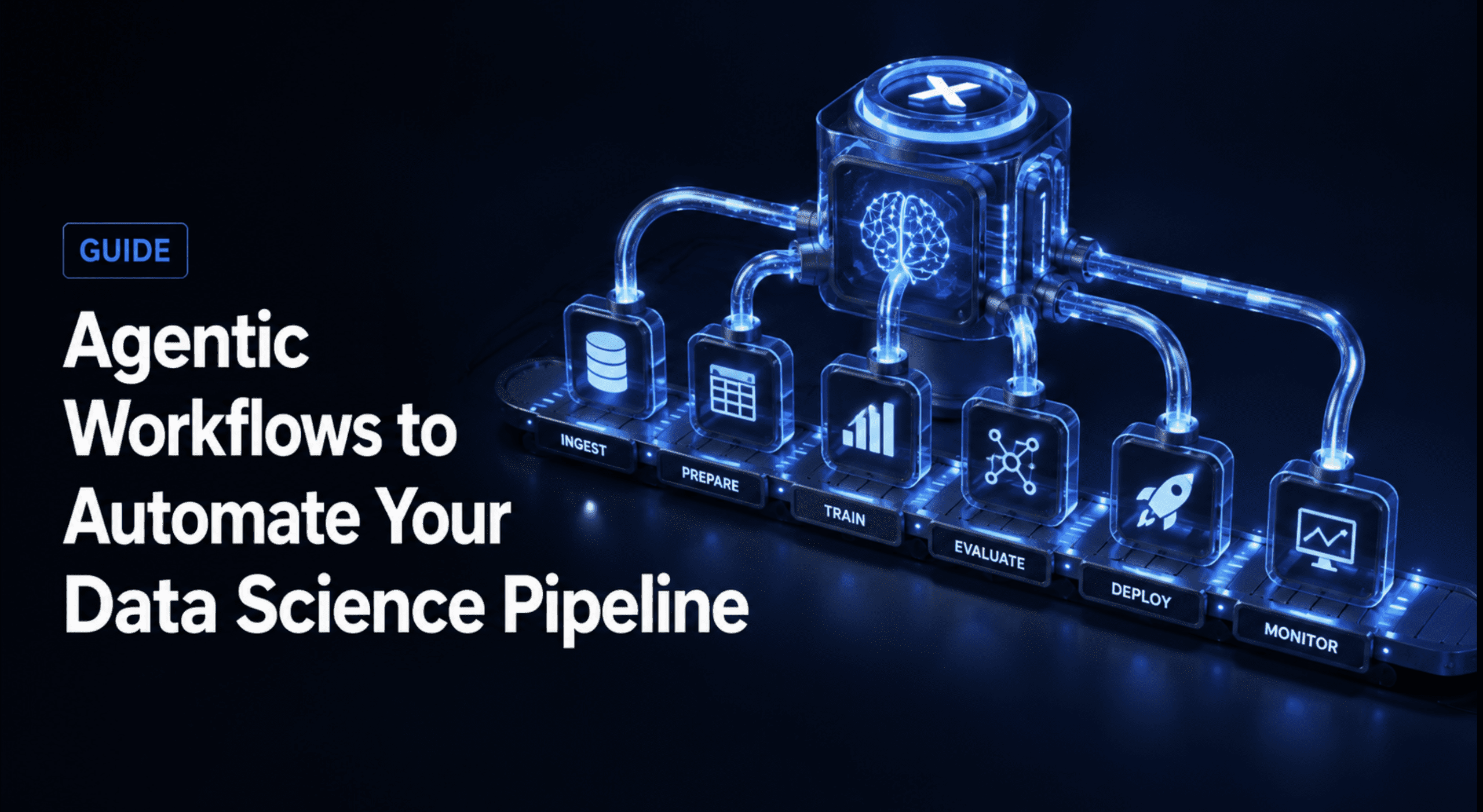
The rise of agentic workflows represents a significant shift in how data scientists approach their pipelines, moving beyond sequential task execution towards a more dynamic and autonomous system. The recent article outlining five concrete agentic workflows across the data science pipeline—from data collection to model deployment—is particularly insightful because it grounds a conceptually complex topic in practical application. We’ve seen a lot of theoretical discussion around agents in AI, but translating that into tangible improvements for data professionals is key. This isn't just about automating individual tasks; it’s about creating a system where AI proactively identifies bottlenecks, optimizes processes, and even suggests improvements—effectively acting as a collaborative partner in the data science journey. Exploring this evolution is vital, and it’s a natural progression from efforts like those highlighted in "Fine-tuning Language Models on Apple Silicon with MLX" [Fine-tuning Language Models on Apple Silicon with MLX](/post/fine-tuning-language-models-on-apple-silicon-with-mlx-cmqv8qnov0eobyt0p577nf9xk], demonstrating the increasing accessibility of powerful AI tools for individual practitioners.
The core value of agentic workflows lies in their ability to address the inherent complexity and iterative nature of data science. Traditional pipelines, often reliant on rigid scripts and manual intervention, struggle to adapt to evolving data landscapes and changing business requirements. Agentic systems, powered by language models and reinforcement learning, can dynamically adjust to these changes, optimizing performance and reducing the risk of errors. Consider, for instance, how an agent could automatically retrain a model when data drift is detected, or proactively identify and correct anomalies in a dataset. The article's focus on specific workflows—data ingestion, feature engineering, model training, evaluation, and deployment—provides a clear roadmap for adopting this approach. This also aligns with ongoing discussions about the future of programming, as illustrated by “Would having a dedicated programming language specifically for LLMs be a viable solution?” [Would having a dedicated programming language specifically for LLMs be a viable solution? [D]](/post/would-having-a-dedicated-programming-language-specifically-f-cmqv8qf3p0eo1yt0p3mwvl369). The demand for more intuitive and efficient interfaces for interacting with AI models will only increase as agentic workflows become more prevalent.
However, the transition to agentic workflows isn’t without its challenges. Ensuring transparency and control over these autonomous systems is paramount. Data scientists need to understand *why* an agent is making a particular decision, and have the ability to intervene if necessary. Robust monitoring and auditing capabilities are essential to prevent unintended consequences and maintain data integrity. Furthermore, the computational resources required to train and deploy these agents can be substantial. This is a consideration that resonates with the work being done to optimize performance, as seen in projects like “MuJoCo derived Simulator for High Fidelity Vision RL training natively on GPU [D]” [MuJoCo derived Simulator for High Fidelity Vision RL training natively on GPU [D]](/post/mujoco-derived-simulator-for-high-fidelity-vision-rl-trainin-cmqv8q6pb0entyt0pi71e2i04), where efficient hardware utilization is key to unlocking the full potential of AI. The accessibility of these technologies, both in terms of development and deployment, will be a critical factor in their widespread adoption.
Ultimately, the emergence of agentic workflows marks a pivotal moment in the evolution of data science. This isn't simply a technological upgrade; it's a paradigm shift that promises to fundamentally reshape how data scientists work. As these systems become increasingly sophisticated, they will likely blur the lines between human and machine, fostering a new era of collaborative intelligence. The question now isn’t *if* agentic workflows will become commonplace, but rather how quickly organizations can adapt their processes and infrastructure to fully harness their transformative power—and what new roles and skillsets will emerge to support this evolving landscape.
Read on the original site
Open the publisher's page for the full experience