7 Approaches to Reduce Inference Latency in Your LLM Workflows
Our take
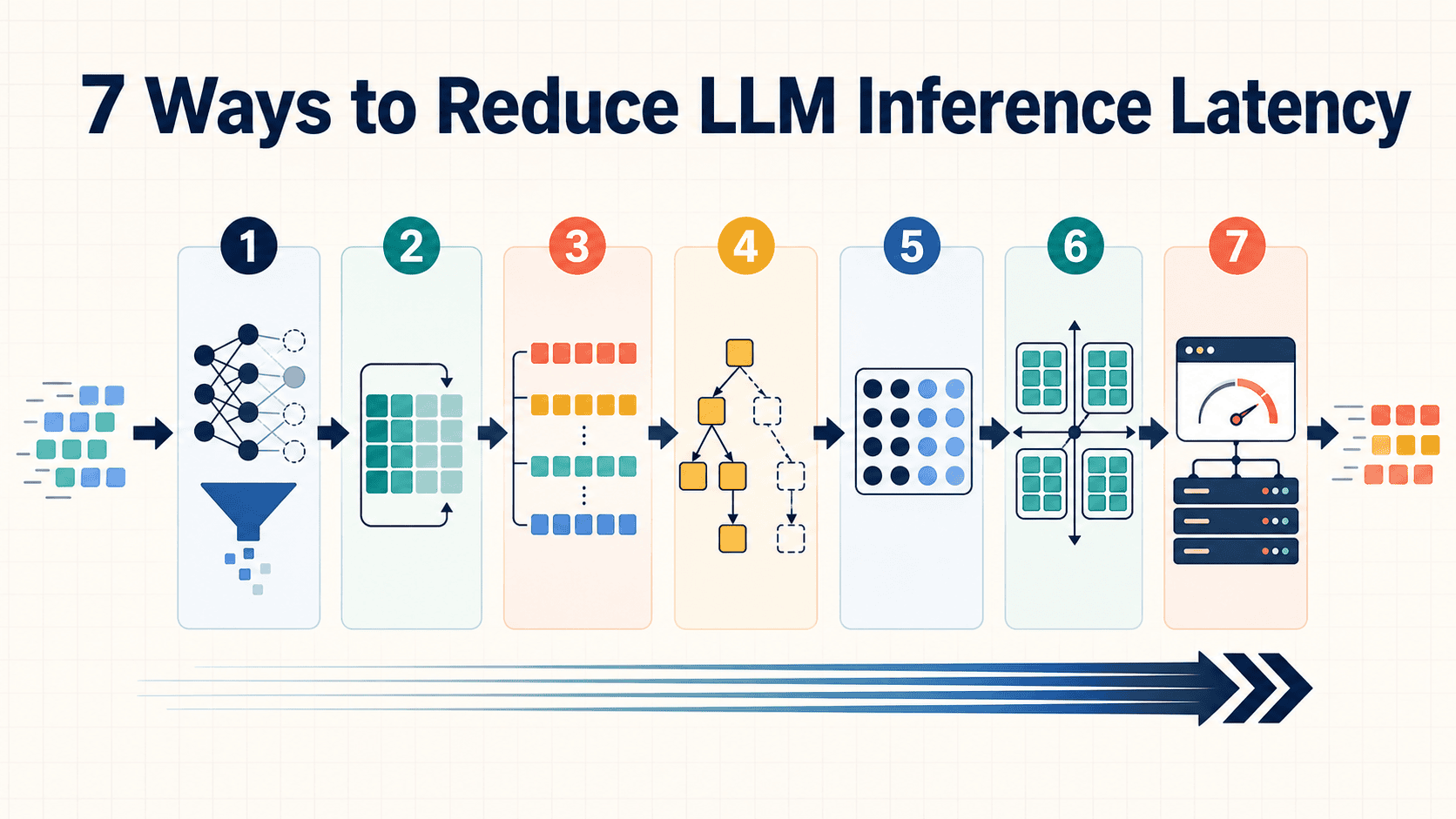
The relentless pursuit of speed in generative AI is rapidly shifting from a theoretical exercise to a core operational imperative. The recent article outlining seven approaches to reduce inference latency – quantization, speculative decoding, knowledge distillation, continuous batching, optimized kernels, distributed inference, and flash attention – highlights a crucial inflection point. For months, the focus has been on model size and capabilities. Now, the real work begins: making these powerful models usable at scale. The challenge isn’t just about generating impressive text or images; it’s about delivering those outputs with the responsiveness expected by modern users. This isn’t merely an engineering detail; it’s a fundamental determinant of adoption and ultimately, the success of generative AI across a wide range of applications. Consider the implications for real-time applications like customer service chatbots or interactive content creation – sluggish responses render even the most sophisticated models practically useless. We’ve previously explored the complexities of deploying LLMs in The Deployment Bottleneck and the rising importance of infrastructure optimization, and this article directly addresses the core of that challenge.
The strategies detailed are not entirely novel, but their increasing prominence and refinement underscore the urgency of the issue. Quantization, for example, reducing the precision of model weights, is becoming more sophisticated, minimizing accuracy loss while significantly improving speed. Speculative decoding, where a smaller, faster model predicts the output of the larger model, represents a clever workaround for computational bottlenecks. What’s particularly interesting is the convergence of these approaches – successful deployments are likely to involve a layered strategy, combining several of these techniques to achieve optimal performance. The article’s inclusion of “optimized kernels” and “flash attention” points to a deeper trend: hardware-software co-design is becoming essential. We’ve seen similar patterns in other computationally intensive fields, like graphics processing, where specialized hardware and software are inextricably linked. Understanding this interplay is critical for anyone building production-ready generative AI applications. It’s also worth noting the implicit acknowledgement that brute-force scaling alone won't solve the latency problem; clever engineering and algorithmic innovation are equally important, as discussed in our recent analysis of Scaling Strategies for LLMs.
Beyond the technical specifics, the article’s significance lies in its reframing of the conversation. Previously, latency was often treated as a secondary concern, something to be addressed *after* model development. Now, it’s clear that latency must be considered from the outset – a core design constraint alongside accuracy and cost. This shift necessitates a new skillset within AI teams, requiring engineers with expertise not just in model training, but also in deployment optimization and hardware acceleration. Furthermore, it highlights the growing importance of specialized AI infrastructure providers, who can offer pre-optimized environments and tools for deploying LLMs at scale. The move towards continuous batching, for instance, requires careful orchestration and resource management – capabilities that many organizations may lack in-house.
Looking ahead, the race to minimize inference latency will likely spur further innovation in model architectures. We might see the emergence of inherently faster models, designed specifically for low-latency deployment, rather than relying solely on post-training optimization techniques. The integration of edge computing will also play a crucial role, bringing inference closer to the user and reducing network latency. A fascinating question to watch is how these latency reduction strategies will impact the trade-off between model size and performance. Will we see a move towards smaller, more specialized models, or will continued advancements in hardware and software allow us to deploy ever-larger models with acceptable latency? The answer will shape the future of generative AI and determine which applications truly realize its transformative potential.
Read on the original site
Open the publisher's page for the full experience