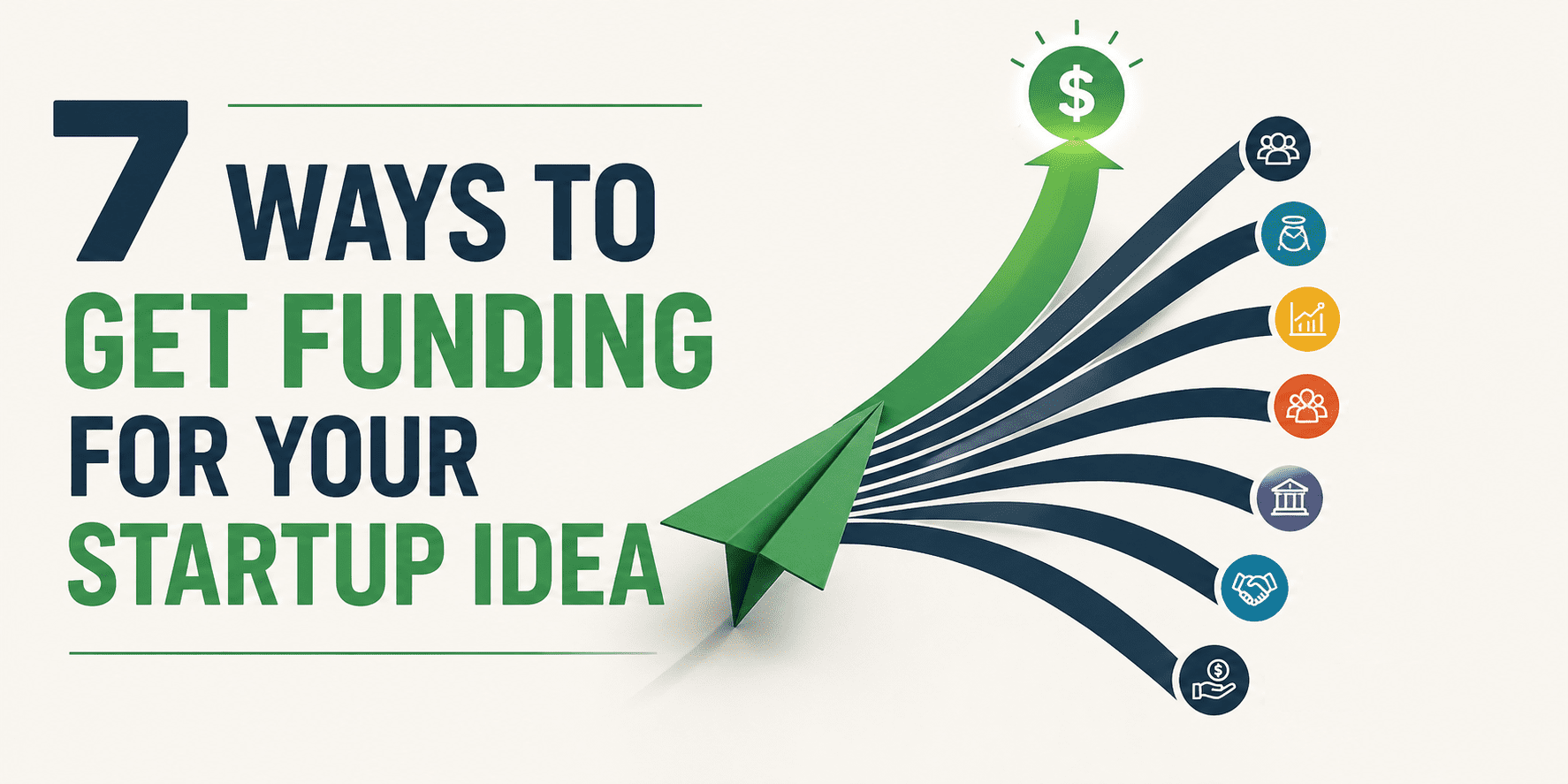
The perennial question for any budding entrepreneur is, of course, "Where will I find the funding?" The recent article, "7 Best Ways to Get Funding for Your Startup Idea," tackles this core challenge head-on, and rightly so. Securing capital is rarely a linear process, and understanding the various avenues available – from bootstrapping and angel investors to venture capital and crowdfunding – is critical for navigating the early stages of growth. It's encouraging to see a piece focused not just on *what* options exist, but also on avoiding common fundraising pitfalls, a crucial element often overlooked. We've seen many promising ventures stumble simply because they approached fundraising with unrealistic expectations or a poorly defined strategy. This aligns with a broader trend we're observing within our user base; many are seeking ways to augment their existing data-driven decision-making capabilities to more accurately forecast financial needs and investor interest—a challenge explored in detail in Time Series Forecasting for Agriculture/Crop Volume & Pricing – Looking for Advice. The ability to project cash flow and model various funding scenarios is becoming increasingly essential for startup success.
Understanding the nuances of each funding option, recognizing for example that venture capital comes with a trade-off in equity and control, is particularly valuable. Too often, startups are blinded by the allure of large sums of money without fully considering the implications. A more considered approach, involving careful evaluation of long-term goals and a clear articulation of value proposition, is paramount. Interestingly, the conversation around data privacy and its impact on model training, a topic gaining significant traction, also has implications for fundraising. As increasingly sophisticated AI-powered tools become integrated into business processes, demonstrating responsible data handling practices can be a major differentiator for attracting investors—as evidenced by the ongoing discussion around Are privacy-preserving techniques actually being used in production ML systems?. Transparency and ethical considerations are no longer optional; they're becoming foundational elements of investor due diligence. Moreover, the ability to rapidly iterate and deploy machine learning models, a skillset highlighted in [Understanding Pytorch better and Moving forward from papers [D]](/post/understanding-pytorch-better-and-moving-forward-from-papers-cmqa6o8x9012dtqtw28ztn6ak), directly impacts a startup's ability to demonstrate product-market fit and attract early-stage investment.
Beyond the specific funding mechanisms outlined, a more fundamental truth is subtly underscored: successful fundraising is, at its core, about building trust. Investors aren't just buying into an idea; they're investing in a team, a vision, and a demonstrated ability to execute. This requires clear communication, a robust business plan, and a willingness to adapt to changing circumstances. The days of simply presenting a compelling narrative are long gone. Investors are demanding data-backed projections, measurable milestones, and a willingness to engage in rigorous questioning. A future-focused approach to data management, one that leverages AI to optimize operations and glean actionable insights, will be increasingly critical for attracting and retaining funding. It's no longer sufficient to *have* data; it's about *effectively* leveraging that data to drive growth and demonstrate a tangible return on investment.
Ultimately, the "7 Best Ways" piece serves as a useful primer, but it's crucial to remember that fundraising is a dynamic and iterative process. The landscape is constantly evolving, with new funding models and investment strategies emerging regularly. The key takeaway is to remain adaptable, to continuously refine your pitch, and to cultivate strong relationships with potential investors. As AI continues to reshape industries and drive innovation, the ability to harness its power to optimize financial planning and demonstrate compelling growth prospects will be a defining factor in the success of startups seeking to secure the capital they need to thrive. What new and unexpected funding models will emerge in the next 5 years, particularly those fueled by decentralized technologies and AI-driven investment platforms?