A Gentle Primer on LLM Explainability
Our take
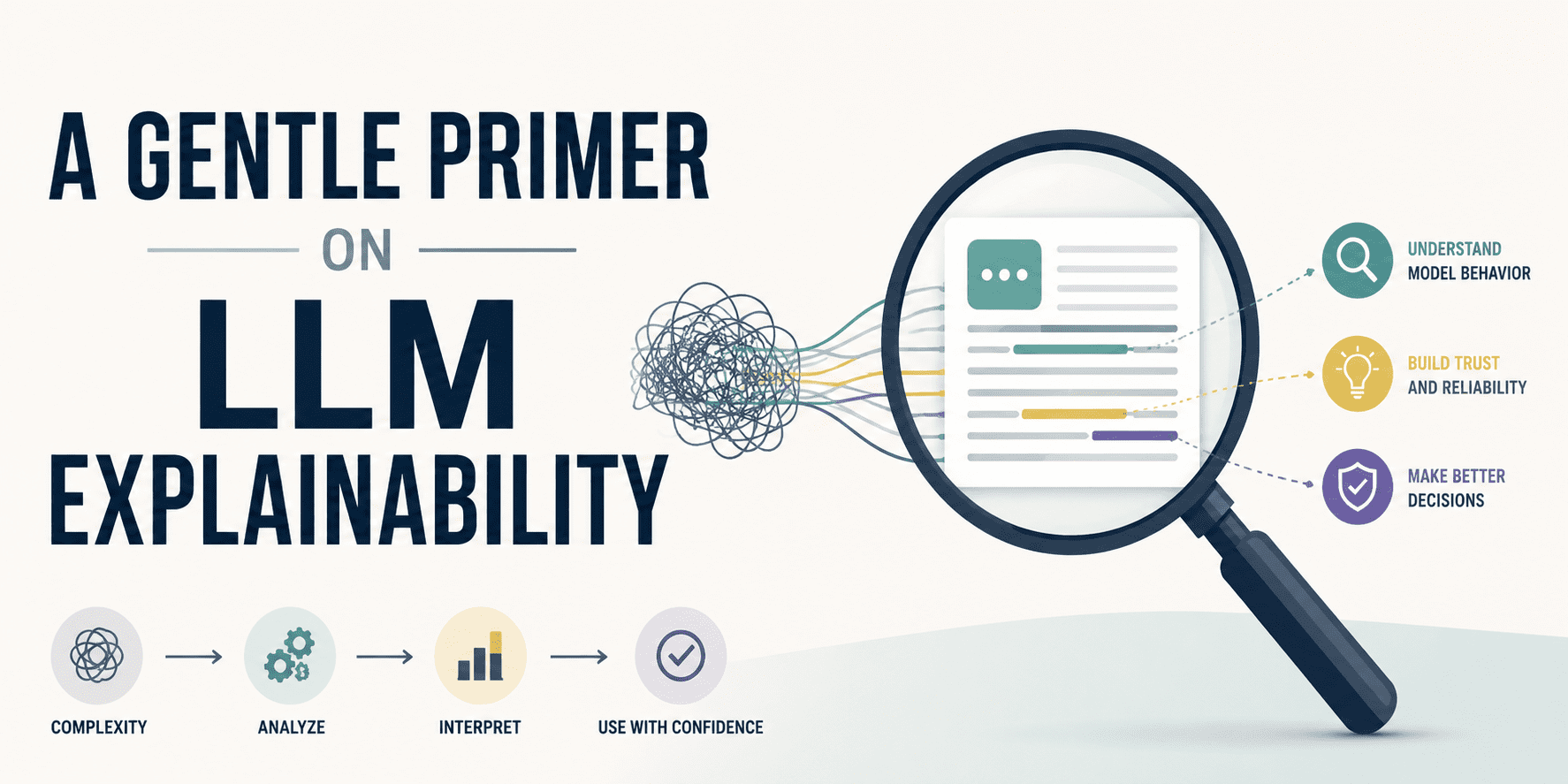
The conversation around large‑language‑model (LLM) explainability has moved from academic curiosity to a practical imperative, and this primer arrives at a pivotal moment. As organizations integrate AI‑native spreadsheets and other data‑centric tools, the demand for transparent, trustworthy outputs grows in lockstep with the technology’s capabilities. Readers who have felt the friction of opaque model suggestions will recognize the relevance of the article’s overview of recent advances—such as attribution methods, concept probing, and interactive debugging frameworks. For those looking to deepen their toolkit, related reads like How Prompt Engineering Shapes Model Interpretability and Bridging the Gap: Human‑Centric Evaluation of AI Outputs provide concrete pathways to apply these insights today.
What makes explainability more than a buzzword is its direct impact on productivity and risk management. When a spreadsheet assistant can point to the specific data patterns that drove a forecast, users gain confidence to act—whether they are adjusting a financial model, refining a marketing plan, or auditing compliance reports. This shift from “black‑box” to “glass‑box” aligns with our progressive vision: legacy tools that hide reasoning are no longer sufficient for teams that need to iterate quickly and responsibly. By demystifying the internal logic of LLMs, the article highlights how developers are embedding causal tracing and counterfactual analysis directly into user interfaces, turning complex model behavior into actionable insights. The result is a more human‑centered workflow where the AI amplifies expertise rather than obscuring it.
From a broader industry perspective, the momentum in explainability signals a maturing ecosystem where transparency is a prerequisite for scaling AI solutions. Regulators are beginning to codify expectations around model accountability, and investors are scrutinizing the risk profiles of AI‑driven products. The trends outlined—standardized attribution dashboards, open‑source interpretability libraries, and real‑time explanation APIs—are not isolated experiments; they are building blocks for a future‑focused data stack. For users of AI‑native spreadsheets, this means that the next generation of tools will not only automate calculations but also surface the “why” behind each recommendation, enabling smarter decision‑making without sacrificing speed.
Looking ahead, the true test will be how seamlessly these explanatory features integrate into everyday workflows. Will users adopt explanation layers as a natural part of data exploration, or will they become another optional add‑on that’s ignored under pressure? As the field evolves, the answer will shape the balance between innovation and trust in AI‑enhanced productivity. We encourage our community to keep an eye on emerging standards for explanation metadata and to explore how these can be embedded into their own spreadsheet solutions. The conversation is just beginning, and the next breakthrough may be a feature that lets you ask, “What would change if the underlying data shifted by 5 %?”—transforming abstract model introspection into a concrete, decision‑support tool.
Read on the original site
Open the publisher's page for the full experience