Agent Harness vs Loop vs Graph Engineering: A Technical Guide
Our take
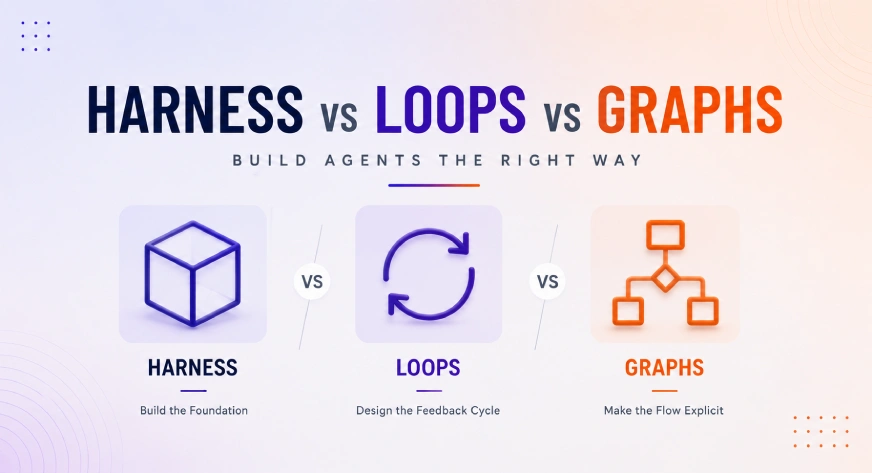
The recent discourse around agent development, as highlighted in the Analytics Vidhya piece "Agent Harness vs Loop vs Graph Engineering", reveals a common pitfall in the burgeoning field of AI agents: a misdiagnosis of the root causes of performance issues. The argument, that focusing on “loop engineering” or complex graph structures before addressing the foundational agent harness, is a crucial one. It echoes a broader trend in technology adoption where complexity is often mistaken for progress. We’ve seen similar patterns with traditional spreadsheets; users often build elaborate formulas and macros to compensate for limitations in the underlying data structure, rather than re-evaluating the fundamental model. This article serves as a valuable reminder that a well-designed harness, providing a clear and efficient interface for the agent to interact with its environment, is paramount. Related discussions on agent architecture, like those explored in "Building Production-Ready AI Agents", underscore the importance of modularity and a solid foundation.
The confusion between harness, loop, and graph engineering isn't merely semantic; it represents a significant shift in how we approach agent design. The piece rightly points out the danger of prematurely optimizing loops or constructing sprawling graphs with dozens of nodes before truly understanding how the agent executes a task sequentially. This often leads to over-engineered solutions that are difficult to debug and maintain. The emphasis should be on creating a robust harness that allows for efficient data flow and control, enabling the agent to execute its core function effectively. Think of it like building a car: focusing solely on the engine’s intricacies (the loops and graphs) while neglecting the chassis and steering (the harness) will result in a powerful but ultimately unusable vehicle. This highlights the need for a more holistic and iterative approach to agent development, prioritizing foundational elements before layering on complexity. The concept of "least astonishment" – ensuring the system behaves as users expect – is particularly relevant here.
The broader significance of this perspective lies in its potential to accelerate the adoption of AI agents across various industries. Currently, many organizations are grappling with the challenges of integrating agents into their workflows, often encountering unexpected performance bottlenecks or frustrating user experiences. By shifting the focus to harness design and emphasizing iterative development, we can create agents that are not only more powerful but also more accessible and user-friendly. This is particularly important as the field moves beyond research labs and into real-world applications. Consider the challenges addressed in "The State of AI Agents" – many of those stem from issues of usability and integration, which are directly impacted by the quality of the underlying agent harness. A focus on a solid foundation will unlock the true potential of AI agents, transforming them from experimental tools into indispensable productivity enhancers.
Looking ahead, the conversation around agent development will likely evolve to encompass more sophisticated harness architectures. We can anticipate seeing greater emphasis on dynamic harnesses that adapt to changing environments and user needs. The current focus on static, pre-defined harnesses represents a limitation that will need to be addressed. Furthermore, understanding how to effectively debug and monitor agent harnesses will become a critical skill for developers. As agents become increasingly complex and integrated into mission-critical systems, the ability to quickly identify and resolve issues within the harness will be essential for ensuring reliability and performance. The question is: how will the tooling and best practices around harness design evolve to meet these challenges, and will we see a standardization of harness interfaces to promote interoperability across different agent platforms?
One of your colleagues asserts that “we require improved loop engineering,” yet the fundamental issue lies within the harness itself. Others may create graphs with 40 nodes before they observe how the agent executes a given task at a single time. Does this sound like something you have encountered before? This ongoing confusion surrounding agent […]
The post Agent Harness vs Loop vs Graph Engineering: A Technical Guide appeared first on Analytics Vidhya.
Read on the original site
Open the publisher's page for the full experience