AWS Improves Aurora Serverless: 45% Faster Ramp-Up, 30% Higher Throughput
Our take
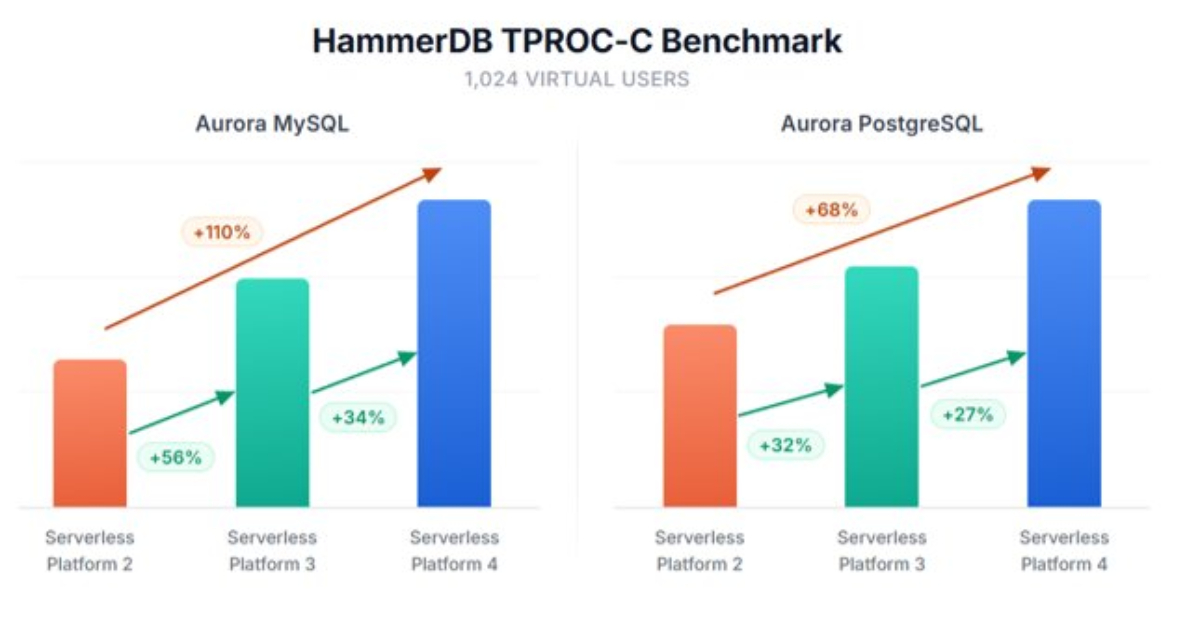
AWSrecently unveiled a series of performance upgrades to Aurora Serverless that promise a 45 percent faster ramp‑up time and a 30 percent boost in throughput. These gains arrive at a moment when many organizations are reevaluating the cost and complexity of their cloud data stacks. In the same announcement, the company confirmed the retirement of WorkMail and the shift of App Runner into maintenance mode, a move that has sparked conversation across the AWS community. As we noted in our coverage of AWS Ends WorkMail and Moves App Runner to Maintenance Mode, the streamlining of lesser‑used services signals a strategic refocus on core strengths. At the same time, the AWS Ends WorkMail and Moves App Runner to Maintenance Mode announcement underscores how AWS is pruning peripheral tools to sharpen its serverless narrative. The new Aurora Serverless metrics are more than incremental numbers; they represent a tangible step toward making serverless databases feel as responsive as traditional relational systems. Faster ramp‑up times reduce the waiting period that often discourages teams from adopting on‑demand scaling, while higher throughput translates directly into lower latency for read‑heavy and mixed‑workload applications. For developers who have wrestled with cold‑start penalties, the announced improvements could eliminate a major friction point and make Aurora a more attractive default choice for both startups and enterprises. Moreover, the enhancements are positioned alongside broader efforts to simplify the AWS ecosystem, a trend highlighted by the recent retirements of WorkMail and the transition of App Runner to maintenance.
Understanding why these changes matter requires looking beyond the headline figures. AWS is effectively signaling that its serverless strategy will be guided by performance, cost efficiency, and developer experience rather than an ever‑expanding catalog of niche services. By concentrating resources on core offerings such as Aurora, Redshift, and Lambda, the company can deliver deeper optimizations and clearer roadmaps. This focus also reassures customers who may have felt uneasy about the earlier retirements, showing that the sunset of peripheral tools is part of a disciplined effort to allocate engineering bandwidth where it yields the greatest ROI. In a market where competitors are racing to claim the “best” serverless database, AWS’s measured upgrades suggest confidence in its existing foundation rather than a need to chase hype.
Looking ahead, the real question is how these performance gains will translate into real‑world product decisions for users. Will faster ramp‑up encourage more teams to migrate legacy workloads to Aurora, or will lingering concerns about vendor lock‑in and data governance slow adoption? How will the continued pruning of ancillary services affect the overall flexibility of the AWS stack? Observers will be watching the next wave of announcements to see whether AWS chooses to double down on serverless performance or to broaden its ecosystem with new, perhaps more experimental, services. The answer will shape not only the trajectory of Aurora Serverless but also the broader calculus for organizations planning their cloud data strategies.
AWS has recently announced that WorkMail will be discontinued and that App Runner will stop accepting new customers and move into maintenance mode. Several other less popular services and features are also entering maintenance or sunset phases, triggering concern and debate across the AWS community.
By Renato LosioRead on the original site
Open the publisher's page for the full experience