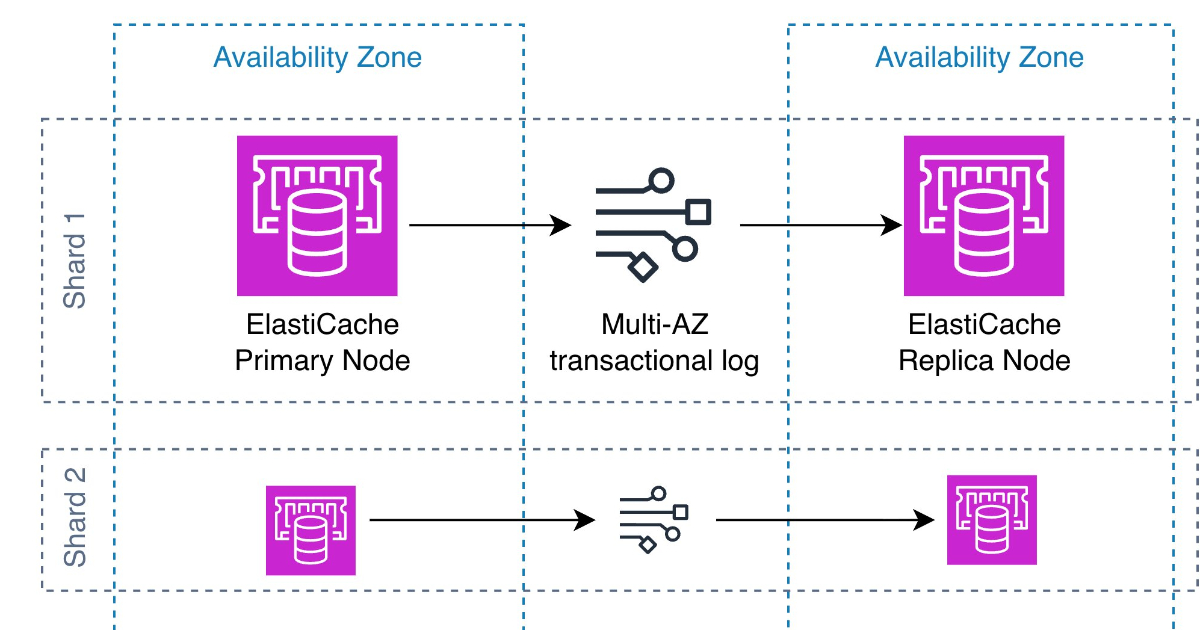
The introduction of durable storage to Amazon ElastiCache for Valkey represents a significant evolution in how organizations leverage in-memory data stores, moving beyond their traditional role as simple caching layers. Previously, Valkey, a Redis-compatible database, was primarily employed for accelerating read operations and managing transient data. Now, with this enhancement, it's positioned to handle persistent workloads, effectively blurring the lines between caching and traditional database solutions. This shift is particularly relevant given the increasing complexities of modern data architectures, where the need for low-latency access to both cached and persistent data is paramount. The move also echoes the broader trend of AI assistants interacting with infrastructure, as demonstrated by the recent release of the Terraform MCP Server [Terraform MCP Server Enables AI Assistants to Interact with Terraform Infrastructure], which highlights the growing demand for seamless integration between data layers and AI workflows. Furthermore, the complexities surrounding data access and security, as exemplified by Anthropic’s recent restrictions on Claude models [Anthropic blocks all public access to Claude Fable 5, Mythos 5 following US government order — what enterprises should do], underscore the importance of robust and reliable data storage solutions like the one Valkey now offers.
The key innovation here lies in the flexibility offered by these new durability options. The ability to prioritize either minimal data loss or lower write latency gives users granular control over their performance and resilience trade-offs. This is a crucial distinction, as different applications have vastly different requirements. A real-time analytics dashboard, for instance, might prioritize low latency for immediate insights, even if it means accepting a slightly higher potential for data loss. Conversely, a financial transaction ledger would absolutely prioritize durability, willing to sacrifice some latency to ensure data integrity. This adaptability addresses a common challenge within the distributed systems space: the ‘one-size-fits-all’ approach rarely works. It’s a testament to AWS’s commitment to providing tools that cater to a diverse range of use cases, empowering developers to build solutions tailored to their specific needs. The underlying engineering involved in achieving this while maintaining Valkey’s performance characteristics is noteworthy; Redis forks are notoriously difficult to optimize, and introducing durability adds a layer of complexity.
The broader significance of this development extends beyond just Valkey users. It signals a broader trend within the cloud database landscape: a convergence of caching and database technologies. We’re seeing in-memory data stores increasingly capable of handling persistent workloads, while traditional databases are incorporating caching mechanisms to improve performance. This convergence is driven by the ever-increasing demand for real-time data processing and analytics, where speed and reliability are both critical. Think about the challenges involved in solving complex probability problems, such as those explored in the 3Blue1Brown example [Solving the 3Blue1Brown String Probability Problem (Without AI)], which often necessitate rapid data manipulation and analysis. Durable Valkey can provide a foundation for such tasks, offering a performance boost without sacrificing data integrity. The availability of this durable option also positions Valkey as a more compelling alternative to other distributed data stores, particularly for applications that require both high performance and strong consistency.
Looking ahead, the implications of this shift are considerable. We can anticipate a greater adoption of in-memory data stores for workloads previously considered the domain of traditional databases. This will likely lead to further innovation in areas like data replication, consistency models, and disaster recovery. The ability to seamlessly integrate AI processes with data management systems, as we’re seeing with tools like Terraform MCP Server, will only amplify this trend. The question now becomes: how will this blurring of lines between caching and databases reshape the overall architecture of modern data systems, and what new challenges and opportunities will arise as organizations increasingly rely on these hybrid solutions?