Building Voice-Controlled AI Agents
Our take
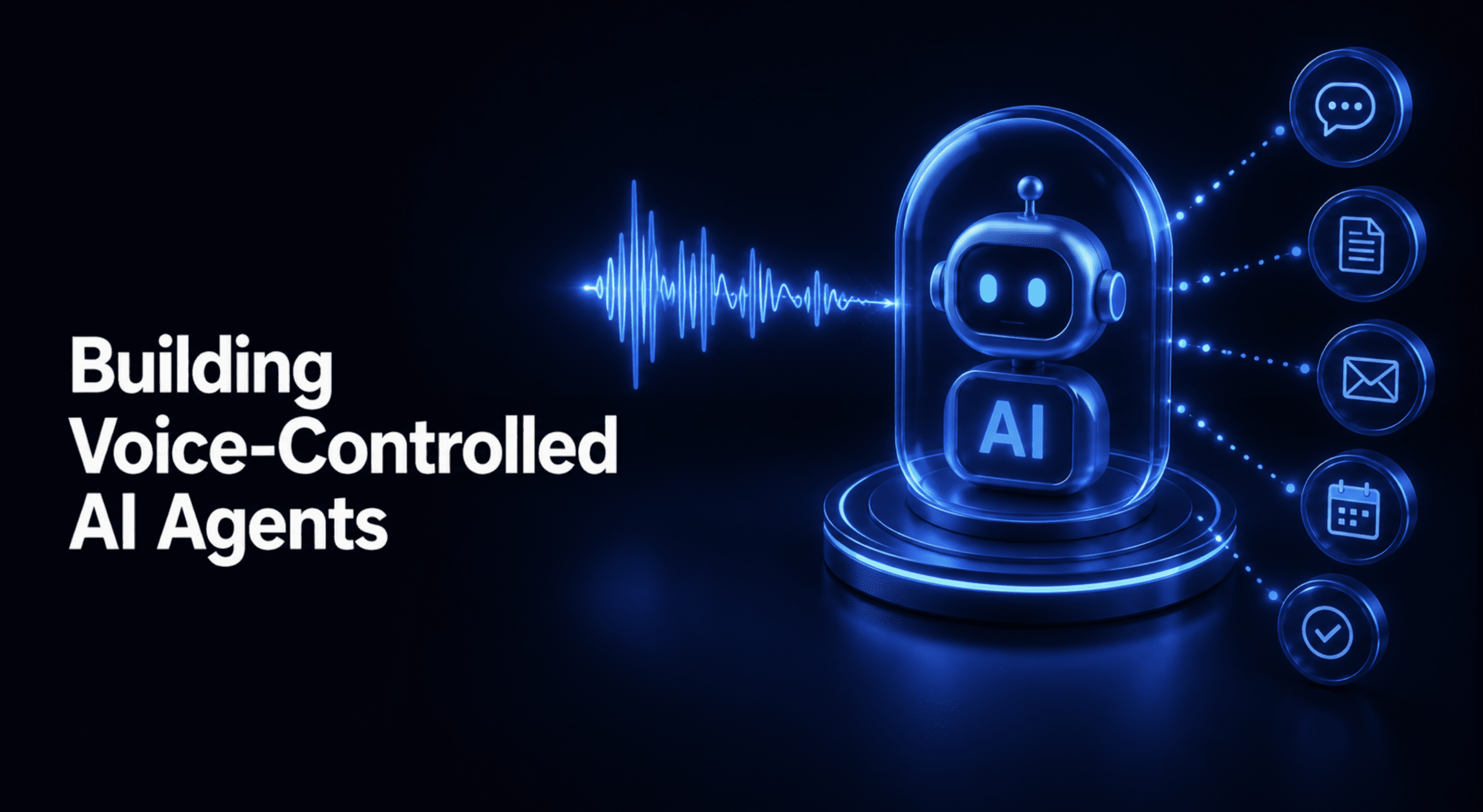
The recent surge in interest surrounding voice-controlled AI agents is undeniable, and the breakdown of their construction presented in "Building Voice-Controlled AI Agents" offers a valuable clarity to what previously felt like an almost magical capability. The article’s focus on dissecting the pipeline – streaming speech recognition, turn detection, streaming generation, interruption handling, and tool calling – is particularly insightful. It moves beyond the hype and delivers a practical understanding of the components involved, which is crucial for anyone looking to build, integrate, or even simply comprehend these systems. We've been tracking advancements in large language models for some time, and the interplay between these models and real-time voice interaction is a key area of innovation. Readers interested in the foundational technologies might find Understanding Embeddings a helpful primer, and those keen to see practical applications should review Voice Cloning Advances for a glimpse into the possibilities. This detailed view of the architecture demystifies the process and empowers a wider range of developers to engage with this exciting technology.
What makes this article truly valuable is its emphasis on the constraints inherent in voice interaction. It’s easy to envision a perfect, seamless AI assistant, but the reality is far more complex. The challenges of streaming speech recognition, ensuring accurate turn detection in a dynamic conversation, and managing interruptions in real-time are significant engineering hurdles. The consideration of tool calling *under voice constraints* – meaning ensuring the AI can reliably execute actions based on spoken commands – is a particularly important point. It highlights the need for robust error handling and a deep understanding of natural language ambiguity. The ability to translate spoken requests into actionable commands, while simultaneously managing the unpredictable nature of human speech, requires a sophisticated system. This level of detail distinguishes this analysis from the often-superficial discussions around AI assistants, grounding the conversation in practical realities. Furthermore, it implicitly acknowledges the ongoing need for improvements in areas like speech recognition accuracy across diverse accents and speaking styles – a crucial factor for accessibility and widespread adoption.
The broader significance of this development lies in its potential to fundamentally alter how we interact with technology. While graphical user interfaces have dominated for decades, voice control offers a more natural and intuitive way to access information and control devices. The advancements outlined in the article pave the way for a future where AI assistants are not just conversational chatbots but powerful tools capable of seamlessly integrating into our daily lives. Consider the implications for accessibility – voice control can empower individuals with disabilities to interact with technology in ways that were previously impossible. Moreover, the ability to automate complex tasks through voice commands has the potential to significantly improve productivity across various industries. The article's breakdown illuminates the technical pathway to realizing this vision, demonstrating that building robust voice-controlled AI agents is within reach, albeit requiring careful attention to the nuances of real-time voice interaction. Exploring how these agents can be adapted to different modalities, such as gesture control or even brain-computer interfaces, is another exciting avenue for future research.
Looking ahead, the most pressing question revolves around the ethical implications of increasingly sophisticated voice-controlled AI agents. As these systems become more adept at understanding and responding to human speech, concerns about privacy, security, and potential misuse will only intensify. Ensuring responsible development and deployment will be paramount, requiring careful consideration of data security, bias mitigation, and the potential for manipulation. The ability to accurately transcribe and interpret speech opens up possibilities for both good and ill, and the industry must proactively address these challenges to build trust and ensure that this transformative technology benefits society as a whole. The evolution of these systems will likely accelerate, and understanding the underlying architecture, as detailed in this article, is essential for navigating the future of voice-powered AI.
Read on the original site
Open the publisher's page for the full experience