Canva Shares S3 Based Architecture for Session Revocation Across Hundreds of Millions of Sessions
Our take
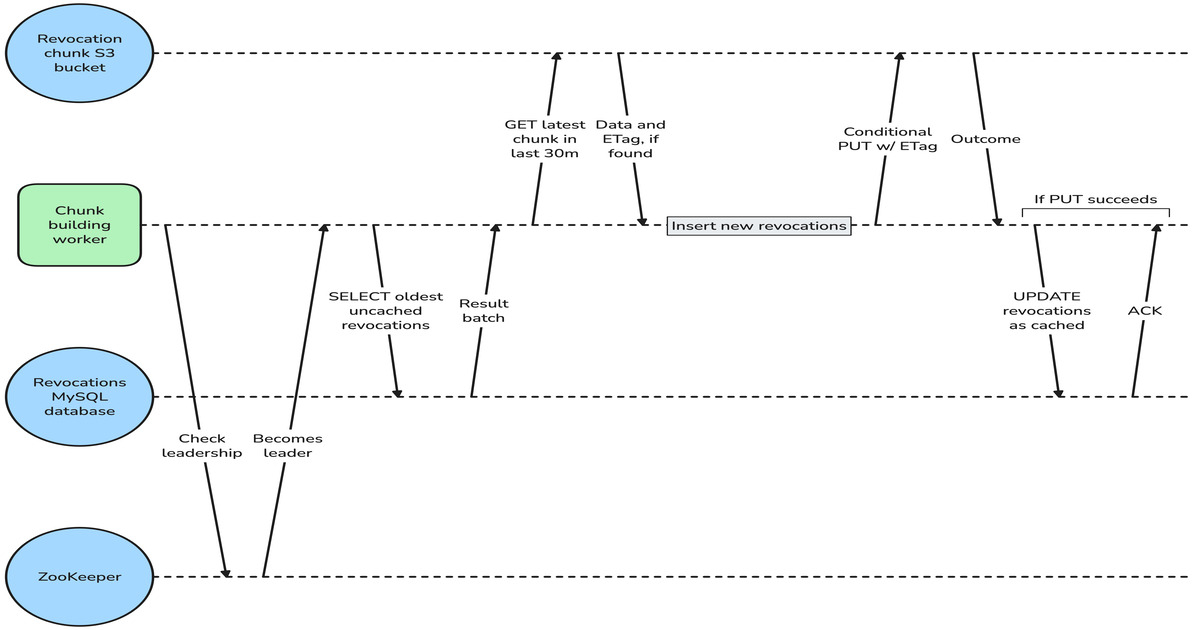
Canva’s recent architectural overhaul of its session revocation infrastructure, as detailed by Leela Kumili, isn't just a technical win for the design platform; it’s a compelling case study for any organization grappling with the challenges of scaling user sessions in a modern, distributed environment. The sheer scale – supporting 100 million active sessions – immediately highlights the complexity involved, and the solution’s elegance lies in its pragmatic approach. Many companies have wrestled with similar problems, often leading to increasingly complex database queries and caching layers. This resonates with the broader industry conversation around managing state in serverless and microservices architectures, a topic explored in depth in Scaling State in Serverless Applications and further complicated by the increasing prevalence of ephemeral compute instances. The move to leveraging Amazon S3 for durable revocation records and distributing compact, in-memory indexes demonstrates a keen understanding of trade-offs between consistency, availability, and performance – a core principle in distributed systems design.
The key takeaway here isn’t necessarily the specific choice of S3, but the *strategy* of decoupling revocation records from the primary database. Traditional approaches often rely on heavy database lookups to determine if a session should be revoked, creating a bottleneck as session counts grow. By shifting this responsibility to a more scalable and cost-effective storage solution like S3, and then distributing localized indexes, Canva significantly reduces the load on its database infrastructure. This reduction in database dependency is particularly significant as it allows for greater flexibility in scaling other parts of the application. The reported 87.5% reduction in revocation cache memory footprint is a testament to the efficiency of the new design, showcasing how thoughtful architectural decisions can yield substantial operational savings. This kind of optimization is becoming increasingly critical as companies face rising cloud costs – a concern discussed in Cloud Cost Optimization Strategies. Moreover, the improved deployment speed is a practical benefit, allowing for faster iteration and more frequent releases.
Beyond the immediate operational benefits, Canva’s architecture offers valuable lessons in embracing simplicity and leveraging existing cloud services effectively. The design avoids the temptation of building a bespoke, highly optimized revocation system from scratch, instead opting for a well-understood and readily scalable solution. This reflects a broader trend toward "building less" and focusing on integrating existing tools to solve complex problems. The choice of in-memory indexes distributed to application gateways also highlights the importance of locality and minimizing network latency in distributed systems. This approach allows for fast revocation checks without constantly querying a centralized service, improving the overall user experience. The ability to rapidly deploy and scale revocation mechanisms also strengthens security posture, allowing for quicker responses to potential breaches or compromised sessions. This proactive approach to security is increasingly vital in today's threat landscape, as highlighted in The Evolving Threat Landscape and Mitigation Strategies.
Looking ahead, it’s interesting to consider how this pattern of decoupling state management from primary databases could be applied to other areas of application state. Could similar approaches be used to manage user preferences, shopping cart data, or even real-time analytics? The success of Canva’s session revocation architecture suggests a broader applicability, prompting us to question how organizations can best leverage durable, scalable storage solutions to offload state management responsibilities from traditional relational databases. As session volumes continue to explode and the demands on cloud infrastructure intensify, the principles demonstrated by Canva will likely become increasingly relevant for a wider range of applications.
Canva redesigned session revocation infrastructure to support 100M active sessions while reducing database lookups. The architecture uses Amazon S3 for durable revocation records and distributes compact, in-memory indexes to application gateways. Canva said the design improved deployment speed, reduced database infrastructure requirements, and cut the revocation cache memory footprint by 87.5%.
By Leela KumiliRead on the original site
Open the publisher's page for the full experience