ChatLLM by Abacus AI Review: A Multi-Model AI Workspace Built for Daily Work
Our take
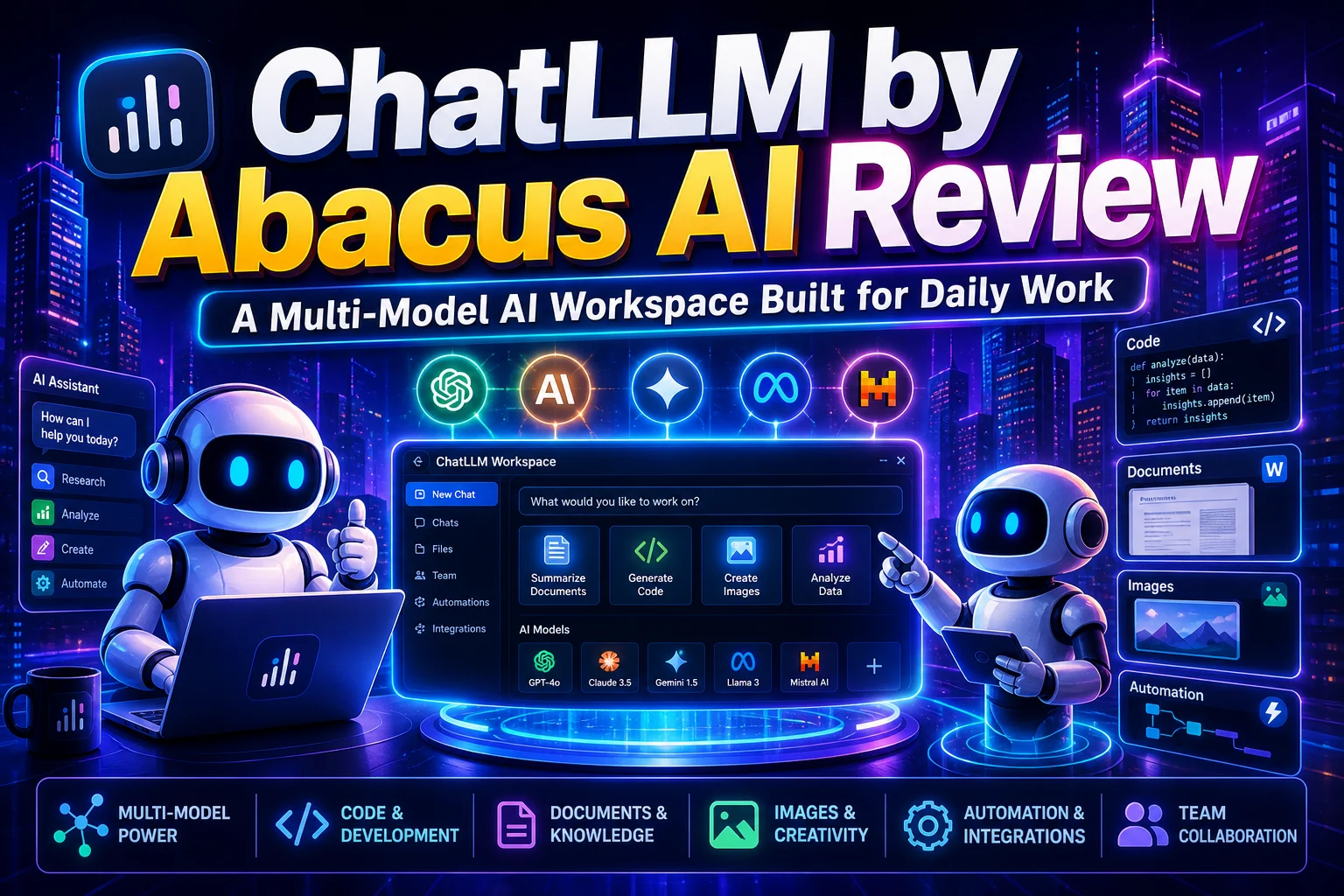
The emergence of dedicated AI workspaces like ChatLLM by Abacus AI signals a significant shift in how professionals interact with large language models. While ChatGPT captured initial attention with its conversational abilities, the need for more structured, task-oriented AI assistance has become increasingly apparent. ChatLLM's focus on multi-model support, AI agents, and coding tools directly addresses this need, moving beyond simple chat interfaces toward a more integrated and productive workflow. It’s particularly interesting to see the evolution of internal data tracking systems, as highlighted in [Presentation: Challenging Google Analytics: Building a Scalable, Cost-Effective User Tracking Service], demonstrating a broader movement toward greater control and customization within data management – a trend ChatLLM seems poised to capitalize on. Furthermore, understanding the vulnerabilities inherent in machine learning systems, as explored in [Article: Understanding ML Model Poisoning: How It Happens and How to Detect It], underscores the importance of secure and reliable AI infrastructure, something a workspace like ChatLLM must prioritize to gain widespread adoption.
What sets ChatLLM apart isn't simply the inclusion of various AI models – a welcome feature allowing users to leverage the strengths of different architectures – but also the emphasis on agents. This functionality, automating repetitive tasks and orchestrating complex workflows, represents a crucial step towards genuinely empowering users. The ability to integrate with existing tools and platforms, as the review details, further enhances its practicality. The comparison to ChatGPT, while important, misses the point somewhat. ChatGPT remains a powerful general-purpose tool, but ChatLLM is clearly targeting a more specialized audience: developers, data scientists, and anyone who requires AI to be deeply embedded within their daily workflow. The pricing structure and usage limits will be critical factors in determining its uptake, particularly among smaller teams and individual users, but the potential for increased productivity is undeniable.
The broader significance of ChatLLM and similar platforms lies in their validation of the AI-native spreadsheet concept. Traditional spreadsheets, while ubiquitous, are inherently limited in their ability to handle the complexities of modern data analysis and automation. We’ve long argued that the future of data management involves seamlessly integrating AI capabilities directly into the tools users already rely on, and ChatLLM represents a tangible manifestation of this vision. The Java ecosystem, as illustrated by the latest updates covered in [Java News Roundup: Spring Tools, Helidon, Open Liberty, TomEE, JobRunr, Hibernate, Commonhaus], is constantly evolving with new tools and frameworks; ChatLLM’s ability to integrate with and leverage these advancements will be key to its long-term success. This shift represents a move away from treating AI as a separate entity and towards embedding it as an integral component of the data processing lifecycle.
Ultimately, the success of ChatLLM and other AI workspaces will depend on their ability to deliver demonstrable value and address real-world pain points. The initial reviews are promising, but sustained adoption will require a commitment to continuous improvement, robust security measures, and a user-centric design philosophy. The question now isn't *if* AI will transform how we work with data, but *how* these specialized platforms will shape that transformation and whether they can genuinely empower users to unlock the full potential of their data, moving beyond simple conversation to meaningful action.
Read on the original site
Open the publisher's page for the full experience