Cloudflare Introduces Flagship: an Edge-Native Feature Flag Service Built on OpenFeature
Our take
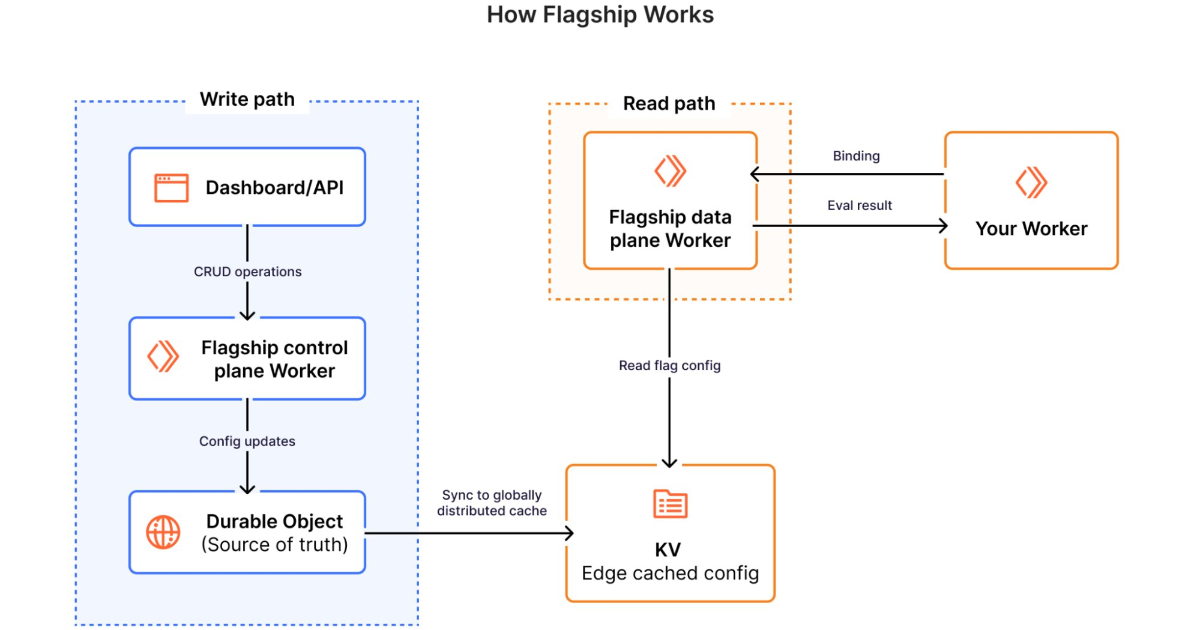
Our Take – Cloudflare’s Flagship signals a shift toward truly edge‑native feature management, and the implications go far beyond a convenience for developers. By embedding a feature‑flag service directly into the global edge platform, Cloudflare is challenging the long‑standing model where teams rely on centralized flag providers that add latency, complexity, and a separate point of failure. This move is especially relevant for anyone who has wrestled with the “feature‑toggle debt” that accumulates when rollouts require code changes or when experiments stall because the flag evaluation sits in a distant data‑center. Flagship’s design, which evaluates flags locally inside Cloudflare Workers, eliminates that round‑trip, turning the edge into a decision‑making layer that can react in milliseconds to user context, location, or device. For readers who have already explored solutions for dynamic data handling, the related article Order form that references data from a table illustrates how real‑time data integration can streamline workflows; Flagship extends that principle to feature control, making the decision process as immediate as the data lookup. Likewise, the discussion in JEP 533 Tightens Exception Handling in Java's Structured Concurrency for JDK 27 shows how language‑level advances aim to reduce friction in complex systems—Flagship does the same at the infrastructure level, offering a smoother path from code to production without the need for additional orchestration layers.
From a practical standpoint, the edge‑native approach offers three concrete advantages. First, latency drops dramatically. When a flag is evaluated inside a Worker that already sits at the edge, the request no longer traverses the internet to reach a central flag service, which can shave tens of milliseconds off response times—a meaningful gain for high‑traffic, latency‑sensitive applications. Second, reliability improves. By removing an external dependency, the failure surface shrinks; if the flag provider experiences downtime, the edge runtime can still serve cached or default values, preserving user experience. Third, cost efficiency emerges because the evaluation runs on the same platform that already processes the request, eliminating the need for separate compute resources dedicated to flag resolution. For teams accustomed to managing separate environments for feature toggles, Flagship invites a more unified, streamlined architecture that aligns with the broader trend of moving logic closer to the user.
What makes Flagship particularly compelling is its adherence to the OpenFeature standard. By embracing an open, vendor‑agnostic API, Cloudflare ensures that developers can migrate between providers or run hybrid setups without rewriting business logic. This forward‑thinking compatibility respects the reality that many organizations already have investments in existing flag ecosystems. Rather than forcing a lock‑in, Flagship positions itself as an accessible upgrade path, encouraging teams to explore a more performant edge solution while preserving their existing workflows. The strategic decision to launch in closed beta also signals confidence that the product has reached a maturity level where real‑world feedback can refine performance and security—an approach that mirrors the incremental, data‑driven releases that feature flags themselves enable.
Looking ahead, the real test will be how Flagship integrates with broader observability and governance stacks. Edge environments excel at speed, but they also introduce new challenges around visibility into decision outcomes and compliance with data residency requirements. If Cloudflare can deliver robust telemetry that ties flag evaluations to downstream metrics, it will empower teams to not only deploy changes faster but also to measure impact with the same rigor they expect from traditional analytics tools. As more organizations adopt edge computing for core business logic, the question becomes: will edge‑native feature management become the default, pushing legacy, centralized flag services into the background? The answer will shape how quickly we can truly transform data‑driven experiences at the speed of the internet.
Cloudflare recently announced the closed beta of Flagship, a new feature flag service built directly into its global edge platform. The service lets teams control feature rollouts and experiment with changes without redeploying code, while evaluating flags locally in Cloudflare Workers rather than calling external flag services.
By Renato LosioRead on the original site
Open the publisher's page for the full experience