Cloudflare Processes 10M+ Daily Insights with New Security Overview Dashboard
Our take
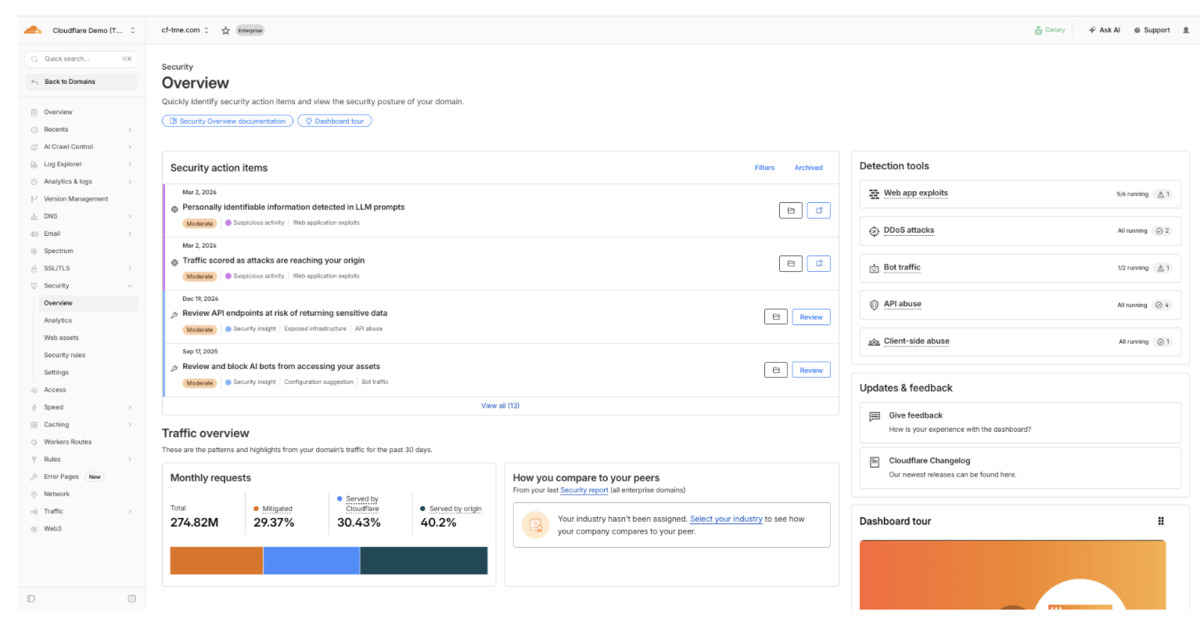
Cloudflare's recent launch of the Security Overview dashboard marks a significant advancement in how organizations can manage their security risks. By consolidating security signals into prioritized action items, this platform surfaces over ten million daily insights, enabling teams to identify and remediate critical risks with unprecedented speed. This is particularly relevant in an era where cyber threats are not only increasing in number but also in sophistication. As organizations increasingly depend on digital infrastructure, the ability to respond quickly and efficiently becomes paramount. This launch echoes themes we see in other innovative approaches, such as the shift to AI-native workflows outlined in I Let CodeSpeak Take Over My Repository and the growing demand for multimodal data solutions, evidenced by Wirestock’s recent fundraising efforts detailed in Wirestock raises $23M to supply creative multimodal data to AI labs.
What sets the Security Overview dashboard apart is its integration of distributed checkers and real-time event processing, which streamlines analytics workflows. This is crucial for organizations that face overwhelming amounts of data and need to prioritize their responses effectively. Traditional security measures often leave teams paralyzed by the sheer volume of alerts, many of which may not warrant immediate action. Cloudflare's new dashboard not only reduces this investigation overhead but also enhances response efficiency, allowing security teams to focus on what truly matters. This is an encouraging development that aligns with the broader trend of leveraging technology to simplify complex processes, a core theme in the evolution of digital tools.
The implications of such advancements are profound. For businesses, faster identification and remediation of risks can translate into significant cost savings and improved operational continuity. Moreover, as organizations navigate an increasingly complex regulatory landscape, having a robust security posture becomes a business imperative, not just a technical requirement. Security is no longer merely an IT concern; it is a strategic business function that impacts customer trust and brand reputation. As seen with Uber's recent announcement about expanding its engineering campuses in India, which aims to support product development and operations, there is a clear recognition that investing in innovative technology and talent is essential for staying competitive in today's market.
Looking forward, the question arises: how will organizations adapt to these transformative tools, and what will be the long-term impact on their security strategies? As we witness the rapid evolution of AI and machine learning technologies, it is clear that the future of data management and security will be shaped by tools that empower users rather than overwhelm them. The challenge lies in ensuring that these tools are not only effective but also accessible to teams with varying levels of expertise. As Cloudflare sets the stage with its Security Overview dashboard, the industry will be watching closely to see how other players respond and innovate in this critical space.
Cloudflare has launched a Security Overview dashboard that consolidates security signals into prioritized action items. It surfaces millions of daily insights, helping teams identify and remediate critical risks faster. Built on distributed checkers and real-time event processing, it integrates analytics workflows to reduce investigation overhead and improve response efficiency.
By Leela KumiliRead on the original site
Open the publisher's page for the full experience