DataCamp vs Coursera: Which Is Worth It in 2026?
Our take

The perennial question of where to acquire data skills – DataCamp or Coursera – has resurfaced, and the comparative analysis offered is timely. Both platforms offer compelling routes to proficiency in areas like Python, SQL, and machine learning, but their fundamentally different approaches highlight a broader trend in online education. DataCamp’s laser focus on data science creates a highly curated and arguably more efficient learning experience, while Coursera’s expansive marketplace provides access to a wider range of subjects, albeit with potentially diluted quality control in the data science space. Considering the challenges many face with implementing retrieval-augmented generation, as detailed in Your RAG Pipeline Is Probably Useless. Here’s a Better Alternative, it’s clear that focused, practical training is often more valuable than broad exposure. Similarly, the complexities of production diagnostics, as explored in Eliya 25 Brings a JVM-Level Diagnostic Profile to OpenJDK 25 LTS, underscore the importance of specialized skill development.
The comparison’s inclusion of factors like teaching methodology, career outcomes, and portfolio building is critical. It’s not enough for a platform to simply offer courses; it must actively facilitate the translation of knowledge into tangible career advantages. The emphasis on what "real learners say" is a refreshing departure from marketing-driven narratives. The article rightly points out that choosing between the two isn't a binary decision – it depends heavily on individual learning styles, career goals, and budget constraints. For those deeply committed to a data-centric career, DataCamp’s specialized curriculum likely provides a more direct path. However, for individuals seeking broader knowledge or exploring data science as part of a more diverse skillset, Coursera’s breadth might be more appealing. The recent developments surrounding government AI regulation, as discussed in The Real Story Behind the Government GPT 5.6 Freeze, also frame the discussion; the need for skilled data professionals to navigate ethical and regulatory landscapes is only increasing.
Beyond the direct comparison, this debate reflects a larger shift within the online learning ecosystem. The trend toward specialization is accelerating, driven by the rapidly evolving demands of the job market. Generalist platforms like Coursera are facing increasing pressure to curate and validate their data science offerings, while specialized platforms like DataCamp are expanding their scope to offer more comprehensive career support. This competition ultimately benefits learners, forcing both types of platforms to improve their quality and relevance. The rise of AI-native tools for data analysis and manipulation further complicates the landscape, requiring learners to not only master fundamental concepts but also adapt to new and evolving technologies. The ability to quickly acquire and apply these skills will be a key differentiator in the years to come.
Looking ahead, the question isn’t just *where* to learn data skills, but *how* learning itself will adapt to the age of AI. Will platforms increasingly leverage AI to personalize learning paths, provide real-time feedback, and generate customized content? Will the line between structured courses and self-directed learning blur as AI-powered tools become more sophisticated? The ongoing evolution of these platforms, and the skills they impart, will be crucial in shaping the future of the data-driven workforce. One must wonder, as generative AI capabilities expand, will the perceived value of foundational data science skills shift, and how will platforms like DataCamp and Coursera adapt to meet those changing needs?
If you’re looking to build skills in data (Python, SQL, machine learning, or analytics), you’ve likely come across both DataCamp and Coursera. One specializes entirely in data skills. The other is a massive course marketplace covering almost everything.
So which one is actually better?
In this DataCamp vs Coursera comparison, we cover pricing, course catalogs, how each platform actually teaches, career outcomes, portfolio building, and what real learners say. Everything you need to make the call without spending another week on comparison articles.
TL;DR
If you’re short on time, this table covers everything. The rest of the article just gets into more detail.

$$
\text{vs}
$$
| Category | DataCamp | Coursera |
|---|---|---|
| Focus | Data and AI only | All subjects |
| Course catalog | 700+ courses | 10,000+ courses |
| Content providers | In-house instructors | 375+ universities and companies |
| Learning format | Interactive coding in the browser | Video lectures, readings, quizzes |
| Career tracks | 30 structured tracks | Specializations and Guided Projects |
| Free access | First chapter of every course | First module preview only |
| Monthly price (varies by region and current promotions) | \$25/month | \$35/month (Coursera Plus) |
| Annual price | ~\$21/month billed annually | ~\$12/month billed annually |
| Certificate recognition | Moderate, known in data hiring | Higher for select employer/university-backed certificates — but certificates rarely get you hired on their own |
| University credentials | No | Yes |
| Portfolio projects | Yes, included in all plans | Yes, in select Specializations |
| Best for | Upskilling in a data role | Getting a recognized credential |
| User rating | 4.6/5 Trustpilot | 1.3/5 Trustpilot (4.5/5 on G2) |
Neither fits perfectly? Dataquest might. It’s built around one goal: getting you hired in data. The way it does that is through hands-on projecta that double as portfolio pieces. Every guided project comes with a downloadable dataset you can push to GitHub. When a hiring manager asks what you’ve built, you open your repository and show them.
1. Courses and Topics
DataCamp and Coursera both have courses, both have certificates, and both will take your money every month. That’s roughly where the similarities end.
DataCamp's Course Catalog
DataCamp courses focus primarily on data. Every course on the platform connects to one of these areas:
- Python programming (from beginner to advanced)
- Data analysis
- Software development
- Data preparation & manipulation
- R for statistical analysis
- SQL and database querying
- Machine learning and AI
- Data visualization (Tableau, Power BI, Matplotlib)
- Data engineering and cloud tools
- Applied finance
- and more
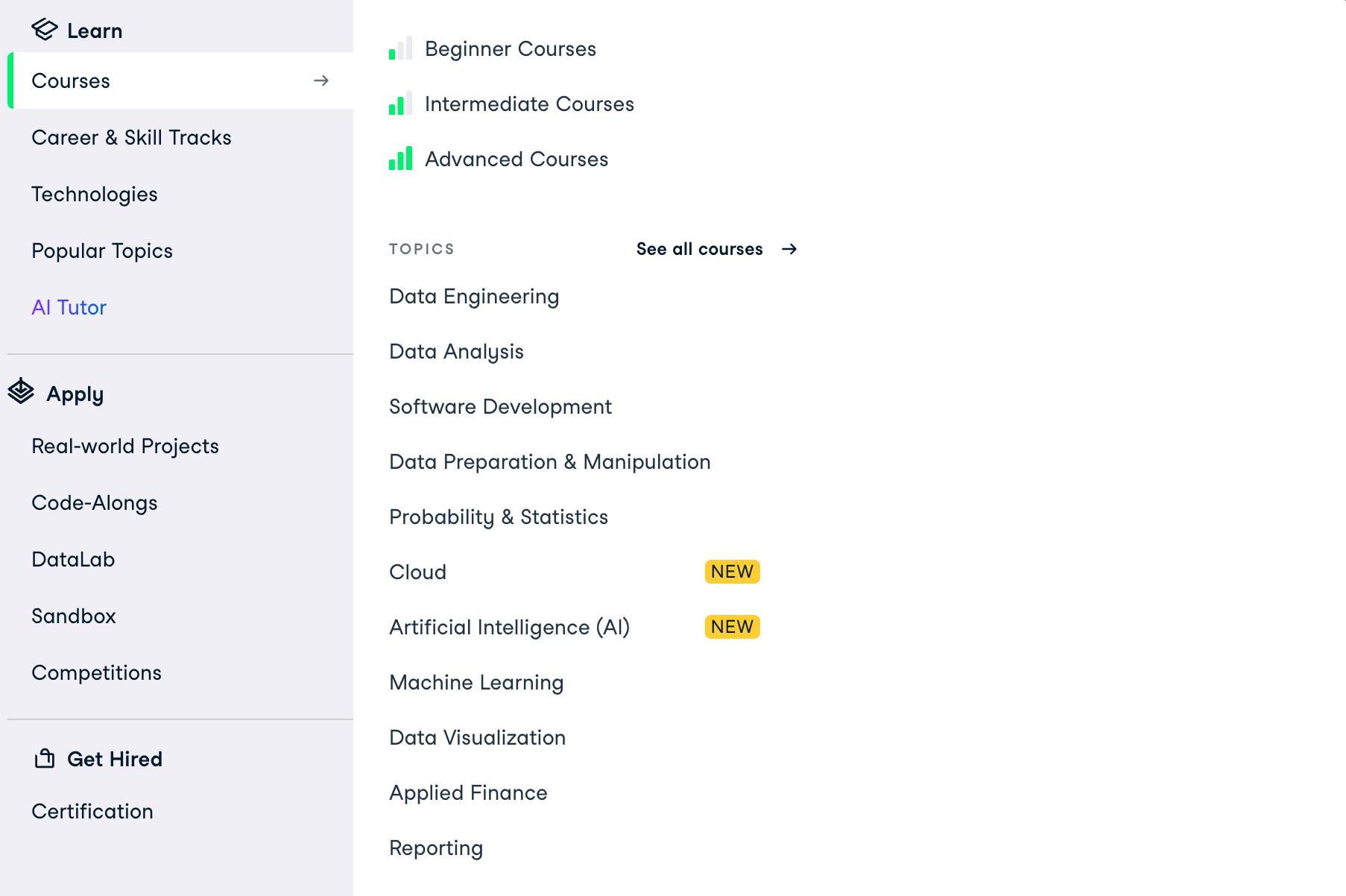
DataCamp now has over 700 courses and 30 career tracks. Career tracks bundle those courses into structured paths, so you don’t have to organize them yourself. For instance, their Data Scientist in Python track runs about 90 hours. The entire catalog is built around one goal: getting you job-ready in a data role.
Coursera's Course Catalog
Coursera is a general-purpose online learning platform. It partners with over 375 universities and companies, including Stanford, Google, IBM, and Meta.
Their catalog spans a wide range of subjects:
- Data science and machine learning (Google Data Analytics, IBM Data Science)
- Business, finance, and management
- Computer science and software engineering
- Health, psychology, and social sciences
- Language learning and personal development
- Cybersecurity
- IT & cloud computing
- UX/UI design
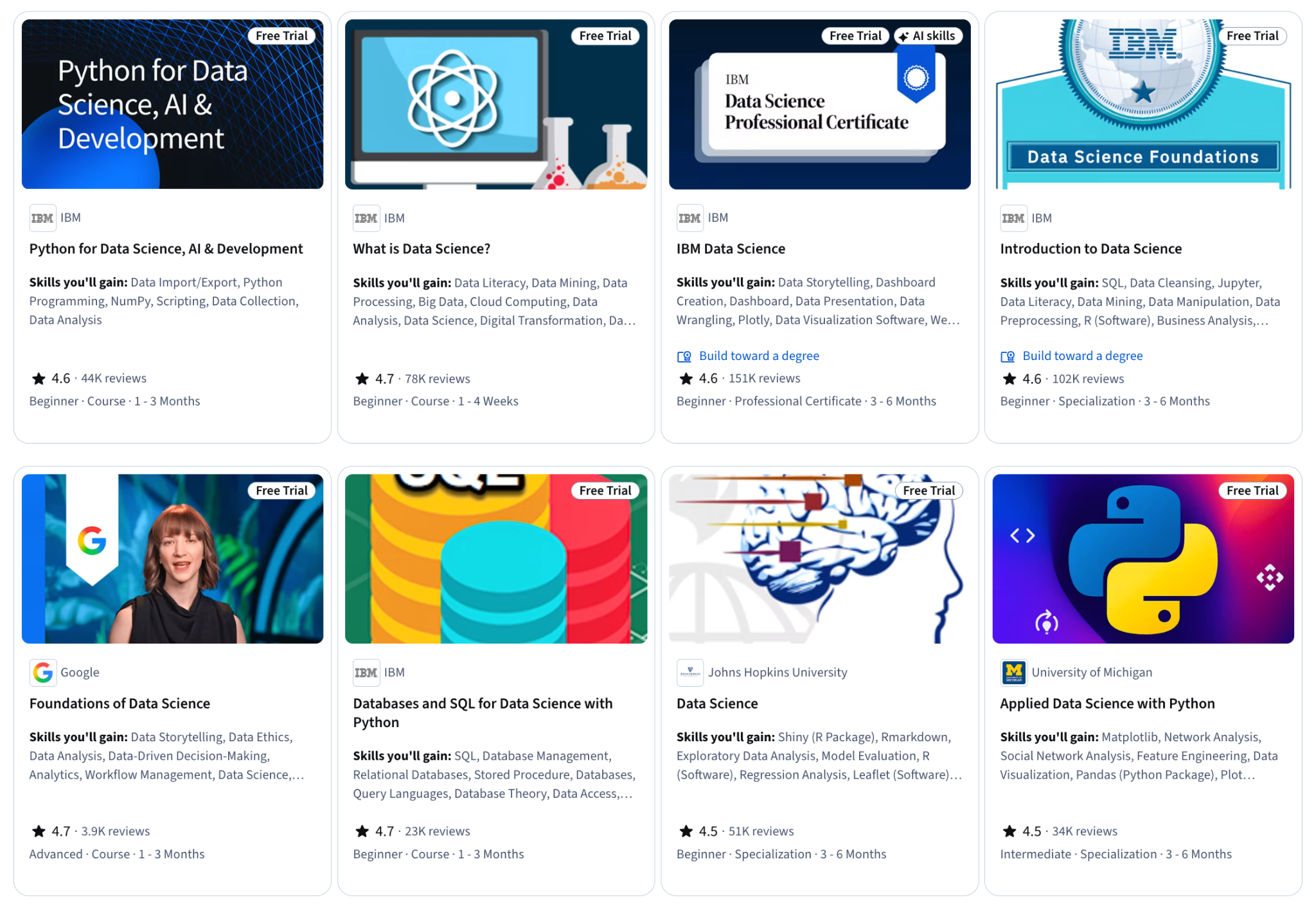
Coursera lists over 10,000 courses, specializations, and certificates. Many of which are not data science courses.
Catalog Comparison
| Feature | DataCamp | Coursera |
|---|---|---|
| Total courses | 700+ | 10,000+ |
| Subject focus | Data only | All subjects |
| Career-oriented programs | Yes (30) | Yes (guided projects, specializations) |
| University-backed content | No | Yes (350+ partners) |
| Courses with certificates | Yes | Yes |
| Python-specific courses | 100+ | 50+ |
| Free content available | Limited (first chapter) | Limited (first module preview) |
If you want to learn Python for data science specifically, DataCamp has more depth and more structured progression. If you want a university-style credential or you’re exploring whether data science is right for you before committing, Coursera gives you more flexibility.
2. Price Comparison
Here’s a side-by-side comparison of each platform’s pricing options.
| Plan | DataCamp | Coursera |
|---|---|---|
| Free access | First chapter of every course | First module preview (no certificate) |
| Monthly plan | \$25/month | \$35/month (Coursera Plus) |
| Annual plan | ~\$21/month (billed annually) | ~\$12/month (Coursera Plus) |
| Individual course | Not sold separately | \$49-\$99 per course (with certificate) |
| Team/Business plan | \$14/user/month (billed annually) | \$279/year |
DataCamp's Pricing
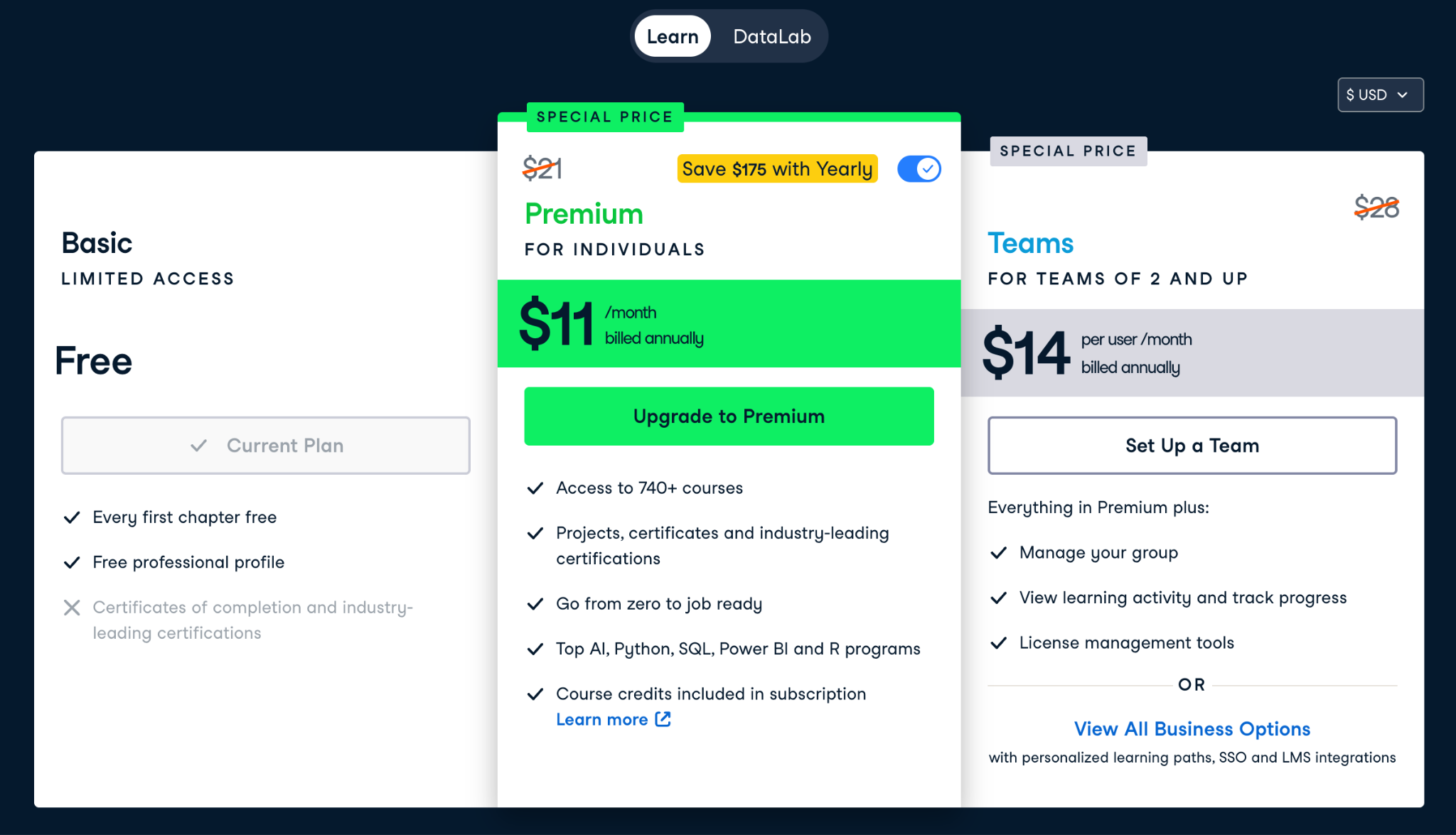
DataCamp uses a flat subscription model. One price gives you access to all 700+ courses, every career track, and all practice projects. There are no individual course purchases. If you commit to learning data skills consistently, the annual plan at around \$21/month is a reasonable deal.
The free tier is limited; you can access the first chapter of any course, which is enough to test the format before buying.
Coursera's Pricing
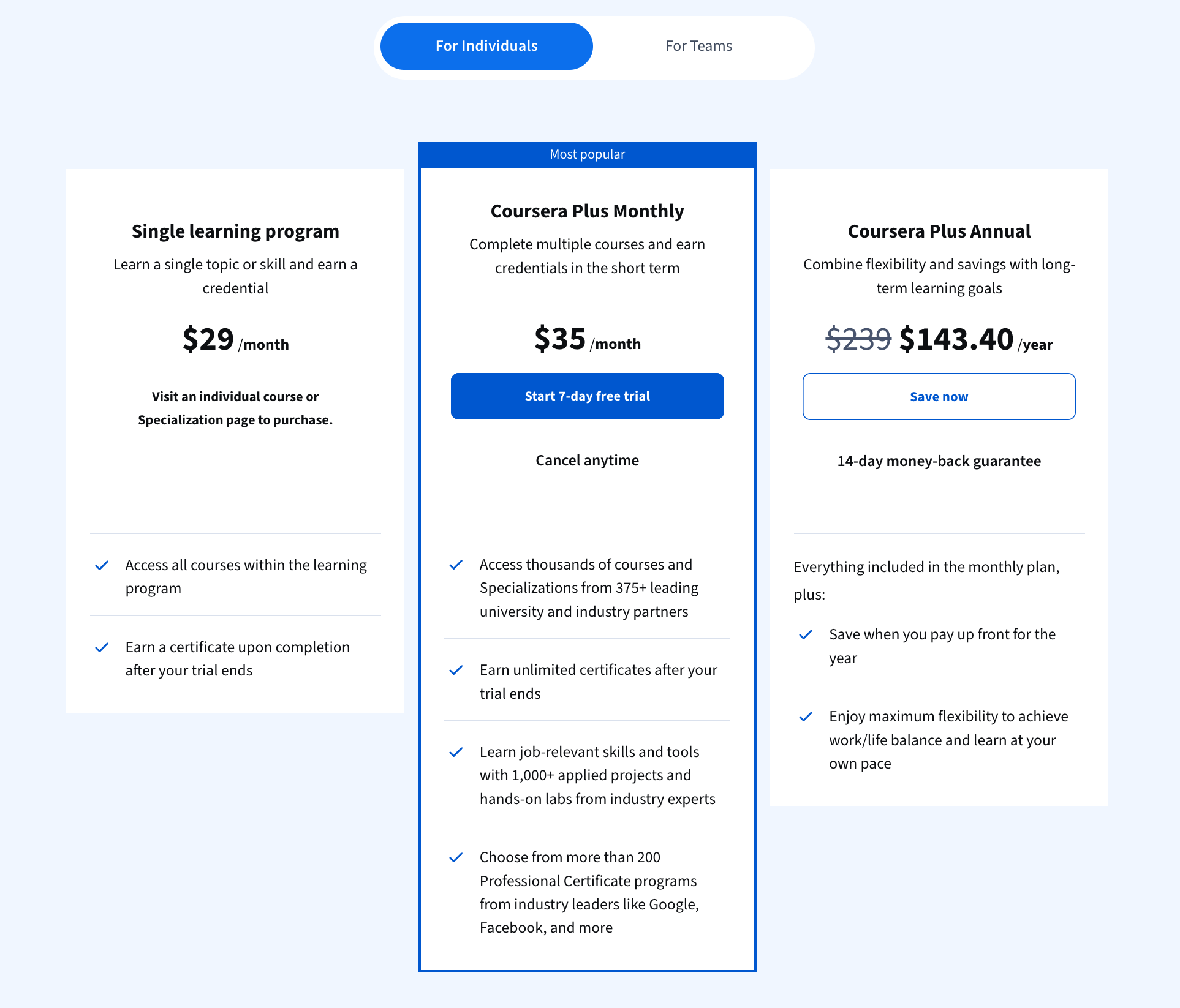
Coursera’s pricing depends on how you use it. As of mid-2025, Coursera replaced its old free audit mode with a “Preview Mode” that gives you access to only the first module of most courses before you hit a paywall.
If you only want one or two specific courses, paying per course is cheaper than subscribing. If you plan to take several courses across a year, Coursera Plus works out closer to DataCamp’s annual price.
Value Comparison
For data science specifically, DataCamp delivers more targeted content per dollar. Coursera is a better value if you want university-backed certificates or you’re still deciding whether to specialize in data at all.
3. Learning Experience
UX matters more than people give it credit for. If a platform is clunky to navigate or hard to find your way around, it chips away at motivation faster than difficult learning material ever could.
DataCamp's Learning Format
DataCamp’s format pairs short video lessons (usually 3 to 5 minutes) with browser-based coding exercises you complete right after. You watch a concept explained, then apply it before moving on. It’s more hands-on than a pure lecture platform, but video is still a significant part of how content is delivered.
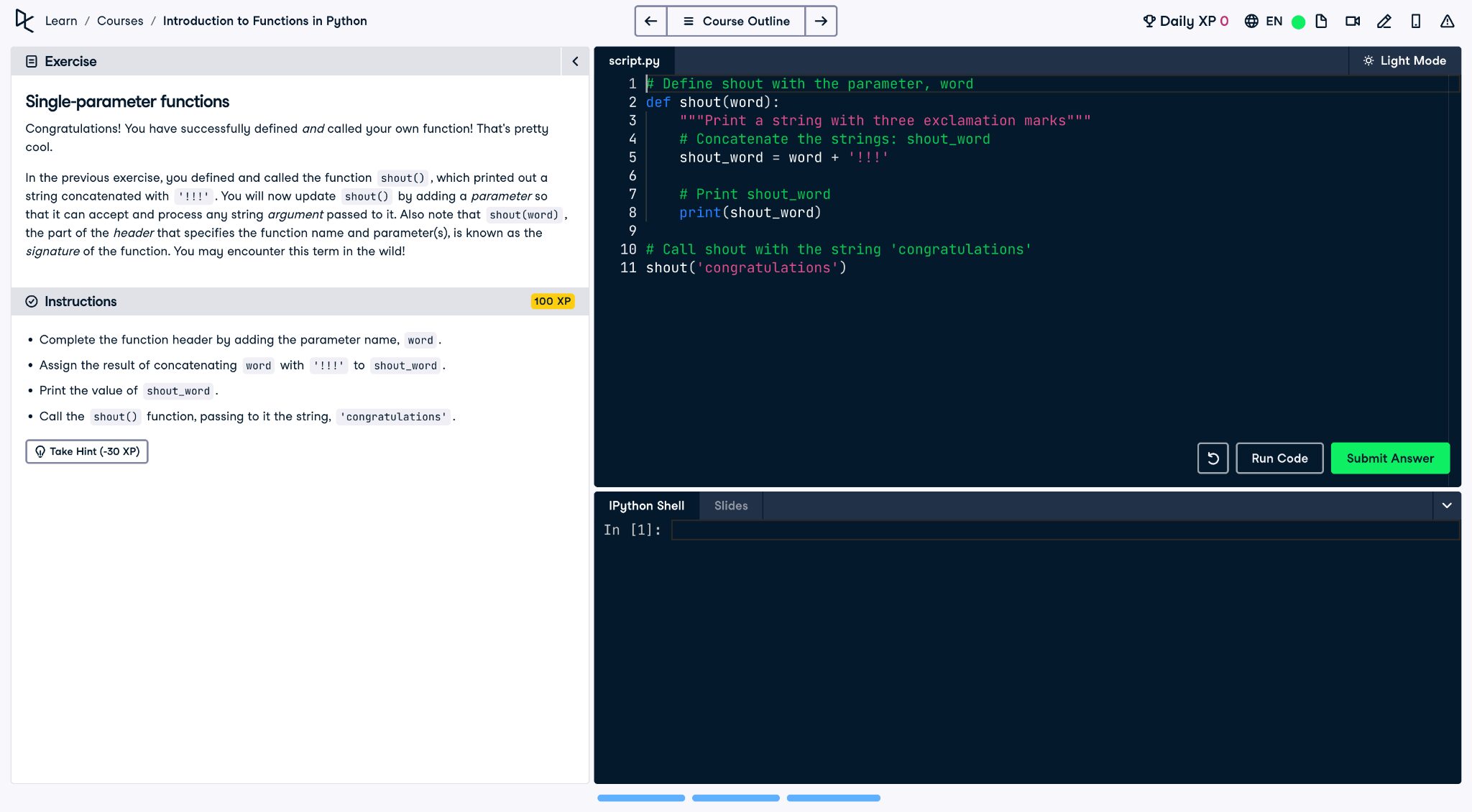
The exercises tend to be guided. You’re often completing specific sections of code rather than writing full solutions from scratch. That works well for beginners who are building foundational knowledge. More experienced learners sometimes find it easier to coast through without fully owning the material.
| Feature | What it is | Best used |
|---|---|---|
| Skill Assessments | Tests your existing knowledge and points you to the right starting level | Before you begin, so you don’t waste time on things you already know |
| Practice Mode | Short exercises that target your weak spots | Between courses, not just at the end |
| DataLab | In-browser notebook with AI assistance, think hosted Jupyter | Once you’re past the basics and want to work with real datasets |
| Mobile App | Covers courses and practice exercises | For lighter lessons on the go, keep project work on desktop |
Navigation is as simple as it can be because the catalog is narrow by design. It’s all data and AI, so you pick a course, a skill track, or a career track and just follow the path.
Coursera's Learning Format
Coursera is closer to taking an actual course than following a tutorial. Most of what you do is watch video lectures from university professors or industry instructors, work through readings, and complete quizzes and assignments. It feels academic, which is either a feature or a bug depending on how you learn best.
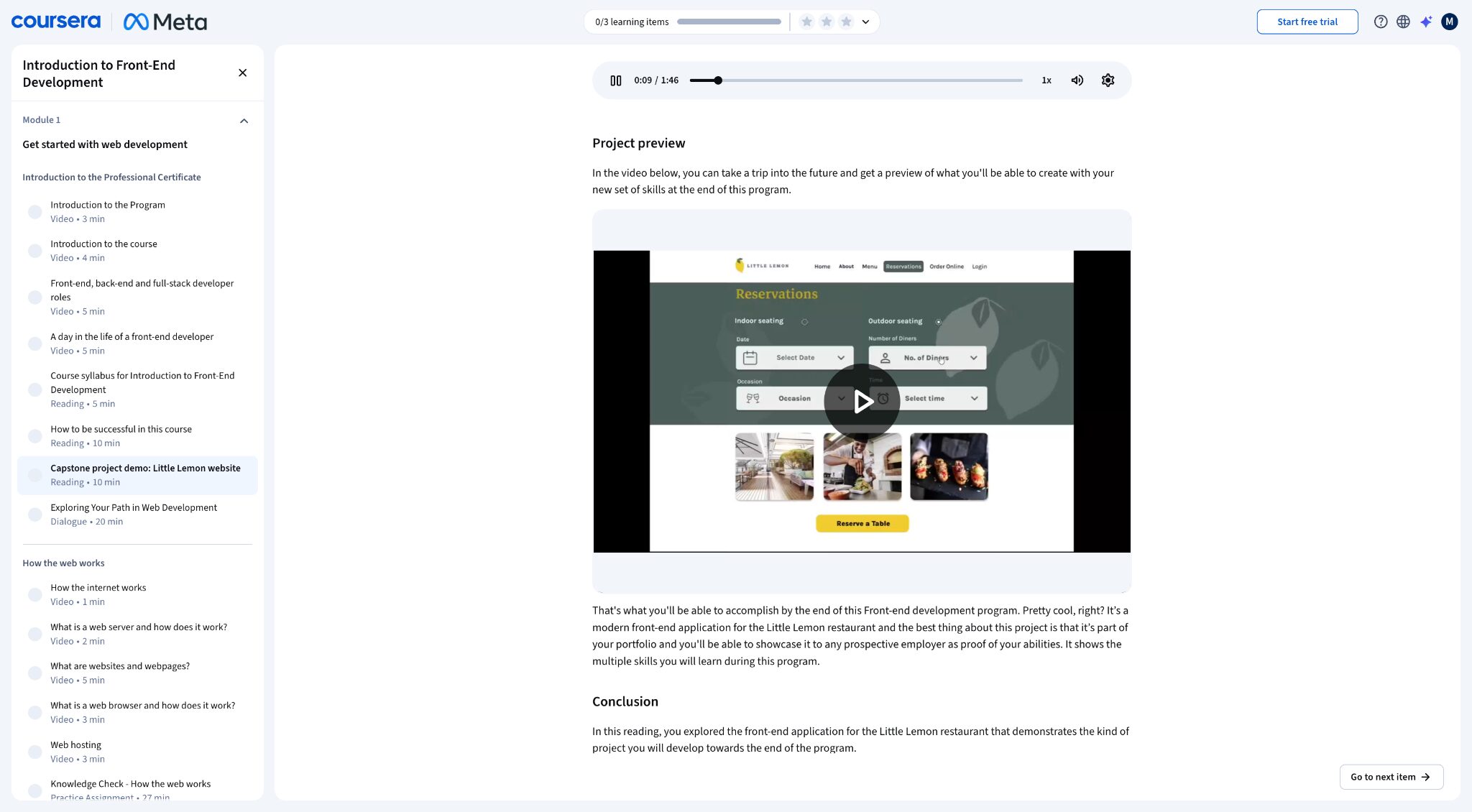
The learning experience also varies a lot depending on who authored the course. A Google Professional Certificate is practical and structured. A Stanford course is a whole different kind of learning path. Workload, pacing, and teaching style differ considerably across the catalog, so read the details before committing.
| Feature | What it is | Worth knowing |
|---|---|---|
| Peer-reviewed Assignments | Other learners grade your work | Adds accountability, but grading quality can be inconsistent |
| Guided Projects | Short hands-on sessions in a split-screen workspace | Good for practical output without committing to a full course |
| Flexible Deadlines | Suggested schedules you can reset if needed | Takes the pressure off, useful if you have a busy or unpredictable schedule |
The one friction point many learners mention is the course browsing process. Coursera covers thousands of subjects across hundreds of providers, so finding the right course takes more effort than on a focused platform.
Learning Experience Comparison
For data science and Python, DataCamp’s interactive learning format keeps you practicing more consistently. Coursera is a better fit for learners who prefer structured video lectures and want the academic framing that comes with university-produced content.
4. Career Outcomes
Nobody studies for fun forever. Eventually, you want a job. Here’s how each platform stacks up on that front.
DataCamp's Career Outcomes
DataCamp targets job-ready skills in specific data roles. The platform builds courses and tracks around real job titles such as Data Analyst, Data Scientist, Data Engineer, and Machine Learning Engineer.
DataCamp certificates carry some name recognition in data hiring circles, particularly among hiring managers who have used the platform themselves. They’re not equivalent to university credentials, but they signal practical, hands-on skills.
Coursera's Career Outcomes
Coursera’s strongest career signal comes from its university and employer partnerships. Certificates from programs like the Google Data Analytics Professional Certificate or the IBM Data Science Professional Certificate carry recognition from some recruiters.
The professional certificates from Google, IBM, and Meta are particularly well-regarded for entry-level data analyst and data science roles. Several large employers, including Google, have publicly stated they accept these certificates in place of degree requirements for some positions.
According to Coursera’s 2025 Learner Outcomes Report, 91% of learners reported at least one positive career outcome after completing a course or program. Outcomes included salary increases, promotions, improved job performance, and new employment opportunities.
As with most platform outcome reports, these results are based on learner surveys and should be treated as self-reported rather than independently verified.
A Note About Certificates
Certificates from either platform are unlikely to be what gets you hired. They can help a resume clear an initial screen, but most hiring managers care more about what you can actually demonstrate in an interview. A solid portfolio project you can walk through in detail will carry more weight than any credential listed on your resume.
We've covered the best AI certifications and best data engineering certifications if you want to see how specific credentials stack up
Career Outcome Comparison
| Career Feature | DataCamp | Coursera |
|---|---|---|
| Certificate name recognition | Moderate | High (Google, IBM, Meta) |
| University-backed credentials | No | Yes |
| Job role-aligned tracks | Yes | Partially |
| Employer partnerships | Yes (B2B product) | Yes (Google, IBM, Meta) |
| Portfolio projects included | Yes | Yes (some Specializations) |
| Learner outcome reporting | No data available | 91% positive (2025) |
If you’re already working in data and want to add specific technical skills, DataCamp’s depth and structured tracks are more practical. If a specific employer or program requires a named credential, Coursera’s Google or IBM certificates are the cleaner path for that. But if the goal is actually getting hired, what you can show matters more than what you can list.
5. Portfolio Projects
When you apply for data jobs, hiring managers want to see what you can actually build. The reality is that course certificates matter less than three solid portfolio projects.
DataCamp’s Project Approach
DataCamp includes 150+ hands-on projects throughout its catalog, covering realistic business scenarios with actual messy data. You might analyze Stack Overflow data on programming language trends, analyze crime patterns in LA, or explore London's travel network.
DataCamp also offers DataLab, an AI-powered notebook environment with database connections to Snowflake and BigQuery.
One thing worth knowing: DataCamp's project notebooks can be downloaded, but its courses (which make up the bulk of the catalog) generally don't provide datasets you can replicate locally. Most users report building independent projects outside the platform for job applications.
Coursera’s Variable Project Quality
Coursera’s approach depends entirely on what you pick. Some Specializations include structured capstone projects — the Google Data Analytics capstone is practical and well-regarded. Others wrap up with a quiz. Quality is tied to the program, not the platform, so you have to research before committing.
The Portfolio Gap
Both platforms work better as learning foundations than complete portfolio solutions. Most successful career changers supplement with independent projects using original datasets.
If portfolio building is your primary concern, it’s worth knowing about a different approach.
Dataquest includes over 30 guided projects with downloadable datasets. You complete realistic simulations, recreate them in your local environment, and build them out into standalone portfolio pieces. When hiring managers ask about your experience, you have real work to show, not just a course completion badge.
Dataquest provides fewer total courses than DataCamp or Coursera, with a desktop-only, text-based approach. But its projects are designed around portability. The datasets come with you, which is the starting point for any portfolio worth showing.
Our Verdict
Neither platform excels at building transferable portfolios. DataCamp projects teach effectively but don’t easily transfer to GitHub. Coursera project quality varies too much by program to rely on. Plan to supplement platform learning with independent projects, or consider alternatives specifically designed for portfolio-first learning.
6. User Reviews
You’d think the reviews would make this an easy call. They don’t. Both platforms have genuine fans and genuine critics, and with Coursera the picture gets even messier because one person’s experience with a Google certificate is completely different from someone else’s experience with a random provider course.
| Platform | Trustpilot | G2 | SwitchUp | Course Report |
|---|---|---|---|---|
| DataCamp | 4.6/5 (900+ reviews) | 4.7/5 (600+ reviews) | 4.69/5 (100+ reviews) | 4.4/5 (100+ reviews) |
| Coursera | 1.3/5 (1,200+ reviews) | 4.5/5 (466+ reviews) | Not available | Not available |
What Learners Say About DataCamp
The overall verdict is pretty positive, especially from beginners. The most common thing you hear is that the hands-on format keeps people engaged. You’re writing code from the first lesson instead of watching long lectures, and a lot of people say that’s why they actually finished a course for once. The short lessons help too since they’re easy to fit into a busy day.
The main criticism is that exercises can feel a bit too guided. You’re often filling in a line or two rather than writing something from scratch, which makes it possible to finish lessons without fully owning the material. More advanced learners also mention hitting a ceiling at some point and moving on to books or personal projects.
Examples from public learner reviews:
Datacamp has simply been a great experience and I can only say positive things about this…One thing I really love is the user experience. To me, it's really helpful for beginners, as well as intermediate learners. The guidance provided is just enough to help you understand the fundamentals.
I love datacamp’s style because it is interactive and reinforces your learning by practicing. I am using several sources / platforms for learning but Datacamp is my primary choice for learning technical skills. Video lessons and practices are neat even on mobile. Datacamp has helped me a lot in not only gaining skills but also having the confidence to really take on actual jobs thru certifications.
What Learners Say About Coursera
The biggest reason people recommend Coursera is credentials. Certificates from Google, IBM, or Stanford carry some name recognition, and users specifically mention the Google Data Analytics Certificate getting noticed by recruiters. The theory tends to be stronger too, which people appreciate in ML and statistics courses.
The main criticism is that it’s easy to coast through passively. Watch, quiz, move on, and not actually retain much. Some users finish entire certificates and still feel shaky applying the skills. Course content also varies a lot depending on the provider.
The thing to understand about Coursera is that people rarely recommend the platform itself. They recommend specific courses. “Take Andrew Ng’s ML course.” “Do the Google Data Analytics Certificate.” Your experience depends almost entirely on what you pick.
Coursera has been a game-changer in my professional development. With a monthly subscription, I completed several skill-based trainings—including Data Analysis and AI promotion—with ease and confidence. The platform’s ability to track progress and recommend the next steps kept me motivated and focused.
Coursera courses are simply superb. The presentation and information provided is of the highest quality. The platform has some big names in it like IBM and Google amongst others who have partnered with it and their instructors are highly knowledgeable.
DataCamp vs Coursera: Which to Choose?
Choose DataCamp if:
- You want to practice writing real code every day
- You’re already in a data role and want to add specific technical skills
- You want structured paths without having to organize your own curriculum
Choose Coursera if:
- A specific employer or program explicitly requires a named credential
- You’re new to data and want to explore whether it’s the right direction before committing
- You prefer structured video lectures from university or industry instructors
Try Dataquest if:
- You need a GitHub portfolio you can actually show employers, not just course badges
- You want a text-based, structured learning format that explains the why behind the code, not just the what
- You want to write real code from the first lesson with no fill-in-the-blank shortcuts
- You're making a career change and need proof of work, not just a credential
Neither DataCamp nor Coursera is wrong. They're built for different stages and different goals. The pitfall is spending weeks comparing them instead of starting.
Read on the original site
Open the publisher's page for the full experience