Disaggregation Is a Thousand-GPU Problem
Our take
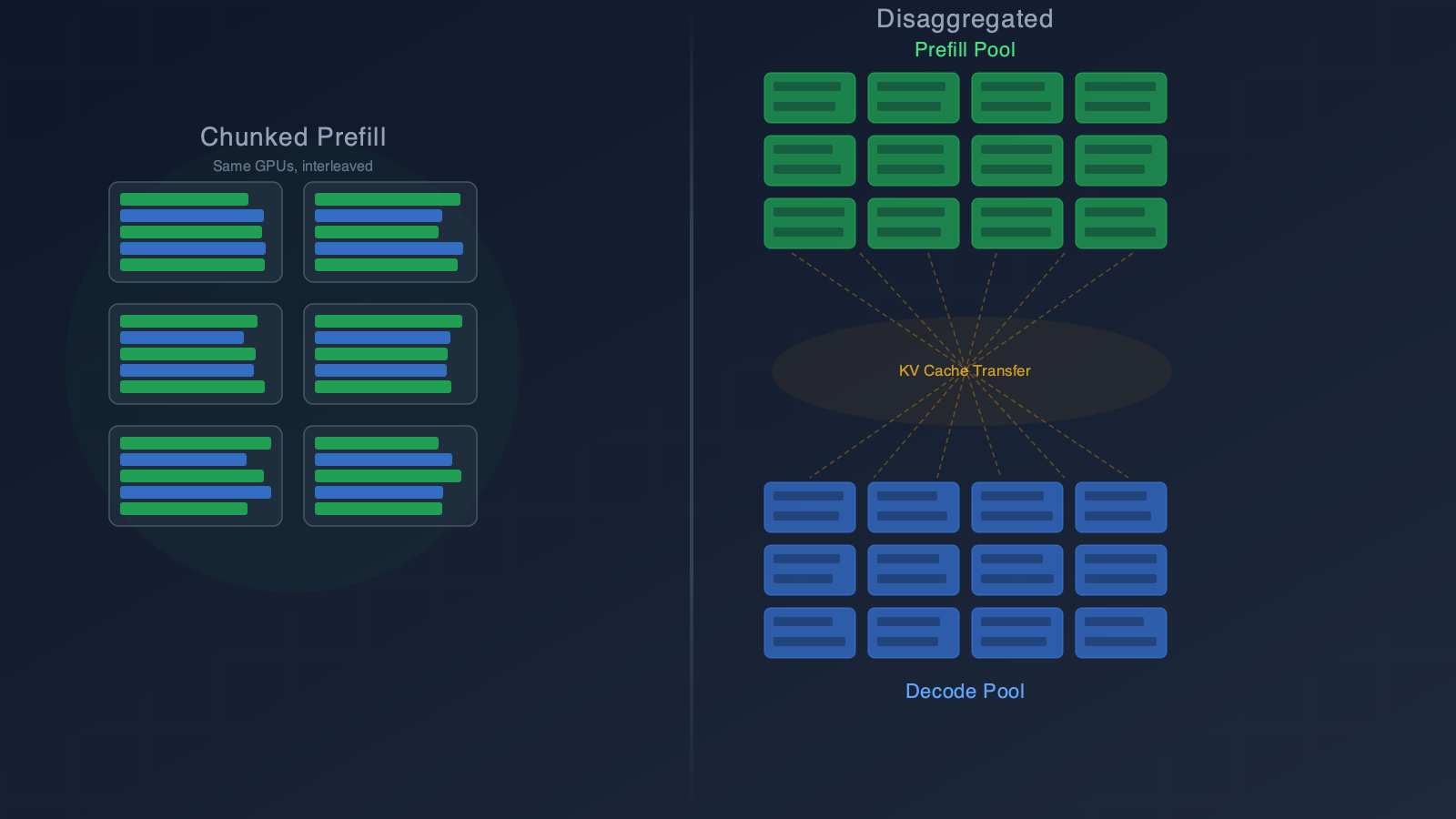
The recent Towards Data Science piece, "Disaggregation Is a Thousand-GPU Problem," highlights a critical, often overlooked, challenge in scaling large language models (LLMs): the practicalities of disaggregation. While the theoretical benefits of separating prefill and decoding stages in LLM inference are clear – increased parallelism, potentially lower latency – the article rightly points out that achieving these benefits requires significant infrastructure and a specific set of conditions. It’s a valuable corrective to the often breathless pronouncements surrounding LLM optimization, reminding us that architectural choices aren't purely academic; they have real-world implications for cost, complexity, and ultimately, usability. This discussion is particularly relevant as organizations move beyond proof-of-concept deployments and grapple with the operational realities of serving LLMs at scale. Understanding these constraints is crucial for making informed decisions about hardware investments and model deployment strategies, and ties into broader conversations around efficient inference techniques, such as those explored in Quantization and its Impact on LLM Performance.
The core argument—that disaggregation only becomes advantageous with a substantial number of GPUs (around a thousand)—is compelling. The overhead associated with data transfer and coordination across distributed compute units can easily negate any gains from parallelism if the scale isn’t large enough. The authors’ suggestion of chunked prefill as a more practical default for smaller deployments resonates with the reality faced by many organizations. We’ve seen a proliferation of techniques aimed at optimizing LLM inference, from speculative decoding to flash attention, but these often require specialized hardware or significant code modifications. Chunked prefill, in contrast, offers a more accessible path to improved performance without demanding a massive infrastructure overhaul. This pragmatism is a welcome perspective, especially when considering the current landscape of rapidly evolving LLM tooling, where the need for efficient deployment is becoming increasingly critical. It also builds upon the foundational understanding of efficient model serving, as detailed in A Practical Guide to Serving Large Language Models.
The significance of this article extends beyond the specific technical details of prefill and decode disaggregation. It underscores a broader trend in AI: the increasing importance of operational efficiency. Early LLM development focused heavily on model size and accuracy, often at the expense of inference costs and deployment complexity. However, as LLMs become more integrated into real-world applications, the focus is shifting towards optimizing for speed, cost, and scalability. This means considering not just the model architecture itself, but also the entire infrastructure and software stack required to serve it effectively. The “thousand-GPU problem” is a microcosm of this larger shift, highlighting the trade-offs involved in pursuing architectural innovations and the need for a holistic approach to LLM deployment. It's a reminder that the most impressive model on paper might not be the most practical or cost-effective solution in the real world.
Looking ahead, the question becomes: how will the development of more efficient communication protocols and hardware architectures impact the viability of LLM disaggregation at smaller scales? While a thousand GPUs might be the current threshold, advancements in interconnect technology and specialized hardware accelerators could potentially lower this barrier in the future. The ongoing research into memory-centric architectures and distributed computing frameworks will be crucial in determining whether disaggregation can become a more broadly applicable strategy for LLM inference. It’s also worth watching the evolution of serverless inference platforms, which could abstract away much of the complexity associated with managing distributed GPU clusters, potentially making disaggregation more accessible to a wider range of users. Ultimately, the pursuit of efficient LLM inference is an iterative process, and the insights from articles like this are essential for guiding that evolution.
Three conditions that must hold before splitting prefill from decode pays off, and why chunked prefill is the right default below that threshold.
The post Disaggregation Is a Thousand-GPU Problem appeared first on Towards Data Science.
Read on the original site
Open the publisher's page for the full experience