Dropbox Integrates MCP and Dash to Close the Gap Between Security Design and Code Review
Our take
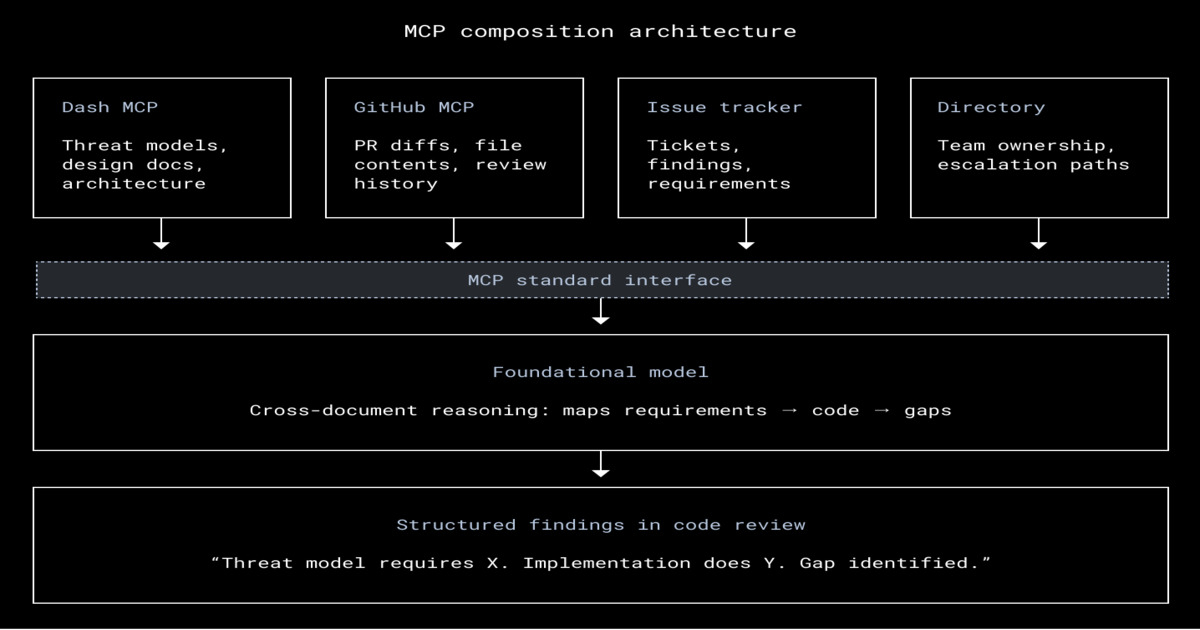
The integration of Model Context Protocol (MCP) with Dropbox’s internal knowledge platform, Dash, to enhance AI-assisted code reviews represents a significant step forward in bridging the often-troublesome gap between security design and implementation. For too long, security reviews have operated in a silo, often lacking the crucial context of the original threat models and security requirements. This disconnect leads to potential vulnerabilities slipping through the cracks, particularly as codebases grow in complexity and development velocity increases. Dropbox’s approach, as detailed in InfoQ’s coverage, addresses this directly by surfacing this critical design information alongside pull requests, enabling reviewers to validate that the code aligns with its intended security posture. This resonates strongly with the broader industry shift towards integrating security earlier in the development lifecycle – a concept we’ve previously explored in our analysis of DevSecOps trends – and demonstrates a practical application of that principle. The reliance on an internal knowledge platform like Dash underscores the importance of accessible, centralized documentation in fostering a security-conscious development culture.
The architecture described in the InfoQ Q&A highlights a particularly elegant solution: MCP acts as a standardized way to represent security design context, allowing Dash to retrieve and present the relevant information to reviewers. This standardization is key; without it, the system would be reliant on manually curated documentation, which quickly becomes outdated and unreliable. The move also leverages the growing power of AI-assisted code review tools, providing them with the necessary context to perform more intelligent and effective security validations. While the initial implementation is internal to Dropbox, the principles behind MCP – a standardized protocol for representing security design – are highly transferable. We anticipate seeing similar approaches adopted by other organizations, potentially leading to the emergence of open-source MCP implementations or industry-standard formats for representing security design context. This shift is particularly relevant as organizations increasingly rely on large language models (LLMs) for code generation and review; providing these models with security context is crucial to ensuring they produce secure code. As we discussed in a recent piece on LLM security risks, simply relying on the LLM to “know” security best practices is insufficient.
The lessons learned by Dropbox, as shared in the Q&A, are particularly valuable for organizations considering a similar implementation. The emphasis on automation and standardization, coupled with the recognition that this is an ongoing process requiring continuous improvement, are critical takeaways. It’s not a “set it and forget it” solution; maintaining the accuracy and relevance of the security design context within Dash requires dedicated effort and integration with existing development workflows. Furthermore, the success of this approach hinges on the adoption of MCP by developers and security engineers alike. Without buy-in and consistent usage, the system’s effectiveness will be limited. Dropbox’s experience reinforces the importance of a human-centered approach to security tooling – focusing on how to empower developers and reviewers, rather than simply imposing new processes. This resonates with our broader perspective that effective security isn’t about building impenetrable walls, but about fostering a culture of security awareness and responsibility within the development team.
Looking ahead, a key question to watch is the evolution of MCP and its potential for broader adoption. Will Dropbox open-source the protocol, or will they license it to other organizations? The answer to this question will significantly impact the pace of adoption and the potential for MCP to become an industry standard. Regardless, the underlying principle – connecting security design context to the code review process – is likely to become increasingly important as software development continues to evolve and the threat landscape becomes more complex. The challenge will be ensuring that these solutions remain accessible and easy to use, preventing them from becoming yet another barrier to productivity rather than an enabler of secure development.
Dropbox has integrated Model Context Protocol (MCP) with its internal knowledge platform, Dash, to surface security design context during AI assisted code reviews. The system retrieves threat models and security requirements for pull requests, helping reviewers validate implementation against design intent. An InfoQ Q&A explores the architecture and key lessons learned.
By Leela KumiliRead on the original site
Open the publisher's page for the full experience