From Camera to Cloud: Netflix’s Scalable Media Processing Pipeline
Our take
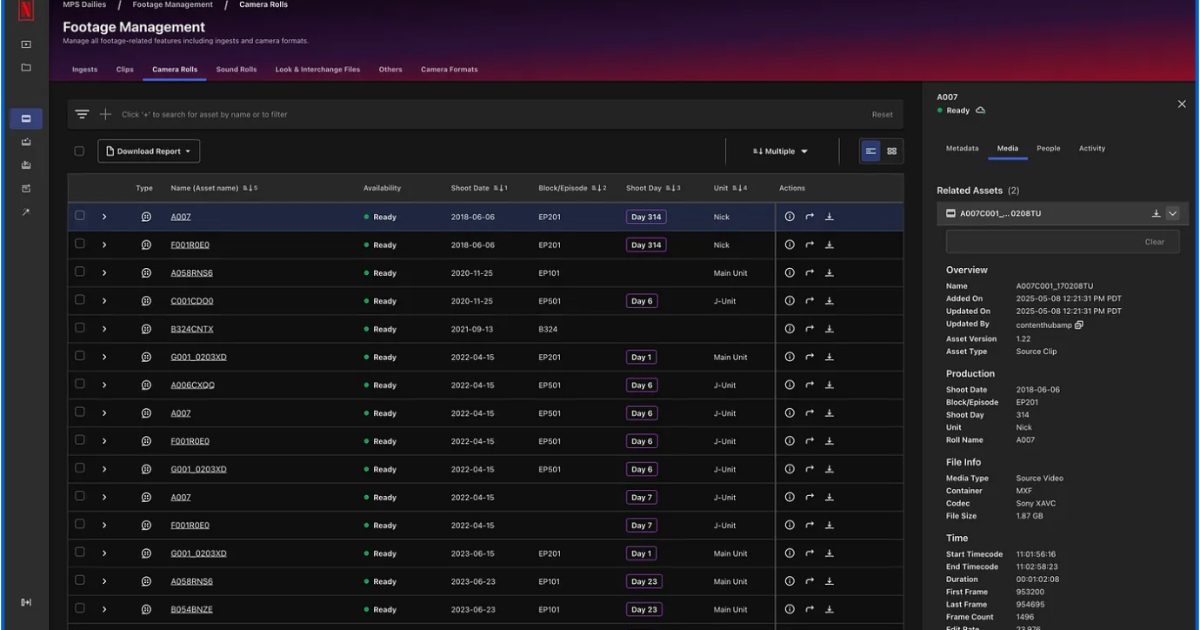
Netflix’s detailed look into their camera file processing pipeline highlights a crucial evolution in media production – the embrace of scalable, cloud-native workflows. The sheer volume of data generated by modern film and television shoots is staggering, and managing it efficiently is no longer a question of incremental improvement but a fundamental requirement for global-scale operations. This isn’t just about storage; it’s about streamlining the entire lifecycle, from raw footage ingestion to final delivery. The article’s focus on standardization across editorial, VFX, and color pipelines is particularly noteworthy, reflecting a broader industry trend towards breaking down silos and fostering collaboration. This resonates with recent discussions around optimizing AI workflows, as seen in "Most People Use ChatGPT Wrong: 10 Features and Tips That Changed How I Work"[/post/most-people-use-chatgpt-wrong-10-features-and-tips-that-chan-cmqjt2ebz05ubyt0p7mpjt4pp], where embracing innovative tools requires rethinking established processes – a similar shift is unfolding in media. The distributed compute architecture, leveraging FilmLight API, underscores the increasing reliance on specialized tools integrated within larger cloud ecosystems.
The move away from traditional, on-premise infrastructure is significant. It allows Netflix to dynamically scale resources based on production needs, reducing both capital expenditures and operational overhead. The standardization Netflix has achieved, facilitated by this cloud-based pipeline, isn’t merely about cost savings; it’s about ensuring consistency and quality across a vast and geographically dispersed network of productions. Consider the challenges of maintaining consistent color grading or visual effects across multiple studios in different countries – a unified, cloud-based system offers a powerful solution. The Athena Coalition’s focus on coordinated defense in open-source security [/post/athena-coalition-brings-coordinated-defence-to-open-source-s-cmqjg8dd205p5yt0pozucy78k] further underlines the importance of robust and secure infrastructure in this context, especially as media pipelines become increasingly reliant on interconnected systems and distributed processing. These sophisticated systems demand a higher level of security awareness and proactive threat mitigation.
This development also has broader implications for the future of independent filmmaking and smaller production houses. While the initial investment in building such a sophisticated pipeline may seem prohibitive, the increasing availability of cloud-based services and APIs is democratizing access to advanced media processing capabilities. We're seeing a shift where the barriers to entry for high-quality production are lowering, driven by the accessibility of scalable infrastructure and specialized software tools. The evolution of space exploration, as demonstrated by NASA’s partnership with Relativity Space [/post/nasa-picks-eric-schmidt-s-rocket-company-for-mars-mission-se-cmqjg9aaf05r1yt0pvwhz6xoh], reflects a similar trend of leveraging innovative technologies to overcome complex challenges – the media industry is mirroring this trajectory. This isn't about replacing skilled professionals; it’s about empowering them with tools that automate repetitive tasks and free them to focus on creative decision-making.
Ultimately, Netflix’s approach reveals a fundamental rethinking of the media production workflow, prioritizing agility, scalability, and standardization. The move to a cloud-native pipeline is not merely a technological upgrade; it’s a strategic investment in a future where data volume and complexity will only continue to grow. The question moving forward is: how will other studios adapt to this new paradigm, and will they be able to leverage these technologies to maintain a competitive edge in an increasingly demanding landscape? The convergence of AI, cloud computing, and specialized media processing tools promises to reshape the industry in profound ways, and Netflix’s example provides a compelling glimpse into that future.
Netflix has detailed a cloud-based system for scaling camera file processing across global film and TV workflows. The pipeline handles ingest, validation, metadata extraction, and media transformation at scale using FilmLight API and distributed compute. It standardizes workflows across editorial, VFX, and color pipelines, improving consistency and reducing manual handling across productions.
By Leela KumiliRead on the original site
Open the publisher's page for the full experience