From One Agent to a Team: Understanding Codex Subagents
Our take
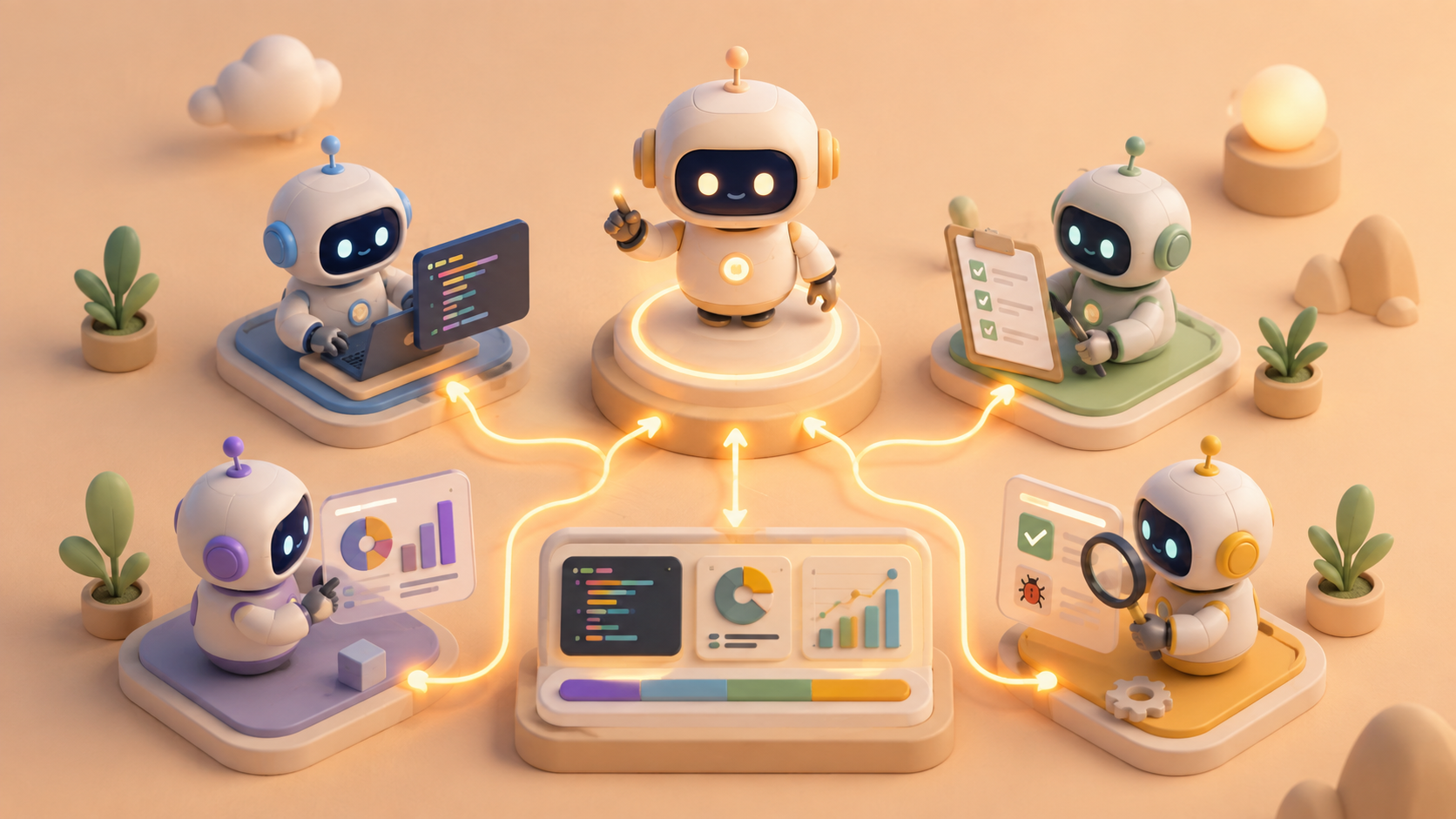
The emergence of subagents within AI agent frameworks like Codex represents a significant shift in how we approach complex problem-solving. The Towards Data Science article, "From One Agent to a Team: Understanding Codex Subagents," provides a valuable hands-on introduction to this concept, and its importance cannot be overstated. For too long, AI agent development has often focused on monolithic agents, attempting to cram numerous capabilities into a single entity. This approach inherently leads to complexity, slower iteration cycles, and difficulty in scaling. Subagents, however, offer a modular alternative – allowing developers to define specialized agents, each excelling in a specific task, and then orchestrate their combined efforts to achieve a larger goal. This mirrors the efficiency of human teams, where individuals with distinct expertise collaborate to deliver results far exceeding what any single person could accomplish. Understanding this architectural change is crucial for anyone looking to build truly robust and adaptable AI solutions, and it builds upon foundational work like that explored in Agentic AI: The Future of Work and the broader exploration of autonomous agents detailed in A Survey of Large Multimodal Models.
The beauty of the subagent approach, as highlighted in the article, lies in its inherent scalability and maintainability. Instead of debugging a sprawling, all-encompassing agent, developers can isolate and refine individual subagents, leading to faster development and improved reliability. This modularity also facilitates reuse – a well-trained subagent for data extraction can be readily incorporated into various workflows. Furthermore, the ability to dynamically assemble teams of subagents based on the specific needs of a task opens up exciting possibilities for adaptive AI systems. Imagine an agent that automatically selects the optimal combination of subagents for analyzing a complex dataset, generating a marketing campaign, or even assisting with software development. The Codex CLI, as described, provides a practical interface for defining and coordinating these subagents, lowering the barrier to entry for developers seeking to leverage this powerful paradigm. The shift from single agents to orchestrated subagent teams directly addresses the limitations of earlier AI models, aligning more closely with the principles of distributed computing and microservices architectures – concepts well-established in traditional software engineering.
The broader significance of subagents extends beyond simply improving the efficiency of individual AI projects. It represents a fundamental rethinking of how we design and build AI systems, moving away from the "black box" approach towards a more transparent and controllable architecture. This increased transparency is particularly important as AI becomes increasingly integrated into critical decision-making processes. By understanding the roles and responsibilities of each subagent, we can better assess the reliability and trustworthiness of the overall system. Moreover, the subagent paradigm facilitates the incorporation of human oversight and intervention – allowing developers to fine-tune the behavior of individual agents or even override their decisions when necessary. This is a crucial step towards building AI systems that are not only powerful but also aligned with human values and goals. As explored in The Alignment Problem: Machine Learning and Human Values, ensuring AI systems act as intended is paramount.
Looking ahead, the evolution of subagent orchestration platforms will be a key area to watch. As the number of available subagents grows, the need for sophisticated tools to manage and coordinate them will become increasingly apparent. We can anticipate the emergence of AI-powered orchestration engines that automatically select and configure subagent teams based on task requirements, dynamically adjusting workflows to optimize performance and adapt to changing conditions. The question then becomes: how will we ensure the emergent behavior of these complex subagent ecosystems remains predictable and controllable? Will we develop formal verification techniques to guarantee the correctness of subagent interactions, or will we rely on more empirical methods of monitoring and debugging? The future of AI agent development likely hinges on our ability to effectively harness the power of subagents while mitigating the potential risks associated with their complexity.
A hands-on guide to defining specialist agents and coordinating their work in the Codex CLI
The post From One Agent to a Team: Understanding Codex Subagents appeared first on Towards Data Science.
Read on the original site
Open the publisher's page for the full experience