Google Deep Research Max: Build Autonomous AI Research Agents in Minutes
Our take
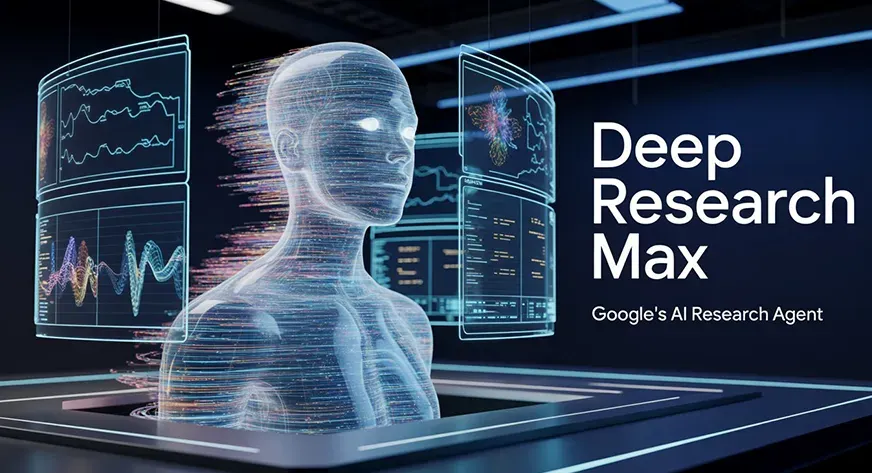
Google's recent launch of Deep Research Max marks a significant evolution in how developers can approach research tasks. Launched on April 21, 2026, this autonomous AI research agent operates on the Gemini 3.1 Pro platform and goes beyond the typical chatbot experience. With capabilities that include planning, searching, reading, reasoning, and writing—all executed from a single API call—Deep Research Max promises to streamline the research process in unprecedented ways. This leap forward not only simplifies the complexities of data gathering and analysis but also invites developers to rethink their workflows and explore innovative solutions that can enhance productivity. For a deeper understanding of how these advancements fit into the broader landscape of AI capabilities, see Google’s new Deep Research and Deep Research Max agents can search the web and your private data.
At the heart of this innovation is the concept of autonomous research agents, which represent a shift from traditional, linear methods of data gathering to a more integrated and intelligent approach. By leveraging sophisticated AI capabilities, Deep Research Max can handle complex tasks that previously required multiple tools and significant human oversight. This not only reduces the time spent on mundane research tasks but also allows developers to focus on higher-level strategic thinking and creativity. The implications for productivity and efficiency are profound, as teams can now allocate their resources toward innovation rather than simply data collection. This transition from manual to automated research will likely redefine how businesses leverage information and insights, pushing the boundaries of what’s possible in data-driven decision-making.
Moreover, the introduction of Deep Research Max challenges the status quo of legacy research tools, which often come with limitations that hinder agility and adaptability. As organizations increasingly recognize the need for responsive and scalable solutions, traditional methods may be seen as outdated. This advancement prompts users to consider how they can transition from older practices to more dynamic systems, ultimately empowering them to take charge of their data journeys. The conversation around tools like Google Deep Research and Deep Research Max emphasizes the necessity of adopting innovative technologies that align with the evolving demands of today’s fast-paced environment.
Looking ahead, the integration of AI research agents into everyday workflows raises important questions regarding the future of human-AI collaboration. As these systems become more capable, how will they influence the role of researchers and developers? Will we see a shift in skill sets required for these professions, or will the focus remain on enhancing human creativity and insight through AI assistance? The potential for AI to augment human capabilities is vast, but it also necessitates a thoughtful approach to ensure that the technology serves to empower users rather than replace them. As we move into this new era of data management, the challenge will be to find the right balance between autonomy and human oversight, fostering an environment where innovation thrives and productivity is maximized.
Google just changed how developers do research. On April 21, 2026, they launched Deep Research Max. It runs on Gemini 3.1 Pro and is not just another chatbot upgrade. This is an autonomous AI research agent. It plans, searches, reads, reasons, and writes, all from a single API call. By the end, you get a […]
The post Google Deep Research Max: Build Autonomous AI Research Agents in Minutes appeared first on Analytics Vidhya.
Read on the original site
Open the publisher's page for the full experience