Google Launches Colab CLI for Developers, Automation, and AI Agents
Our take
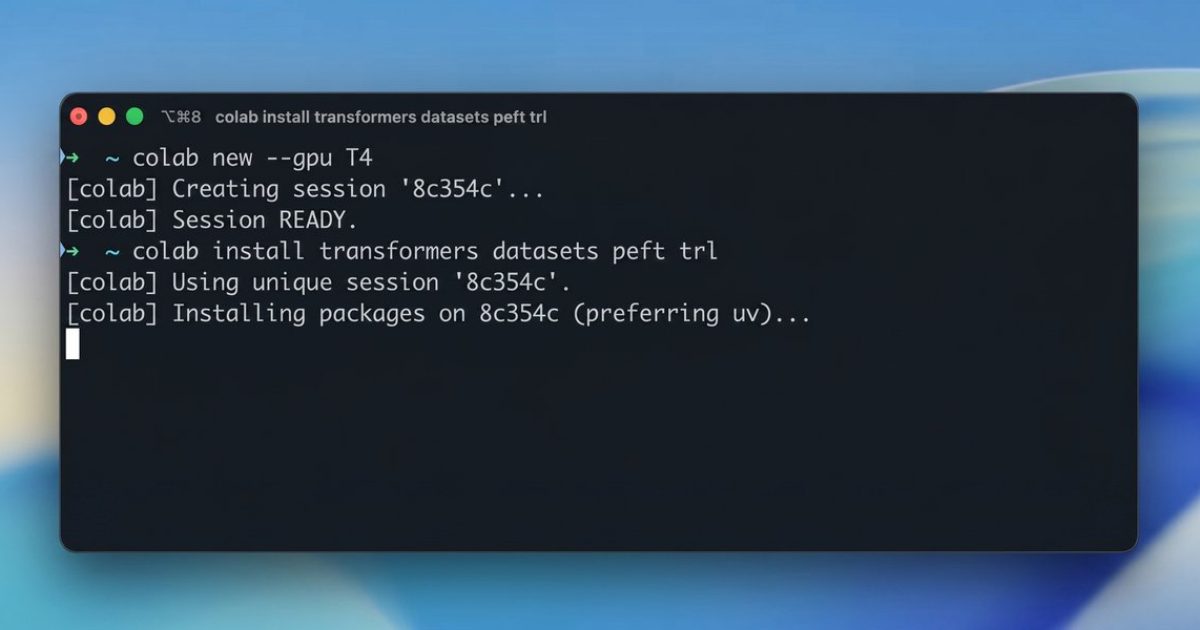
Google’s introduction of the Colab CLI marks a subtle but significant shift in how developers and AI practitioners will engage with cloud-based computational environments. The ability to interact with remote Colab runtimes directly from a local terminal unlocks a new level of automation and integration possibilities, moving beyond the traditional browser-based interface. This isn't about replacing the familiar Colab notebook experience; instead, it's about expanding its utility into workflows that demand greater programmatic control and scripting capabilities. The timing of this release is particularly relevant given the increasing sophistication of AI agents and the need for robust tooling to manage their execution and data pipelines, a theme explored in our recent article The Impact Of Humanoid Robots On Humanity. Integrating Colab into automated pipelines becomes far more streamlined, allowing for tasks like model training, hyperparameter tuning, and data processing to be orchestrated with greater precision and efficiency.
The benefits extend beyond simply automating repetitive tasks. Developers can now leverage existing command-line tools and scripting languages to manage Colab resources, making it easier to incorporate Colab into continuous integration/continuous deployment (CI/CD) pipelines. This allows for more sophisticated testing and deployment strategies, particularly for machine learning models. The Colab CLI also opens doors for creating custom AI agents that can autonomously interact with Colab environments, executing code, managing data, and monitoring performance without constant human intervention. It's a natural evolution, mirroring the broader trend of bringing the power of cloud computing closer to developer workflows. For those seeking to optimize numerical performance within these environments, understanding techniques like vectorization is key, as discussed in 3 NumPy Tricks for Numerical Performance. The CLI allows for more fine-grained control over the underlying hardware and libraries used in these computations. Moreover, the underlying efficiency of model implementations – like those detailed in [hubert.cpp, a C++ implementation of distilHuBERT [P]]( /post/hubert-cpp-a-c-implementation-of-distilhubert-p-cmqavo4ph000vyt0ppgghcmkd) – will shine through when integrated into automated, CLI-driven workflows.
While Colab has long been a popular platform for experimentation and learning, this CLI provides a crucial bridge to production-level use cases. The accessibility of Colab, coupled with the power of the command line, creates a compelling proposition for teams looking to democratize access to AI development resources. Previously, integrating Colab into complex workflows often required cumbersome workarounds or reliance on third-party tools. The CLI removes these barriers, allowing developers to leverage Colab’s free GPU resources and pre-configured environment more seamlessly. This shift aligns with a broader movement towards making AI development more accessible and efficient, reducing the technical debt associated with managing complex infrastructure. It also represents a recognition that many developers are already comfortable and productive within command-line environments, and providing a CLI interface caters directly to that preference.
Ultimately, the Google Colab CLI exemplifies a move toward greater flexibility and control within the cloud-based AI development space. It’s a pragmatic response to the evolving needs of developers and researchers who are increasingly relying on automated pipelines and AI agents. It’s exciting to consider what new paradigms of AI development will emerge as this tool matures and finds wider adoption. A key question to watch will be how the CLI’s capabilities evolve to support more complex orchestration scenarios, potentially including integration with containerization technologies like Docker and Kubernetes, further blurring the lines between cloud-based development environments and traditional infrastructure.
Google has announced the Google Colab CLI, a command-line tool that allows developers and AI agents to interact with remote Colab runtimes directly from a local terminal.
By Daniel DominguezRead on the original site
Open the publisher's page for the full experience