Guardrails for LLMs: Measuring AI ‘Hallucination’ and Verbosity
Our take
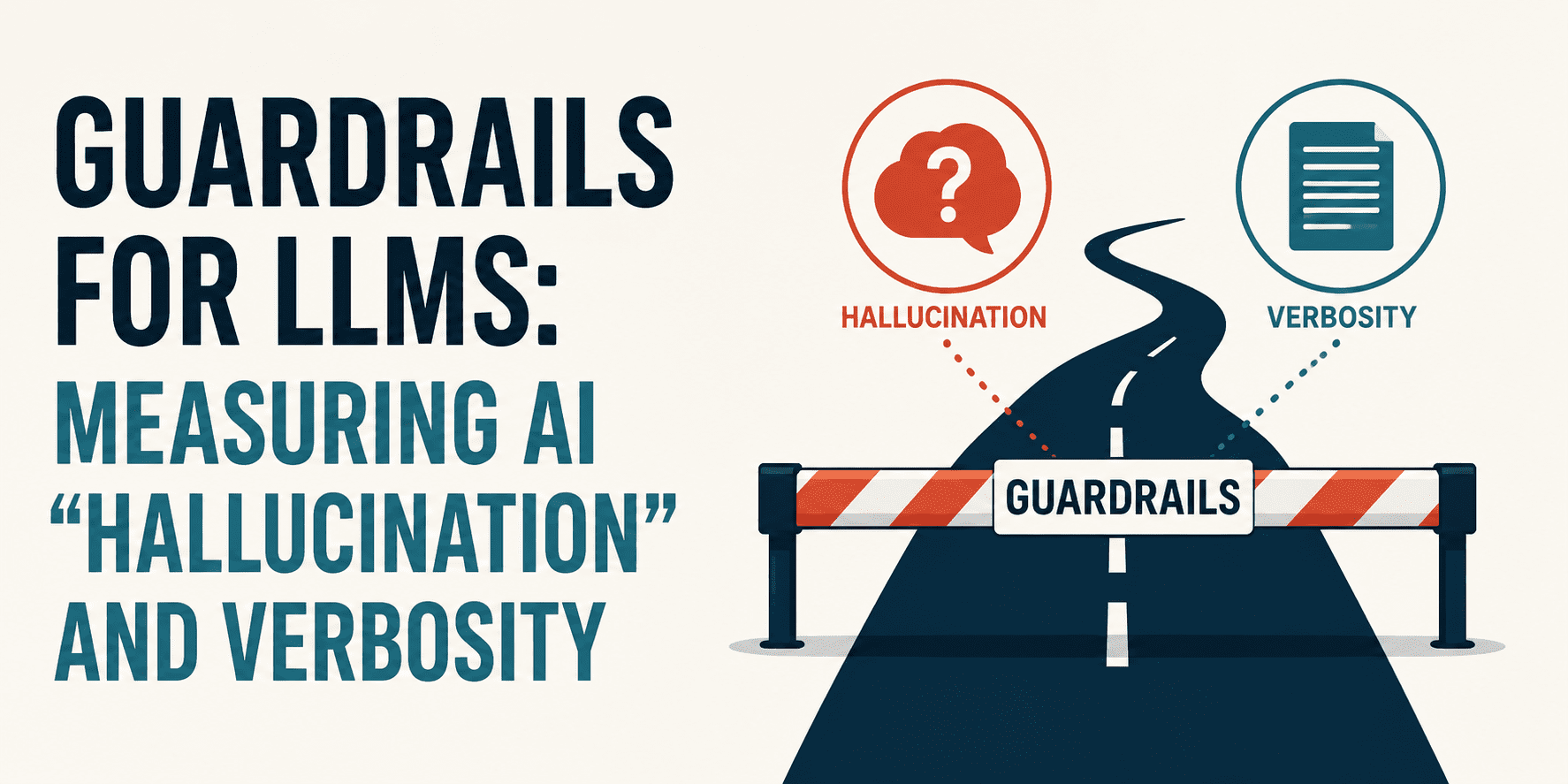
As large language models move from experimental tools to embedded features in daily workflows, a critical challenge is emerging: ensuring these systems deliver precise, trustworthy responses rather than verbose or hallucinated outputs. The infrastructure being developed to measure and control AI verbosity and inaccuracy represents more than a technical adjustment—it signals a maturation of the field, shifting focus from raw capability to reliable performance. This evolution matters because inconsistent outputs don't just frustrate users; they undermine confidence in systems increasingly integrated into customer service, content creation, and decision-making processes.
Consider how this plays out in real products. When Google adds Gemini-powered Dictation to Gboard, positioning it as a competitive alternative to dedicated transcription services, the feature's success hinges on delivering accurate, concise results rather than rambling explanations. Similarly, Google unveils Googlebooks, a new line of AI-native laptops designed from the ground up for Gemini—if the software doesn't consistently meet user expectations for reliability and precision, even purpose-built hardware falls short. These deployments reveal that measurement infrastructure isn't just about fixing problems; it's about building the foundation for trustworthy AI integration.
The measurement challenge is particularly nuanced because verbosity and hallucination often correlate with confidence—the most persuasive AI responses aren't necessarily the most accurate. Traditional evaluation metrics focused solely on factual correctness miss the subtler dynamics of tone, relevance, and user intent that shape actual experience. Developing meaningful guardrails requires understanding not just what constitutes an "incorrect" answer, but what users actually need in different contexts. A customer service bot explaining a return policy requires different communication patterns than a research assistant brainstorming options, yet both must maintain accuracy while adapting their delivery style.
What emerges is a need for context-aware controls that can adapt response styles based on task requirements and user expectations. The infrastructure being built for measurement isn't merely about limiting negative behaviors—it's enabling more sophisticated, appropriate interactions. This represents a shift from treating AI as a general-purpose oracle to designing systems that understand when to be brief, when to elaborate, and when to acknowledge uncertainty.
The question moving forward isn't whether these measurement challenges will be solved, but which organizations will master the balance between capability and constraint—and how that mastery will reshape user expectations for what constitutes genuinely helpful AI versus simply powerful technology.
Read on the original site
Open the publisher's page for the full experience