How Netflix Scaled Its Real-Time Service Map
Our take
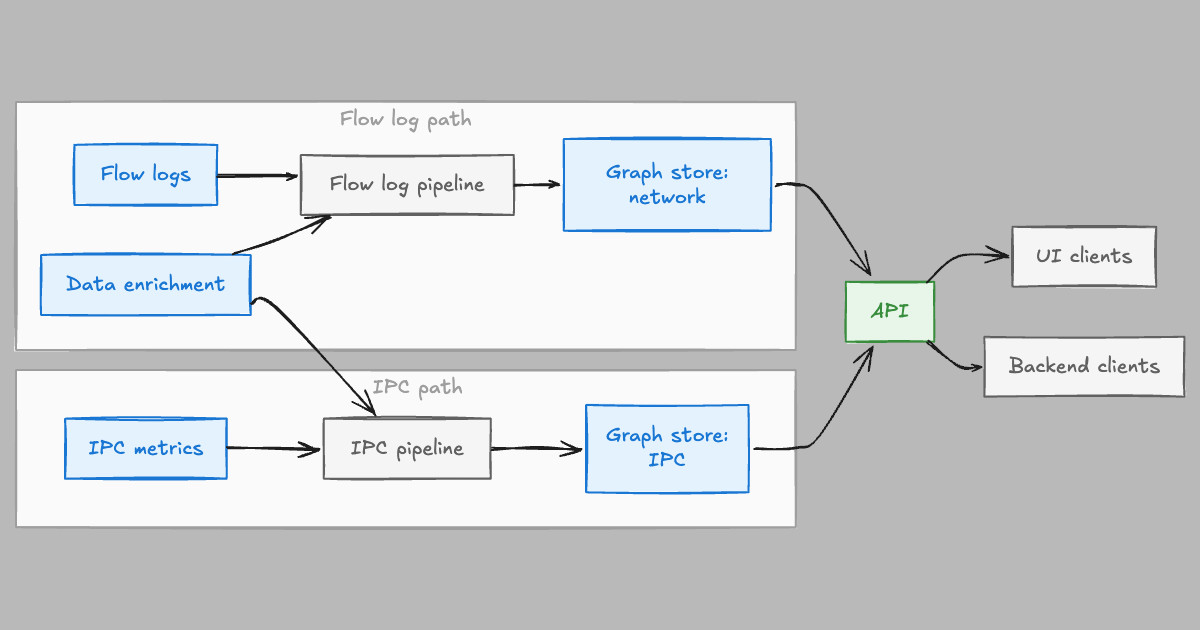
Netflix’s recent detailing of the redesign behind Service Topology, their real-time service dependencies map, provides a fascinating case study in scaling observability infrastructure to production levels. It’s a topic increasingly vital for organizations navigating the complexities of modern microservice architectures. As systems grow in scope and interconnectedness, understanding the real-time relationships between services becomes paramount for troubleshooting, performance optimization, and proactive incident prevention. This isn't just about knowing *what* services exist, but *how* they interact and the potential impact of failures cascading through the system. The challenges Netflix faced, and the innovative solutions they implemented, offer valuable lessons for anyone building or maintaining similarly complex distributed systems. For a deeper dive into the challenges of observability in a distributed environment, consider exploring The Observability Landscape and Building Observability Pipelines.
The specific technical choices Netflix made—separating intermediary resolution, enrichment, and persistence into distinct pipeline stages—demonstrate a thoughtful approach to managing complexity and improving throughput. Breaking down the processing into discrete units allows for independent scaling and optimization of each stage. The decision to propagate backpressure to Kafka, rather than dropping records, is particularly noteworthy. Dropping data, while seemingly a quick fix for overload, introduces inconsistencies and can obscure the root cause of performance issues. By feeding backpressure signals, the system allows upstream services to throttle their output, preventing further load and maintaining data integrity. This highlights a shift towards more resilient and adaptive architectures, recognizing that graceful degradation is often preferable to abrupt failure. The shift from gRPC to server-sent events for high-volume internal transfers also speaks to a focus on efficiency and scalability, leveraging a simpler protocol optimized for unidirectional data flow.
The broader significance of this development extends beyond Netflix's specific implementation. It reinforces the trend toward increasingly sophisticated observability solutions that are not just passive monitoring tools, but active components in the system's overall resilience and performance. Traditional monitoring approaches often struggle to keep pace with the velocity and complexity of modern applications. Service Topology represents a move towards a more dynamic and real-time understanding of system behavior, allowing engineers to proactively identify and address potential issues before they impact users. Furthermore, the emphasis on architectural choices that prioritize data integrity and backpressure handling underscores the importance of building observability into the system from the ground up, rather than bolting it on as an afterthought. This aligns with the growing recognition that observability is not just about collecting data, but about designing systems that are inherently observable and adaptable. You might find Principles of Observability a useful resource for understanding these foundational concepts.
Looking ahead, the evolution of Service Topology and similar real-time dependency mapping tools raises a compelling question: will these systems eventually become self-healing, capable of automatically detecting and mitigating performance bottlenecks or failures without human intervention? The increasing sophistication of AI and machine learning offers the potential to automate many of the tasks currently performed by observability engineers. While full autonomy may be years away, we can anticipate seeing increasingly intelligent observability solutions that proactively identify and resolve issues, freeing up engineers to focus on more strategic initiatives. The challenge will be ensuring that these automated systems are reliable, transparent, and aligned with business objectives, preventing unintended consequences and maintaining human oversight.
Netflix has described how it redesigned the streaming pipeline behind Service Topology, its real-time service dependencies map, to support production scale. The system uses three stages to separate intermediary resolution from enrichment and persistence, propagates backpressure to Kafka rather than dropping records, and uses server-sent events instead of gRPC for high-volume internal transfers.
By Eran StillerRead on the original site
Open the publisher's page for the full experience