How to Build Vector Search From Scratch in Python
Our take
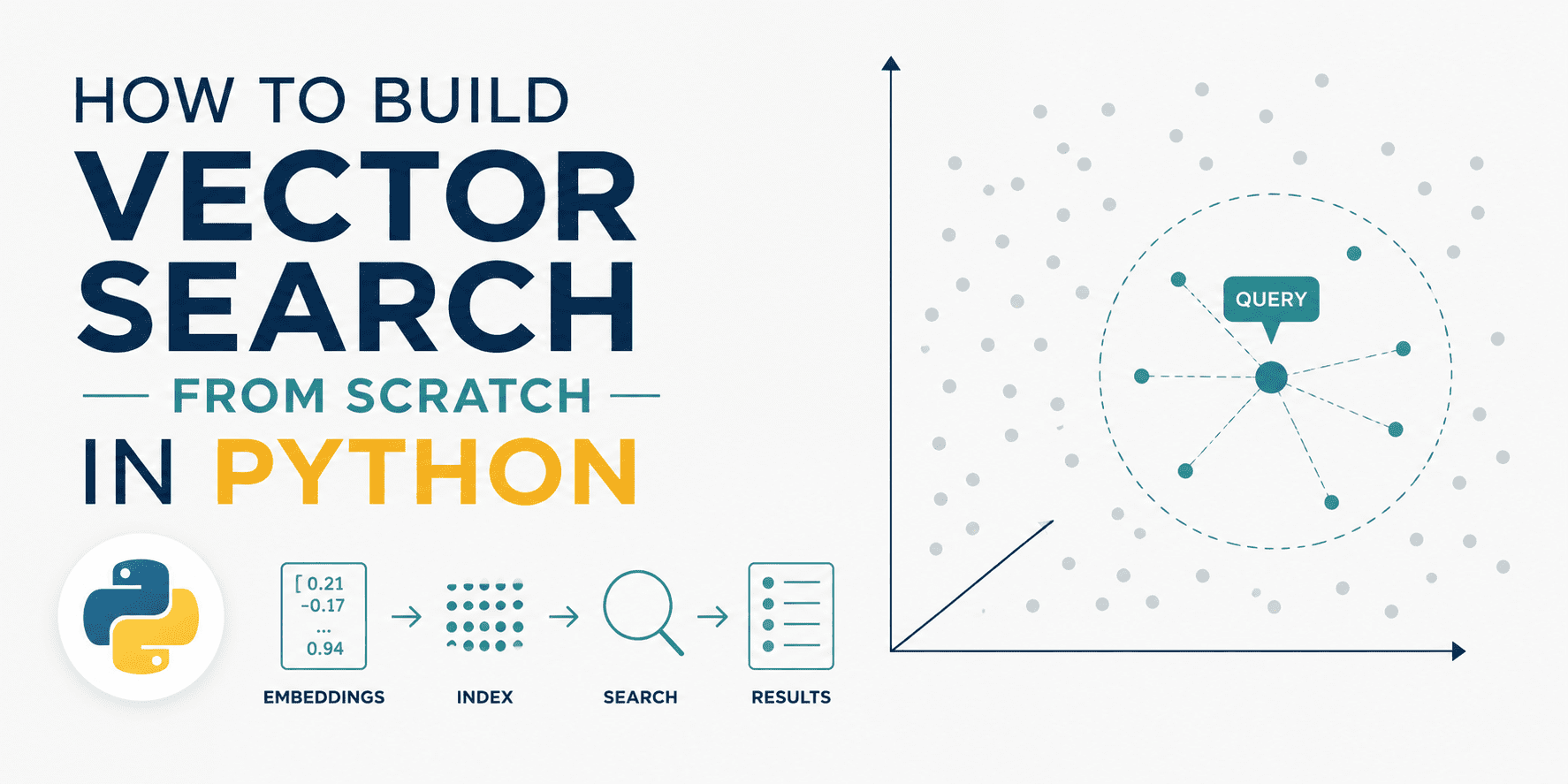
Building a vector search engine from scratch in Python might seem like an exercise reserved for machine learning engineers, but it represents a pivotal moment in how we think about data retrieval and organization. For users navigating the complexities of modern information management, this shift from keyword-based to semantic search is nothing short of transformative. After all, when was the last time a traditional spreadsheet — like the ones grappling with Numbers changing to hashtags when converting to any date format — truly understood the intent behind a query? Vector search bridges that gap, converting data into numerical representations that capture meaning, not just syntax. It’s a powerful reminder that the tools we’ve relied on for decades are being reimagined, not just replaced.
The process of constructing such a system involves three core components: embeddings, similarity scoring, and retrieval logic. Embeddings translate data — whether text, images, or metadata — into high-dimensional vectors that preserve relationships. Similarity scoring, often through cosine similarity or Euclidean distance, then measures how closely these vectors align. Finally, retrieval logic determines which results matter most, ranking them based on relevance. This is where the contrast with legacy approaches becomes stark. Consider a scenario where How to find missing data leaves you manually sifting through spreadsheets for certification gaps. A vector search engine would instead surface those gaps automatically, interpreting context and intent rather than rigid field matches. The implications extend far beyond code repositories or research databases; they apply to any system where precision and nuance matter.
What makes this particularly compelling is how accessible the underlying concepts have become. You no longer need a PhD in linear algebra to grasp the fundamentals. Python’s ecosystem — with libraries like NumPy, scikit-learn, and increasingly, frameworks like PyTorch and TensorFlow — provides intuitive abstractions that democratize these techniques. For teams still wrestling with fragmented workflows or siloed data sources, the ability to prototype a semantic search layer is a gateway to smarter decision-making. It’s not about discarding existing tools but enhancing them, layering intelligence onto familiar interfaces. The real power lies in recognizing that data isn’t just structured or unstructured — it’s meaningful, and meaning can be computed.
Yet building from scratch also illuminates the assumptions we carry. Every choice — from the embedding model to the similarity metric — shapes the system’s behavior. A cosine similarity might prioritize orientation over magnitude, while Euclidean distance emphasizes absolute proximity. These aren’t mere implementation details; they’re design philosophies that reflect what you value in results. As AI-native tools evolve, understanding these nuances becomes critical, especially for users who want to move beyond black-box solutions toward purpose-built intelligence.
The question isn’t whether vector search will become standard — it’s how quickly teams will integrate it into their workflows. Will we see AI-enhanced spreadsheets that anticipate needs, surfaces that learn from usage patterns, and interfaces that blur the line between querying and conversing? The foundations are being laid today, one embedding at a time.
Read on the original site
Open the publisher's page for the full experience