How to connect MCP servers with Claude (Claude desktop and Claude Code)
Our take
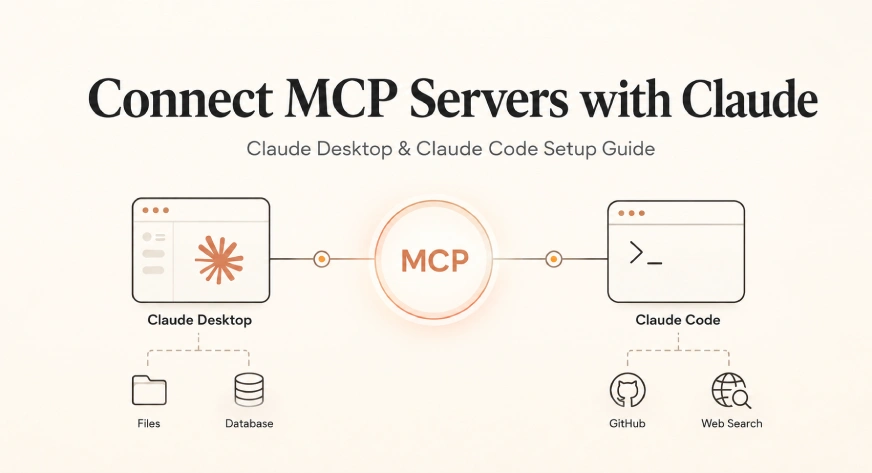
The increasing ability of large language models (LLMs) like Claude to interact with external systems marks a significant shift in how we approach data analysis and workflow automation. The Analytics Vidhya article detailing the connection of MCP servers to Claude, as outlined here, highlights a practical step in this evolution. For too long, LLMs have been largely confined to the realm of conversational interaction, limited by the data available within their training sets or the immediate chat window. Expanding their reach to encompass external data sources, such as those managed by MCP servers, unlocks a new level of utility, allowing them to become truly integrated tools within complex operational environments. This capability moves beyond simple query answering and into the territory of automated data manipulation, reporting, and even proactive decision support. Understanding the nuances of connecting these systems, as the article does for both Claude Desktop and Claude Code, is a crucial first step for organizations eager to leverage these powerful models. This development sits alongside the broader exploration of integrating LLMs with data warehouses, as discussed in this piece on connecting LLMs to Snowflake, demonstrating a growing trend toward bridging the gap between generative AI and established data infrastructure.
The core benefit of this connectivity lies in the ability to move beyond static datasets and engage with dynamic, real-time information. Imagine a scenario where Claude, connected to an MCP server, can automatically generate performance reports, identify anomalies in operational data, or even trigger automated workflows based on pre-defined rules. This moves away from the traditional, often manual, process of extracting data from various sources, feeding it into a spreadsheet, and then manually analyzing it. The shift allows data professionals to focus on higher-level strategic tasks, leaving the more repetitive and time-consuming data wrangling to AI. While the article focuses on the technical ‘how-to’ of the connection, the implications are far broader. It suggests a future where AI assistants become indispensable partners in managing and interpreting complex operational data, fundamentally reshaping how businesses monitor and optimize their performance. Furthermore, the distinction between Claude Desktop and Claude Code's setup, as detailed in the article, underscores the growing specialization within the LLM landscape; Code’s focus on development workflows suggests a powerful tool for developers needing to access and manipulate data within code repositories managed by MCP servers.
However, this increased connectivity also introduces new considerations. Data security and access control become paramount; ensuring that Claude only accesses and manipulates data it is authorized to handle is critical. The article rightly focuses on the technical setup, but organizations implementing this type of integration must also establish robust governance frameworks to mitigate potential risks. Furthermore, the quality of the data flowing from the MCP servers directly impacts the accuracy and reliability of Claude's outputs. Garbage in, garbage out remains a fundamental principle, and careful data validation and cleansing are essential steps in the integration process. The potential for bias within the data, and how that bias might be amplified by Claude's analytical capabilities, is another important consideration that needs to be addressed proactively. We've seen similar conversations evolve around the application of LLMs to financial data, as explored in this article on LLMs and financial risk assessment.
Looking ahead, the continued expansion of LLM connectivity to external systems represents a pivotal moment for data management. The ease with which we can now integrate these models into existing workflows will drive further innovation and adoption. The challenge will be to move beyond simple integrations and build truly intelligent systems that can proactively identify opportunities, mitigate risks, and automate complex processes. A key question to watch will be how these integrations evolve to support more sophisticated workflows, potentially incorporating real-time feedback loops and adaptive learning capabilities. Will we see a future where LLMs not only analyze data but also actively participate in shaping it, creating a dynamic and self-optimizing data ecosystem?
Connecting MCP servers to Claude allows it to work with external tools, files, databases, repositories, and other systems instead of operating only within the chat window. The setup differs slightly between Claude Desktop and Claude Code, but both can be configured in just a few steps. In this article, you’ll learn how to connect MCP […]
The post How to connect MCP servers with Claude (Claude desktop and Claude Code) appeared first on Analytics Vidhya.
Read on the original site
Open the publisher's page for the full experience