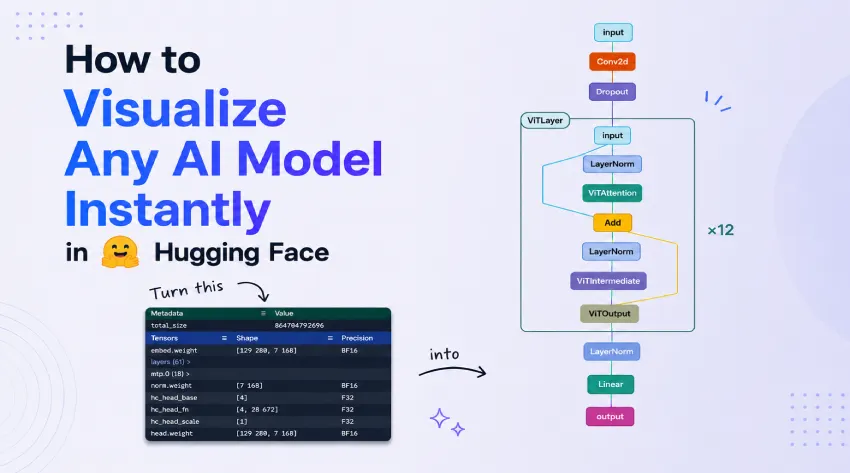
In the rapidly evolving landscape of artificial intelligence, comprehending the intricacies of modern AI architectures is a growing challenge. The complexity often found in Hugging Face repositories, complete with extensive configuration files, layer definitions, and model cards, can overwhelm even seasoned developers. These technical documents typically outline what a model accomplishes but seldom provide clarity on how it is constructed internally. This disconnect can hinder innovation and productivity, as many developers find themselves mentally reconstructing architectures, which is not only time-consuming but also prone to error.
This situation resonates with broader themes in the tech community, especially as businesses increasingly seek to integrate AI solutions into their workflows. The transformative potential of AI-native workflows, pointing to the necessity for tools that streamline the development process, is explored in "I Let CodeSpeak Take Over My Repository". Similarly, understanding the networking decisions behind OpenAI's infrastructure, as discussed in "The Counterintuitive Networking Decisions Behind OpenAI's 131,000-GPU Training Fabric," underscores the importance of clear architecture visualization in optimizing performance and resource allocation. These insights collectively emphasize that a clearer understanding of AI frameworks is crucial for harnessing their full potential.
The need for tools that can demystify complex architectures is not just about convenience; it's about empowerment and innovation. When developers can visualize AI model architectures easily, they are better equipped to make informed decisions about their applications. This capability leads to a more agile development process, where teams can iterate quickly, adapt to changes, and ultimately deliver better products. The accessibility of such tools can also bridge the gap for those who may not have deep technical expertise but are eager to leverage AI technologies. This aligns with our progressive vision for data management, where innovative solutions are designed to enhance user productivity rather than overwhelm them with complexity.
Moreover, the challenge of understanding AI architectures speaks to a larger issue in the tech sphere: the need for human-centered design in technological tools. As AI continues to infiltrate various aspects of our lives and work, ensuring that these technologies are approachable is paramount. An essential question about how we can make complex AI systems more transparent and user-friendly is raised. This focus on clarity can foster a more inclusive tech environment where diverse skill sets can thrive.
Looking forward, as AI continues to advance, the question remains: How will we ensure that the tools we develop not only keep pace with innovation but also enhance understanding and accessibility? The evolution of AI architecture visualization is a critical step in this journey, and observing its development will be essential for anyone invested in the future of AI applications. By prioritizing clarity and usability, we can transform the way we interact with complex systems, paving the way for a more empowered and innovative community of developers and users alike.