How Zalando Built an In-Process Client-Side Load Balancer for One Million Requests per Second
Our take
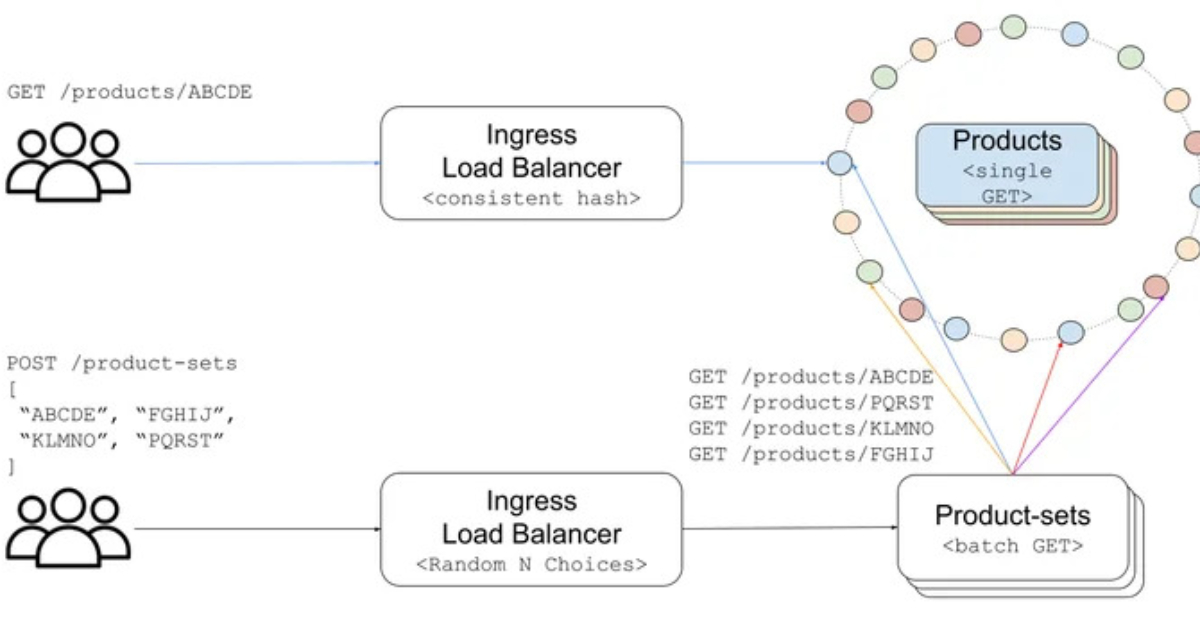
Zalando’s recent engineering deep dive into their client-side load balancer implementation, handling a staggering one million requests per second, offers a compelling case study in the evolution of distributed systems architecture. The move away from traditional, infrastructure-based load balancing towards an in-process solution is a significant shift, driven by the increasing demands for predictable performance and granular observability in high-throughput environments. This approach directly addresses the challenges of managing latency and pinpointing failure sources in complex microservice architectures. We’ve previously explored similar themes in our piece on Service Mesh Adoption, where the complexities of routing and observability are central concerns. Furthermore, the focus on client-side implementation aligns with the broader trend of shifting responsibility for resilience and efficiency closer to the application layer, as detailed in Building Resilient Systems. The fact that Zalando, a large-scale e-commerce platform, has found success with this approach lends considerable weight to its viability for other organizations facing similar scaling challenges.
The core innovation lies in moving the load balancing logic *into* the client application itself, rather than relying on external load balancers. This fundamentally changes the dynamics of request routing. Traditionally, external load balancers abstract away the underlying infrastructure, often masking latency spikes and making it difficult to trace the root cause of errors. Zalando’s solution, by contrast, provides a much clearer picture of performance and failures as they originate closer to the point of request generation. This increased visibility allows for more targeted optimization efforts and faster troubleshooting. The reported reduction in infrastructure costs is a significant benefit, stemming from the reduced need for dedicated load balancing infrastructure and potentially improved resource utilization across the entire system. While the complexity of implementing and maintaining such a system within each client application is undeniable, the gains in predictability and observability appear to outweigh this cost for Zalando's specific use case.
The engineering choices behind Zalando’s implementation – specifically, the use of an in-process approach – are particularly noteworthy. This eliminates the network hops inherent in traditional load balancing, directly contributing to lower latency. However, it also introduces new considerations around code deployment and consistency. Ensuring that all client instances are running the correct load balancing logic is crucial. The article suggests a robust deployment pipeline and versioning strategy were key to their success. This highlights a broader truth about modern distributed systems: the architectural choices themselves are only part of the equation. Operational excellence, including rigorous testing, monitoring, and automated deployment, is equally essential for realizing the full benefits of any new architecture. Furthermore, the ability to dynamically adjust load balancing strategies based on real-time conditions – a capability often enhanced by client-side logic – allows for a level of responsiveness that’s difficult to achieve with static, infrastructure-based solutions.
Looking ahead, the success of Zalando’s client-side load balancer raises an important question: will this approach become a more common pattern for high-throughput APIs? While it's unlikely to completely replace traditional load balancers – particularly in scenarios where simplicity and centralized management are paramount – we anticipate seeing increased adoption of client-side techniques for specific use cases where predictable latency and granular observability are critical. The challenge will be developing standardized libraries and frameworks that simplify the implementation and management of these systems, making them more accessible to a wider range of organizations. A key area to watch will be how service mesh technologies evolve to incorporate and abstract away some of the complexities of client-side load balancing, providing a more streamlined and manageable path toward this increasingly valuable architectural pattern.
The engineering team at Zalando recently described the design and implementation of an in-process, client-side load balancer for a high-throughput API handling around 1 million requests per second. The result was more predictable latency, a drop in infrastructure costs, and better visibility into where failures actually originate.
By Renato LosioRead on the original site
Open the publisher's page for the full experience