Inside Atlassian’s Forge Billing Architecture for Distributed Usage Tracking at Scale
Our take
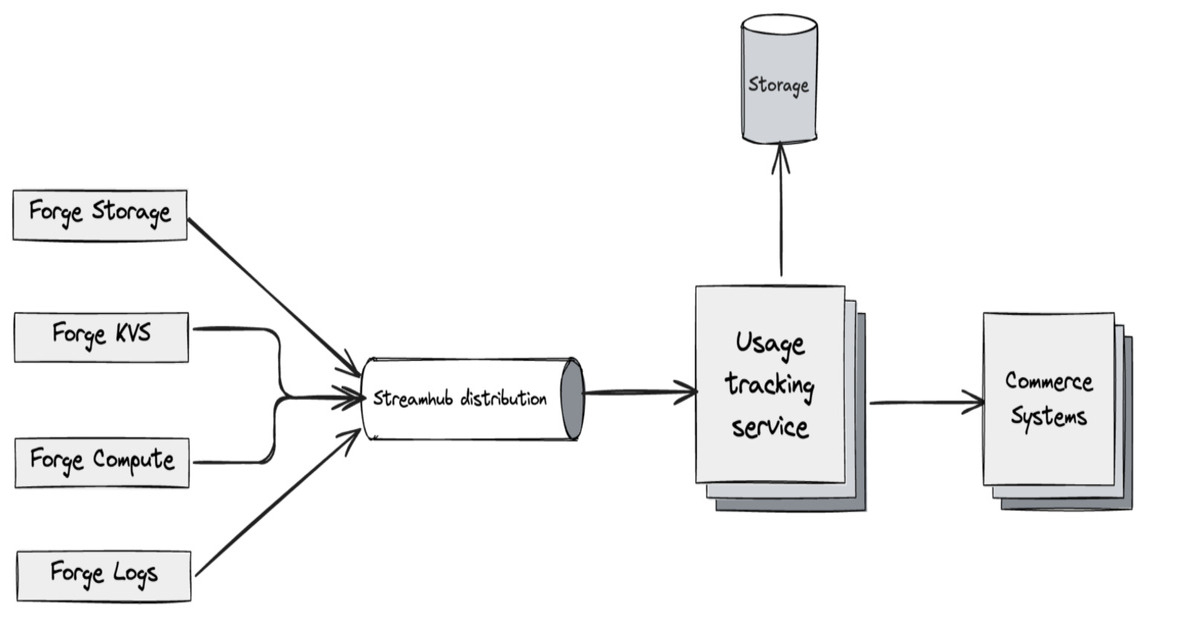
Atlassian’s unveiling of its Forge billing architecture represents a significant advancement in the often-overlooked world of usage-based billing at scale. The challenges inherent in accurately tracking, attributing, and aggregating usage across a distributed cloud ecosystem are considerable, and Atlassian’s solution, as detailed by Leela Kumili, demonstrates a sophisticated approach. It's a development that resonates strongly with the broader trends in AI and cloud computing, where microservices and event-driven architectures are becoming increasingly prevalent. The complexity of managing billing in such environments is often underestimated, leading to inaccuracies, disputes, and ultimately, a poor user experience. We've previously explored related challenges in ensuring safe concurrency on the GPU [Fearless Concurrency on the GPU: Safe GPU inference in Rust, competitive with vLLM/SGLang], highlighting the need for robust systems in handling distributed workloads, and the discussion around analyzing probe strength [How do you analyze the relative "strength" of probes?] points to the growing importance of precise measurement and attribution as AI models become more complex and multifaceted.
The core of Forge's design—a streaming pipeline coupled with idempotent processing and layered storage—is particularly noteworthy. This architecture allows for both near real-time visibility into usage patterns and reliable reconciliation, crucial for building trust and transparency with users. The emphasis on idempotency, ensuring that operations can be repeated without unintended consequences, is a hallmark of well-engineered distributed systems. Many companies attempt usage-based pricing, but falter due to the underlying infrastructural complexity. The details shared about Atlassian’s specific implementation—the streaming pipeline, the meticulous deduplication process, and the tiered storage—provide valuable insights for other organizations grappling with similar challenges. It's not just about *having* usage-based pricing; it's about having *accurate* and *reliable* usage-based pricing, and that requires architecture like this.
The broader significance of Forge extends beyond Atlassian’s own product ecosystem. The principles and techniques employed—streaming data processing, idempotent operations, and layered storage—are applicable to a wide range of industries and use cases where granular usage tracking is essential. As we move towards increasingly complex, AI-powered services, the ability to accurately measure and attribute consumption will become even more critical. Consider the implications for AI model serving, where cost optimization hinges on understanding precisely how each model is being utilized. The challenges Atlassian has addressed with Forge offer a blueprint for other companies looking to move beyond traditional subscription models and embrace a more flexible and data-driven approach to pricing. This is especially relevant when we consider the ongoing explorations into targeted SFT as a mechinterp method [Contrastive targeted SFT as a mechinterp method - has anyone mapped causal dependency interactions this way?], where accurate attribution of model behavior is crucial for understanding and optimizing performance.
Looking ahead, the evolution of Forge and similar platforms will likely focus on further automation and intelligence. Imagine a system that not only tracks usage but also proactively identifies anomalies, predicts future consumption patterns, and optimizes pricing strategies in real-time. The potential for integrating machine learning into these billing systems is immense, enabling a level of dynamism and responsiveness that is currently unattainable. A key question to watch is how these platforms will handle the increasing complexity of multi-tenant environments and the challenges of attributing usage across diverse services and user groups. Ultimately, the success of usage-based pricing will depend not only on the technical sophistication of the underlying infrastructure but also on the ability to build trust and transparency with users.
Atlassian details the Forge billing platform built for usage-based pricing across its cloud ecosystem. It processes large-scale usage events with correct attribution, deduplication, and aggregation using a streaming pipeline, idempotent processing, and layered storage to enable accurate billing, near real-time visibility, and reliable reconciliation across distributed services.
By Leela KumiliRead on the original site
Open the publisher's page for the full experience