Loss Function Explained For Noobs (How Models Know They Are Wrong)
Our take
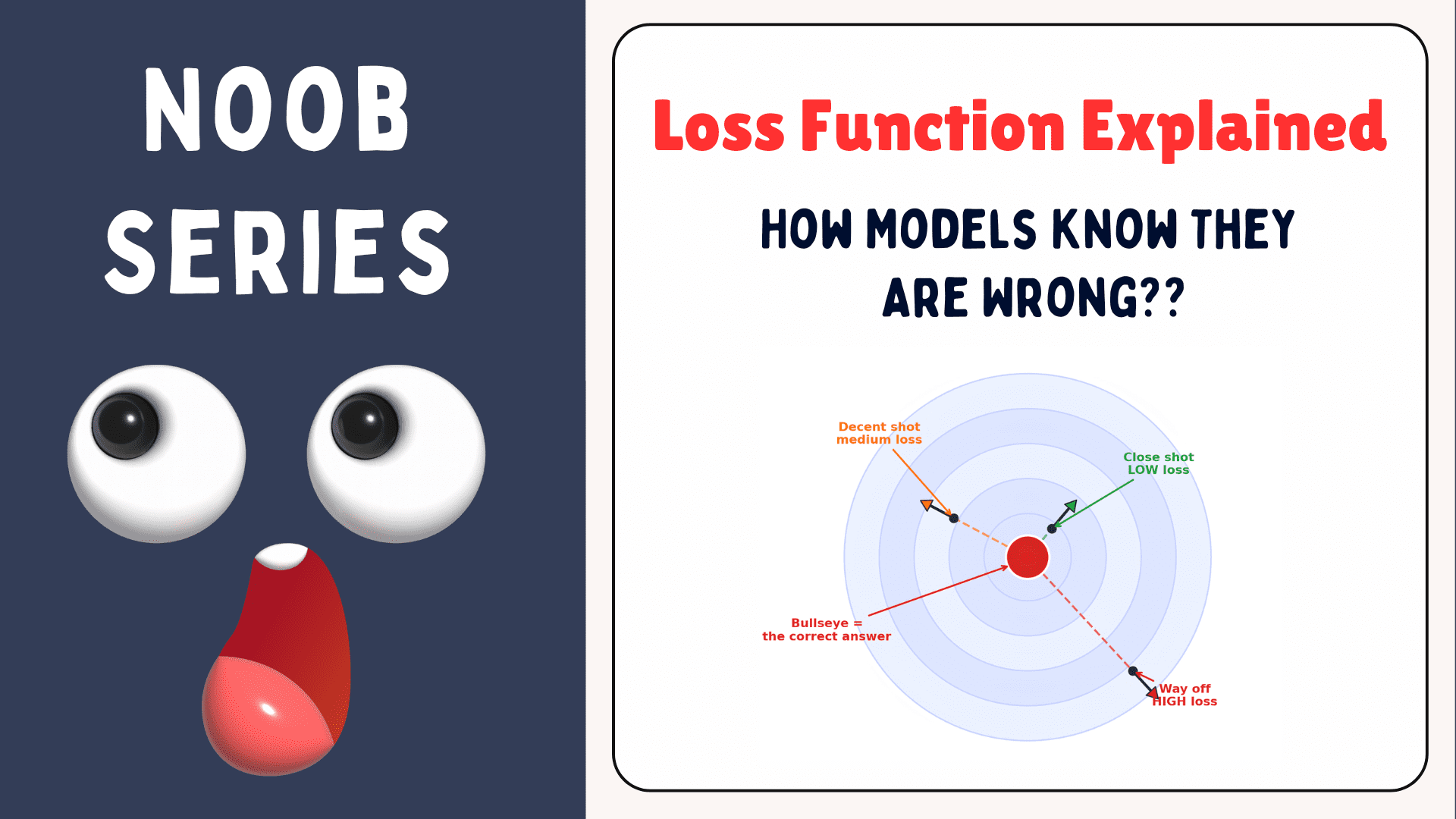
The recent piece, "Loss Function Explained For Noobs (How Models Know They Are Wrong)," is a welcome addition to the growing body of accessible machine learning explanations. Demystifying loss functions is crucial; it’s the silent engine driving the learning process in any model, yet often remains a black box for those outside of deeply technical roles. Understanding how a model quantifies its errors and adjusts its parameters is fundamental to appreciating the underlying mechanics of AI. It's especially pertinent now, as organizations increasingly leverage AI for complex data analysis – a capability highlighted by OpenAI’s internal Kepler agent, discussed in their presentation AI Agents to Make Sense of Data at OpenAI. That agent's ability to query petabytes of data underscores the scale of the challenges and the importance of efficient, well-trained models, all of which hinge on a solid grasp of loss functions. The move toward more declarative UI building, as explored in TSRX: A Framework-Agnostic Alternative to JSX, also necessitates a deeper understanding of the data pipelines and models powering those interfaces.
The beauty of the "Noobs" guide lies in its clarity. It avoids the dense mathematical notation that often intimidates newcomers, instead focusing on the core concept: a loss function is essentially a metric that tells the model how far off its predictions are. The iterative process of minimizing this loss—adjusting internal parameters to reduce the error—is the cornerstone of machine learning. While the article rightly simplifies the complexities, it’s an excellent starting point for those moving beyond a purely black-box usage of AI. Many aspiring data scientists, and even established engineers, find themselves in system design interviews, where demonstrating a conceptual understanding of these fundamentals—beyond simply choosing an algorithm—is paramount, as detailed in System Design for ML Interviews: 10 Real Problems Walked Through. A firm understanding of loss functions directly informs architectural choices and troubleshooting strategies within those systems.
The increasing accessibility of this knowledge is a positive trend. Historically, the intricacies of machine learning were largely confined to research papers and specialized courses. While that depth remains vital, the democratization of understanding—making these core concepts available to a broader audience—is essential for fostering innovation and empowering data-driven decision-making across industries. It’s no longer sufficient to simply *use* a machine learning model; organizations need individuals who can critically evaluate its performance, understand its limitations, and contribute to its ongoing improvement. This requires a more nuanced comprehension of the underlying principles, and resources like this guide play a crucial role in bridging that gap. The shift is away from simply deploying pre-trained models towards building and refining custom solutions—a trend that demands a more informed and technically literate workforce.
Looking ahead, the continued development of more sophisticated loss functions will be a key area of focus. Current approaches often rely on relatively simple metrics, but as models tackle increasingly complex problems, the need for loss functions that can accurately capture nuanced aspects of performance—such as fairness, robustness, and explainability—will only grow. How will we create loss functions that not only minimize error but also align with broader societal values? The rise of techniques like adversarial training and reinforcement learning, where the 'reward' itself can be considered a form of loss, suggest exciting avenues for future exploration. It's a question worth watching as we move towards increasingly autonomous and impactful AI systems.
Read on the original site
Open the publisher's page for the full experience