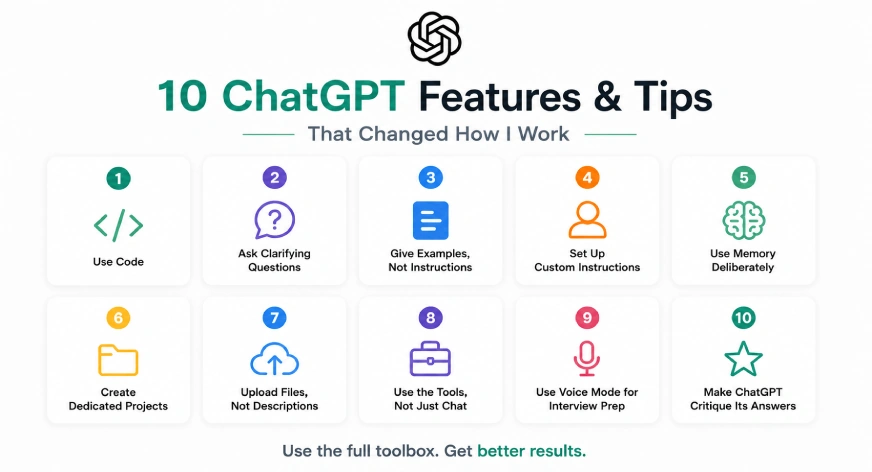
The recent Analytics Vidhya piece highlighting common ChatGPT usage pitfalls resonates deeply with our own observations about the evolving landscape of AI-native tools. Many initially approach large language models (LLMs) as advanced search engines, a perfectly reasonable starting point. However, this approach drastically underutilizes their potential. The shift from simple question-and-answer interactions to leveraging features like web browsing, file analysis, and memory retention represents a significant leap in capability, and one that unlocks transformative possibilities for data professionals. It's similar to how early spreadsheet users primarily focused on basic calculations, unaware of the complex modeling and automation capabilities that lay dormant within the software. We've seen analogous limitations in how users embrace newer AI-powered data tools, frequently overlooking the nuanced functionalities that can drastically improve workflow efficiency. This is further underscored by the growing focus on architectural decision-making, as explored in [How Lightweight ADRs and Architectural Advice Forums Can Support Architectural Decisions], highlighting the importance of understanding the broader context and capabilities of these tools. It's a reminder that thoughtful implementation, not just adoption, is key to realizing true value.
The core of the issue isn't a lack of understanding of *what* ChatGPT *is*, but rather a lack of awareness of *what it can do*. The emphasis on features like memory and web browsing is crucial because they move LLMs beyond isolated tasks and into the realm of collaborative, context-aware assistants. Imagine analyzing a complex dataset, then instantly using ChatGPT to research relevant market trends, all while maintaining a record of your previous prompts and analyses – that's a level of productivity far exceeding a traditional search-and-answer approach. The increasing sophistication of these models also necessitates a greater focus on security considerations, a point emphasized in [VS Code 1.123 Adds Two-Hour Extension Update Delay to Limit Supply Chain Attacks], reminding us that robust safeguards are essential as AI tools become increasingly integrated into workflows. The Athena Coalition's initiative, [Athena Coalition Brings Coordinated Defence to Open Source Security], further reinforces this need for a proactive approach to security within the AI ecosystem, ensuring that innovation isn't compromised by vulnerabilities.
The shift in perspective highlighted by the Analytics Vidhya piece isn't just about mastering ChatGPT; it's about rethinking how we interact with data and technology in general. It represents a move away from siloed tools and towards a more integrated, AI-assisted data management ecosystem. This transition requires embracing a mindset of continuous exploration and experimentation, actively seeking out and learning new functionalities rather than settling for the initial, more intuitive use cases. Just as the evolution of spreadsheets from simple calculators to powerful data analysis platforms demanded a broader understanding of their capabilities, so too does the rise of LLMs require a willingness to delve beyond surface-level interactions. This is particularly relevant for data professionals who are often juggling multiple tools and seeking ways to streamline their workflows and unlock deeper insights from their data.
Looking ahead, we anticipate a growing emphasis on prompt engineering and the development of specialized AI agents tailored to specific data tasks. The ability to effectively communicate with and guide these models will become a critical skill, akin to mastering advanced spreadsheet formulas. The question isn't simply *can* AI do this, but rather *how* can we best harness its capabilities to amplify human intelligence and transform the way we work with data? The continued evolution of these tools, and the increasing complexity of their capabilities, necessitates a proactive and adaptable approach to data management – one that embraces exploration and prioritizes user empowerment.