New Free eBook: Understanding Agentic AI, an Executive Briefing
Our take
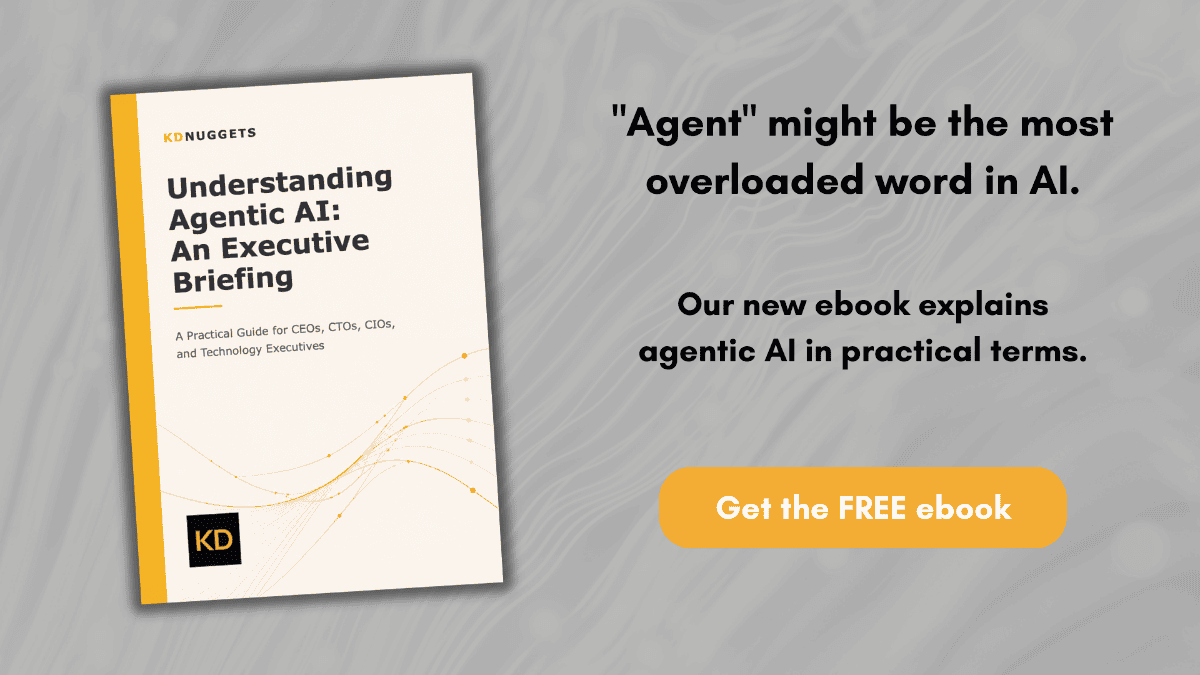
The emergence of "agentic AI" is rapidly shifting from a buzzword to a tangible force reshaping how businesses operate, and the release of this executive briefing signals a crucial step in demystifying this technology for leadership. Agentic AI, at its core, represents a move beyond passive AI assistants to systems capable of autonomously planning, executing, and adapting to achieve specific goals. It's a paradigm shift from simply responding to prompts to proactively driving outcomes, and understanding its underlying components – as this ebook promises to do – is vital for executives making strategic technology investments. We've previously explored the implications of autonomous workflows in The Rise of the Autonomous Spreadsheet and the challenges of aligning AI goals with business objectives in AI Governance: A Practical Guide, and this briefing provides a critical foundation for navigating both. The focus on a practical, component-based understanding – rather than abstract concepts – is particularly valuable, ensuring executives can assess the true capabilities and limitations of different agentic AI solutions.
The value of this briefing lies in its targeted audience and its commitment to clarity. Many discussions around agentic AI are laden with hyperbole, creating a sense of both excitement and confusion. By explicitly addressing CEOs, CTOs, and CIOs, the ebook acknowledges the need for a grounded, business-oriented perspective. Focusing on the *components* of a real agentic system – rather than simply declaring a product "agentic" – is a refreshing and necessary approach. It moves beyond marketing claims to offer a framework for evaluating the technical feasibility and potential ROI of these systems. This is especially important as the market becomes increasingly crowded with vendors vying for attention, many of whom may overstate their capabilities. A deeper dive into the architecture, planning mechanisms, memory systems, and tool usage capabilities of these agents is essential for discerning genuine innovation from clever branding. Consider the related exploration of AI tool orchestration in Building the AI Operating System - a concept intrinsically linked to the agentic AI paradigm.
The broader significance of this development is the acceleration of AI’s integration into core business processes. Agentic AI isn't about replacing humans; it's about augmenting their capabilities and automating tasks that are currently repetitive, time-consuming, or require specialized expertise. This can lead to significant gains in efficiency, productivity, and innovation. However, realizing these benefits requires a shift in mindset. Executives must move beyond viewing AI as a tool for specific tasks and embrace it as a platform for building autonomous workflows. This necessitates a focus on data governance, model transparency, and ethical considerations – all of which are amplified in the context of agentic AI. The ability to understand the "why" behind an agent's decisions, and to intervene when necessary, is paramount to building trust and ensuring alignment with business goals.
Looking ahead, the true test of agentic AI will be its ability to handle complexity and adapt to unpredictable environments. While current systems excel at well-defined tasks, their performance often degrades when faced with unexpected situations. The development of more robust planning algorithms, improved memory capabilities, and sophisticated reasoning engines will be crucial for unlocking the full potential of agentic AI. One key question to watch is how these systems will be integrated with existing enterprise infrastructure and workflows, and whether we’ll see the emergence of standardized frameworks for building and deploying agentic AI applications. The ability to seamlessly connect these agents to existing data sources and business processes will be a major differentiator in the coming years, ultimately determining which approaches truly transform the way we work.
Read on the original site
Open the publisher's page for the full experience