Pairing Claude Code with Local Models
Our take
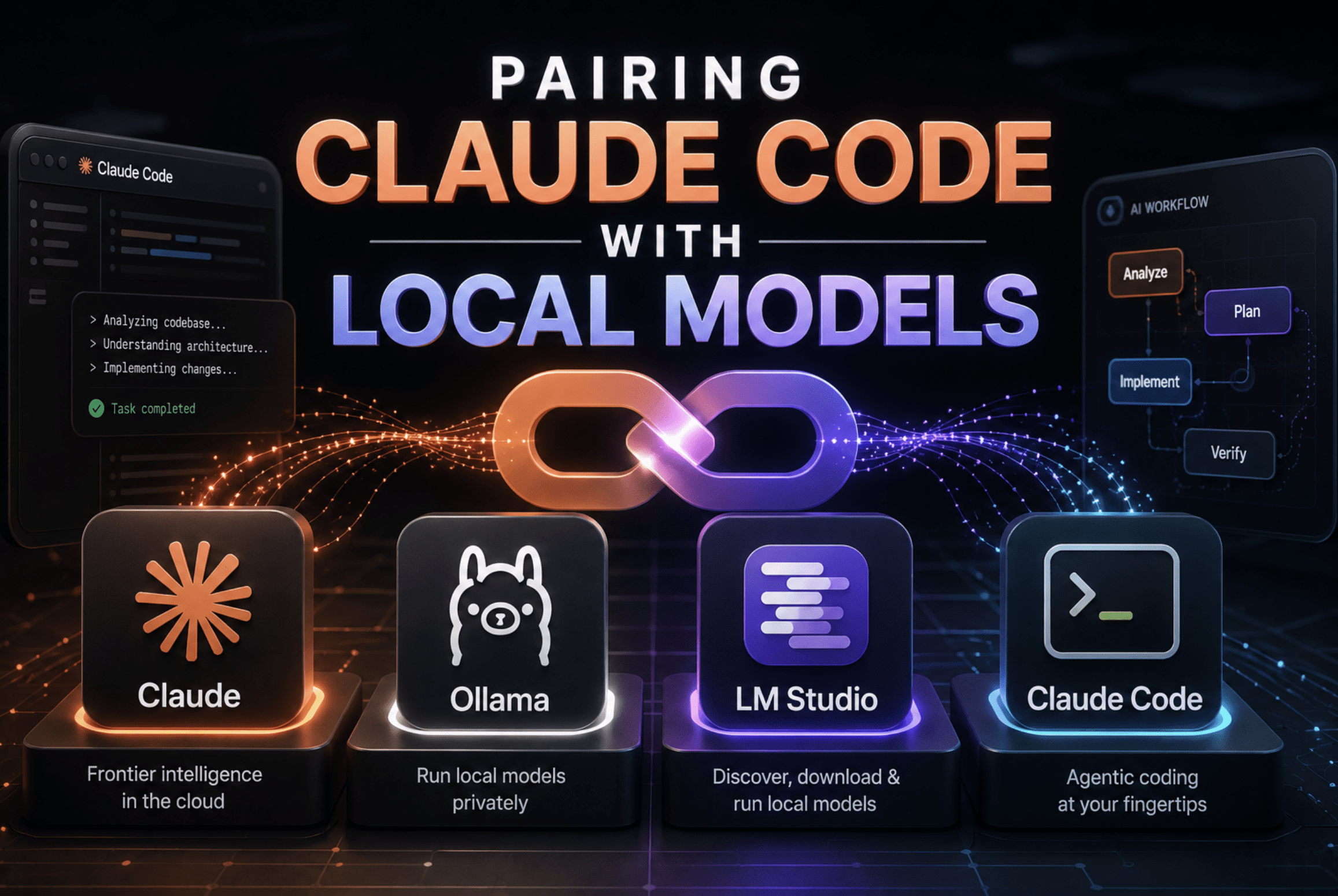
The recent assertion that local AI models will be “good enough” to handle the daily tasks of tools like Claude Code by 2026 carries significant weight, and deserves a closer look. This isn't merely a technical curiosity; it represents a fundamental shift in how developers and organizations will approach AI-powered coding assistance. The argument, essentially, is that the cost and latency benefits of running models locally—zero per-token cost and no rate limits—will outweigh the slight performance differences compared to cloud-based offerings like Claude Code for the vast majority of use cases. This resonates deeply with the growing movement toward data sovereignty and control, and aligns with efforts to build more robust and traceable AI workflows, as explored in our recent piece on [Scholialang: an open, vendor-neutral protocol for structured AI agent reasoning traces]. The implications for smaller teams and individual developers, who have often been priced out of premium AI tools, are particularly noteworthy.
The rise of quantized models, specifically, is the key enabler here. Quantization reduces the precision of the model’s parameters, significantly shrinking its size and computational requirements without dramatically impacting performance. Coupled with increasingly powerful and accessible hardware, this allows for complex models to run effectively on local machines, even laptops. This development also builds on the momentum we’ve seen regarding AI accessibility – a trend evident in articles like [Only 1 in 1,600 People Use Codex. Here's How to Catch Up.], which underscored how many developers are still navigating the landscape of AI-assisted coding. The ability to operate offline, secure sensitive code without transmitting it to external servers, and avoid per-token charges represents a compelling value proposition that will accelerate adoption. The focus is shifting from sheer model size and parameter count to efficient deployment and practical utility. We are already witnessing this trend in data integration solutions – Pinecone’s recent [Pinecone Brings AI Agents Directly to Enterprise Data with Microsoft OneLake Integration] exemplifies the drive to bring AI capabilities closer to where data resides.
While cloud-based AI will undoubtedly remain relevant for specialized tasks and large-scale deployments, the shift toward local models signifies a democratization of AI power. It empowers developers to iterate faster, experiment more freely, and build more customized solutions without being beholden to the constraints of cloud providers. Consider the implications for security-conscious industries or teams working with proprietary code. The ability to keep models and data within a controlled environment dramatically reduces risk and compliance burdens. This isn't about replacing cloud AI entirely; it’s about creating a more balanced ecosystem where developers can choose the optimal solution for each specific task. The focus will increasingly be on orchestration – intelligently routing tasks between local and cloud models based on factors like cost, latency, and security requirements.
Looking forward, the convergence of increasingly capable local models, efficient quantization techniques, and improved hardware will fundamentally reshape the AI-assisted coding landscape. The question becomes not *if* local models will become a viable alternative, but *how quickly* they will achieve parity with cloud-based solutions in terms of performance and functionality. Furthermore, the development of robust tooling and infrastructure to manage and deploy these local models will be crucial for widespread adoption. The next few years will be pivotal in determining the long-term role of local AI models in the future of software development.
Read on the original site
Open the publisher's page for the full experience