Practical NLP in the Browser with Transformers.js
Our take
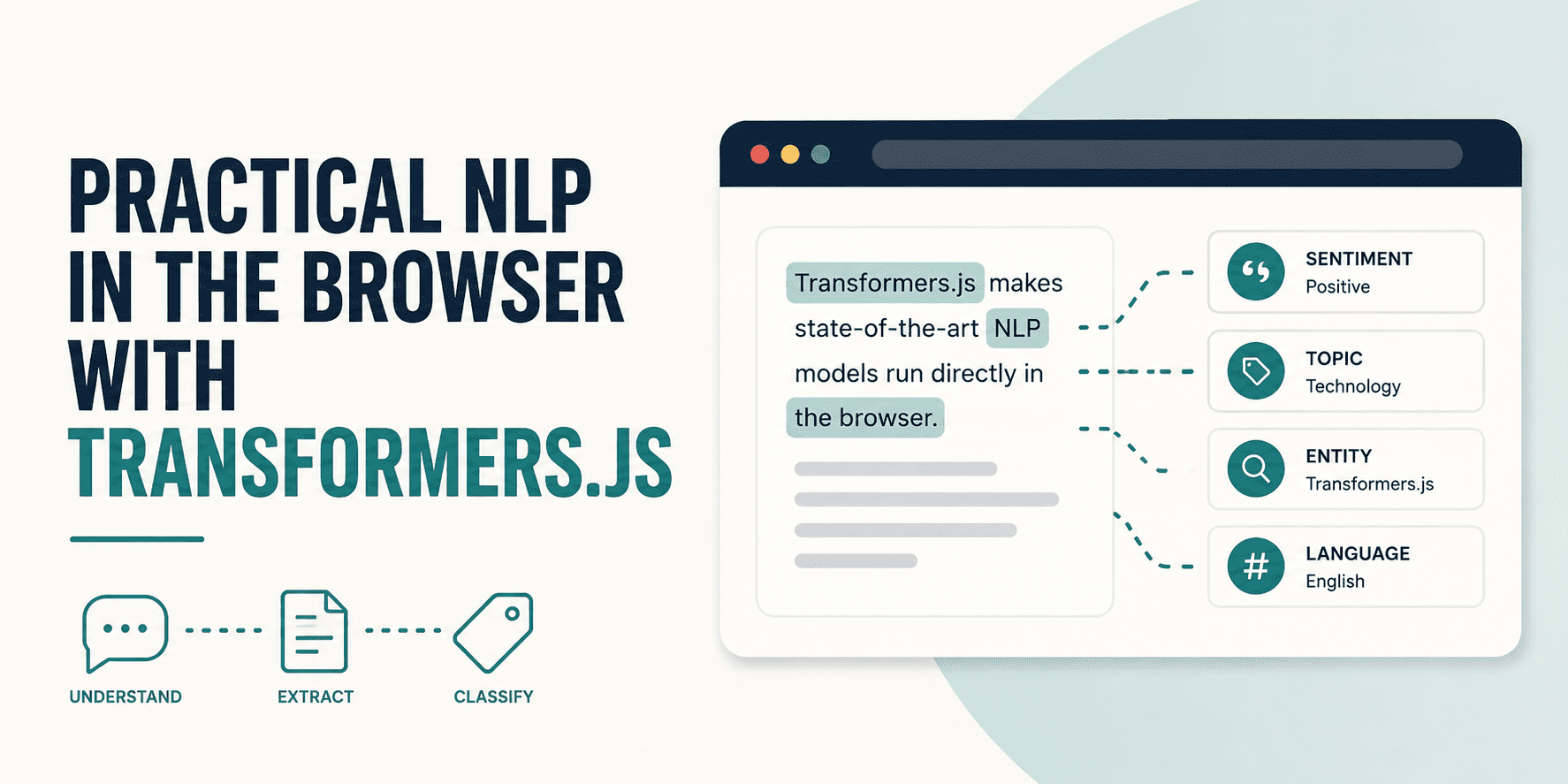
The recent tutorial on using Transformers.js for practical natural language processing (NLP) in the browser highlights a significant shift in how we can leverage AI technology for everyday tasks. Covering three essential NLP tasks—text classification, zero-shot labeling, and question answering—this tutorial empowers users to integrate advanced language models directly into their web applications. As users increasingly seek innovative solutions to enhance their productivity, tools like Transformers.js make complex NLP capabilities accessible, transforming the way we approach data management in spreadsheets and beyond. This is particularly relevant for those who may struggle with robust data manipulation, as illustrated in articles like Need to Isolate Matching Numbers in Same Workbook and Need a formula for 2 columns with a list of start and end dates and excel will give the total without double counting overlapping dates, where users are often navigating intricate data scenarios.
The significance of implementing NLP directly in browser environments cannot be overstated. Historically, the complexity of NLP tasks required significant expertise and resources, often relegating such technology to specialized use cases. However, with frameworks like Transformers.js, even those with a fundamental understanding of spreadsheet technology can begin to harness the power of advanced AI. This democratization of technology aligns with the progressive vision of making data management not only more efficient but also more intuitive. By bridging the gap between technical complexity and user accessibility, this tool invites users to explore transformative solutions that can simplify their workflows.
Moreover, the tasks outlined in the tutorial reflect broader trends in data handling and AI integration. Text classification can streamline processes, while zero-shot labeling allows for flexibility in categorizing data without the need for extensive training sets. Question answering, on the other hand, opens up new avenues for interactive data engagement. These capabilities resonate with users who are increasingly looking for ways to enhance their productivity without getting bogged down by technicalities. As seen in discussions around alternatives to traditional formulas, such as those found in For testing something else, how to comment out a formula that has several quotation marks? Would like to use N(""), but don't want to have to edit all my quotation marks article, there is a clear demand for solutions that simplify complex tasks while maintaining the integrity of data.
As we look to the future, the implications of integrating NLP in user-friendly platforms are profound. The shift towards browser-based AI tools reflects a growing recognition that the future of data management lies in accessibility and user empowerment. This trend invites a question worth considering: how will the continued evolution of such technologies shape not only our approach to spreadsheets but also the broader landscape of data analytics and decision-making? The potential for AI to enhance human productivity while simplifying technology is an exciting frontier that merits close observation. As users embrace these tools, we may find ourselves at the cusp of a new era in which data management is not only more efficient but also fundamentally transformed by the very technologies that once seemed out of reach.
Read on the original site
Open the publisher's page for the full experience