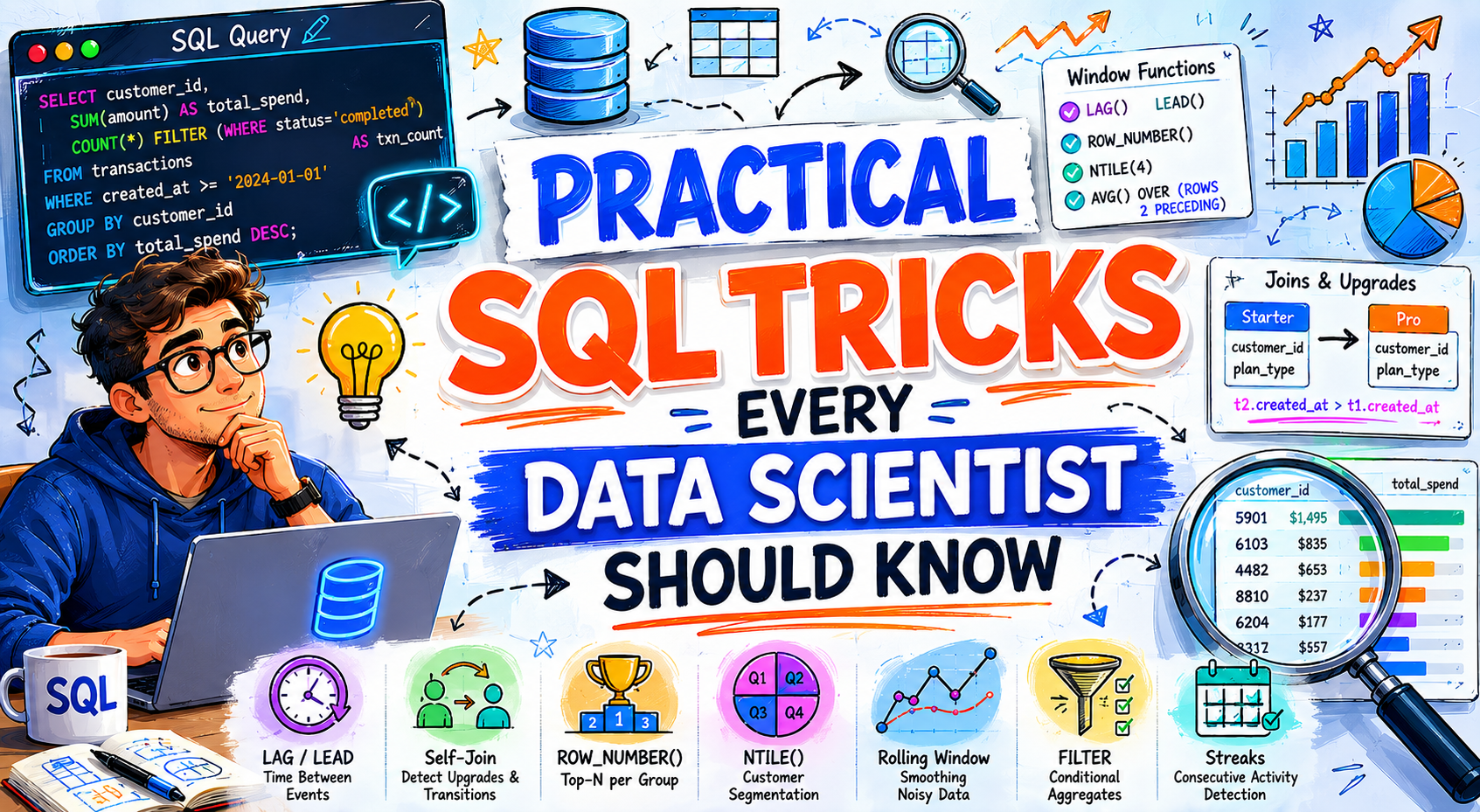
The resurgence of SQL as a critical skill for data scientists might seem counterintuitive in an era dominated by Python and R, but articles like "Practical SQL Tricks Every Data Scientist Should Know" underscore a fundamental truth: efficient data manipulation remains a cornerstone of any analytical workflow. While frameworks like Pandas offer incredible flexibility, relying solely on them can obscure the underlying data structures and lead to performance bottlenecks as datasets scale. Understanding SQL allows data scientists to leverage the power of relational databases, optimizing data retrieval and transformation before even bringing data into their preferred programming environment. It's also worth remembering that many organizations still rely on legacy SQL databases, so proficiency in this language is often a non-negotiable requirement. This skillset complements, rather than replaces, other data science tools, and recognizing this synergy is key to unlocking true analytical potential. To that end, a deeper understanding of how models learn can enhance SQL query building; as explained in [Loss Function Explained For Noobs (How Models Know They Are Wrong)], the iterative nature of model refinement mirrors the need for refined, efficient data queries.
The emphasis on practical workflows highlights a crucial shift in thinking. It's not just about *knowing* SQL syntax; it's about applying it strategically to streamline data analysis. This includes mastering techniques like window functions, common table expressions (CTEs), and optimized indexing. The ability to write performant SQL queries directly translates to faster insights, reduced computational costs, and improved overall productivity. Consider the implications for AI workflows; the ability to efficiently pull and prepare data is paramount. For example, the integration of CI validation into AI coding workflows, as demonstrated by [CircleCI Introduces Chunk Sidecars to Bring CI Validation Directly Into AI Coding Workflows], demonstrates the increasing need for seamless data handling within the development pipeline. Optimizing SQL queries upfront can drastically reduce the time spent waiting for data, allowing data scientists to focus on model building and experimentation. The advancements showcased by OpenAI, who built a data analyst agent that can query 600+ petabytes of data, as detailed in [Presentation: AI Agents to Make Sense of Data at OpenAI], exemplifies how SQL remains central to managing and accessing vast datasets, even within AI-driven systems.
The broader significance of this trend lies in its implications for data democratization. While advanced machine learning models capture much of the attention, the ability for *anyone* within an organization to access and analyze data is equally crucial. Proficiency in SQL empowers business analysts, product managers, and even marketing specialists to perform ad-hoc analyses, answer critical questions, and contribute to data-driven decision-making. This doesn't diminish the role of the data scientist; rather, it frees them from repetitive data preparation tasks, allowing them to focus on more complex modeling challenges. By fostering a greater understanding of SQL across the organization, companies can unlock a wealth of untapped insights and accelerate their data-driven transformation. Furthermore, the shift towards cloud-based data warehouses, like Snowflake and BigQuery, has only amplified the importance of SQL, as these platforms are fundamentally built around SQL-based query languages.
Looking ahead, we can expect to see even tighter integration between SQL and AI-powered tools. Imagine AI agents that automatically optimize SQL queries, suggest improvements to database schemas, or even generate SQL code from natural language requests. This would further lower the barrier to entry for data analysis and empower a wider range of users to leverage the power of data. The question then becomes: as AI takes on more of the heavy lifting in data management, what new skills will data scientists need to cultivate to remain valuable contributors? Will the ability to effectively *prompt* and *validate* AI-generated SQL become the new essential skill?