Presentation: AI-First Software Delivery: Balancing Innovation with Proven Practices
Our take
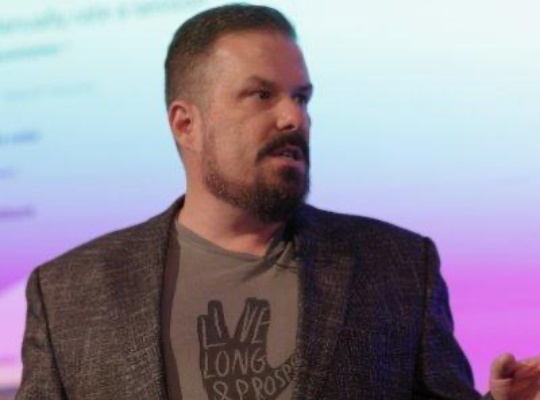
The conversation around AI in software development has shifted from speculative enthusiasm to practical strategy, and Wes Reisz's presentation on AI-first software delivery captures this inflection point with welcome clarity. Rather than pitching AI as a universal panacea, Reisz confronts the more nuanced reality: agentic workflows require intentional design, and the best outcomes emerge when teams match their automation approach to the specific demands of their work. This framing resonates with lessons explored in "Presentation: Engineering at AI Speed: Lessons from the First Agentically Accelerated Software Project," which documents how early adopters have navigated the operational complexities of embedding AI into real development pipelines. The shared insight is unmistakable—AI's promise only materializes when grounded in disciplined engineering thinking.
At the heart of Reisz's approach lies a strategic two-by-two model that helps teams decide between supervised and unsupervised agents based on two critical variables: code longevity and the presence of automated verification. The logic is intuitive yet powerful. When code will persist and evolve over time, supervised agents provide the oversight necessary to maintain quality and institutional knowledge. When verification is robust and the work is more transactional, unsupervised agents can operate with greater autonomy. This framework does something valuable—it transforms an abstract debate about AI trust into a concrete decision matrix that teams can apply immediately. For organizations still treating AI adoption as a binary choice between full automation or manual control, this model offers a practical middle path that honors both innovation and risk management.
Equally compelling is the RIPER-5 framework—Research, Innovate, Plan, Execute, Review—which Reisz proposes as a mechanism for amplifying engineering discipline within AI-augmented workflows. The acronym is memorable, but the underlying principle is serious: AI accelerates execution, but acceleration without discipline compounds technical debt rather than eliminating it. By embedding explicit research and review phases into AI-assisted cycles, teams create feedback loops that prevent automation from becoming justification for shortcuts. This reflects a mature understanding of how AI changes the engineering landscape—not by removing the need for rigor, but by redistributing where rigor matters most. The engineers who thrive in this environment will be those who use AI to handle volume while reserving their expertise for judgment, strategy, and quality assurance.
What remains worth watching is how industry standards will evolve to support these nuanced approaches. As more organizations adopt models like Reisz's two-by-two framework, the community will likely develop shared benchmarks for assessing code longevity, verification maturity, and agent suitability. The teams that begin experimenting with these frameworks now will shape those standards. The question is not whether AI-first delivery will become mainstream, but whether the mainstream will embrace the discipline required to do it well.
Wes Reisz discusses the shift toward AI-first software delivery, emphasizing that agentic workflows are not one-size-fits-all. He explains a strategic two-by-two model based on code longevity and automated verification to decide between supervised and unsupervised agents. He shares the RIPER-5 framework - Research, Innovate, Plan, Execute, Review - to amplify engineering discipline.
By Wes ReiszRead on the original site
Open the publisher's page for the full experience