Presentation: From Hype to Strong Foundations: What the Rise, Fall and Resurgence of Agents Can Teach Us About Outlasting the Cycle
Our take
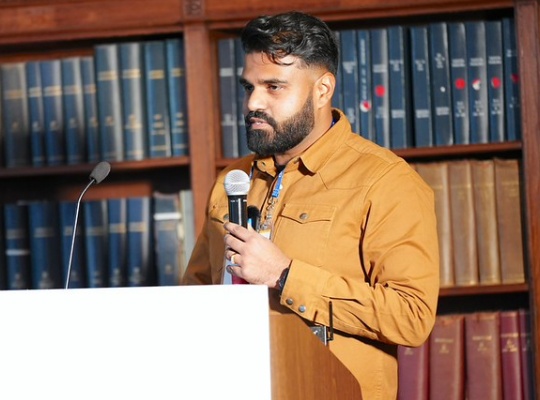
The recent cycle of AI hype and subsequent disillusionment, often referred to as the "amnesia phase," is a familiar pattern in technological innovation. Aditya Kumarakrishnan’s piece, “Presentation: From Hype to Strong Foundations,” offers a valuable roadmap for navigating this pattern, particularly for engineering leaders. It’s refreshing to see a focus on building sustainable, practical AI solutions rather than chasing fleeting trends. The current landscape is ripe with opportunities, evidenced by the increasing accessibility of AI education, like [OpenAI Just Launched 3 Free AI Courses with Certificates], but the key to long-term success lies in grounding these advancements in robust architectural principles. The debate around model size and performance, as highlighted in articles like [Why Weibo’s tiny VibeThinker-3B has the AI world arguing over benchmarks again], further underscores the need for a shift away from solely focusing on the “biggest and best” and towards efficient, adaptable systems.
Kumarakrishnan’s blueprint, centered around modular agent frameworks leveraging CoALA and decades of process science, is particularly insightful. The concept of "terraform[ing] legacy environments" into event-sourced artifacts is a crucial consideration. Many organizations are burdened by existing infrastructure and data silos, and the ability to seamlessly integrate AI agents into these environments without wholesale replacement is a significant advantage. This approach acknowledges the reality of most organizations – that transformation is rarely a clean slate – and provides a pragmatic path forward. The emphasis on process science is a welcome addition, grounding AI agent behavior in established principles of workflow optimization and scalability, moving beyond ad-hoc implementations. The potential for this approach to simplify complex, cross-functional tasks is significant, especially when considering the challenges faced by companies navigating regulatory complexities, as seen in the recent discussions surrounding [Anthropic’s latest feud with the Trump admin may actually help it, sales data suggests].
The core message resonates deeply: sustainable AI adoption requires a move beyond the surface-level excitement and a commitment to building resilient, modular systems. CoALA, as a framework for organizing and orchestrating AI agents, appears to be a critical component of this strategy, allowing for greater control, scalability, and maintainability. The integration of process science provides a layer of predictability and reliability often missing in AI deployments, especially as organizations seek to automate increasingly complex workflows. This isn’t about rejecting the power of large language models or generative AI; it’s about harnessing their potential within a well-defined, robust architecture. The focus on event-sourcing, in particular, allows for greater auditability and resilience, crucial elements in regulated industries and for ensuring data integrity.
Ultimately, Kumarakrishnan’s framework offers a path towards a more mature and practical AI landscape. Instead of chasing the next shiny object, engineering leaders can focus on building foundational systems that can adapt to evolving AI capabilities and organizational needs. The shift from reactive, “hype-driven” AI implementations to proactive, engineered solutions is a necessary evolution. The question moving forward is not *if* AI will transform workflows, but *how* organizations will build the infrastructure to manage and control that transformation – and Kumarakrishnan’s blueprint provides a compelling answer, one grounded in established engineering principles and a clear understanding of the "amnesia phase" that inevitably follows periods of intense AI enthusiasm.
Aditya Kumarakrishnan explains how to move past the "amnesia phase" of AI. He shares a blueprint for engineering leaders to build modular agent frameworks using CoALA, leverage decades of process science for scalable workflows, and "terraform" legacy environments into robust, event-sourced artifacts capable of handling unpredictable, cross-functional agent demands.
By Aditya KumarakrishnanRead on the original site
Open the publisher's page for the full experience