Presentation: Migrating Uber Eats Feeds to Webview
Our take
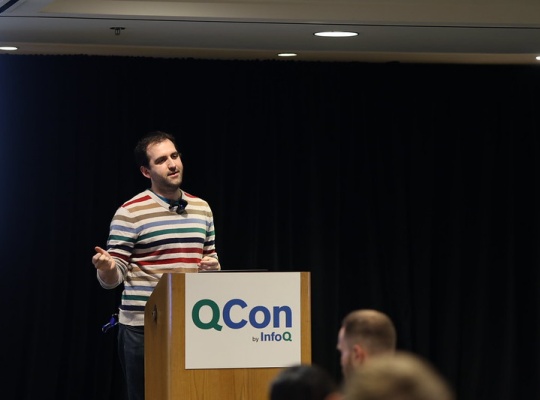
The shift Uber Eats undertook, as detailed by Nick DiStefano, represents a significant evolution in mobile application architecture, moving away from the traditional, often cumbersome, native app screen model toward a WebView-centric approach. This isn't merely a technical tweak; it's a strategic realignment reflecting the increasing demands for rapid iteration, cross-platform consistency, and reduced reliance on lengthy native release cycles. The core motivation—bypassing those release cycles—is a powerful one, particularly for businesses like Uber Eats that require constant updates to respond to market changes and user feedback. The challenge, as DiStefano outlines, lies in doing so without sacrificing performance or user experience. This resonates with the broader trends we’ve been tracking in mobile development, particularly the rise of hybrid approaches and the increasing blurring of lines between native and web technologies. For those interested in the complexities of hybrid app development, Building Hybrid Apps with Flutter offers a deeper dive into alternative frameworks. Furthermore, understanding the performance implications of WebView solutions is crucial; WebView Performance Optimization provides valuable insights from Google on how to mitigate potential bottlenecks.
The brilliance of Uber Eats’ approach, according to DiStefano, isn't just the adoption of WebView technology itself, but the implementation of strategies to manage the inherent challenges. The native-driven, single-page WebView architecture, coupled with a generic native-web message bridge, provides a robust mechanism for communication and state management across platforms. This elegantly addresses the perennial problem of maintaining consistency across iOS and Android, a constant headache for development teams. The ability to treat UI elements as essentially web components, managed and updated independently of native release cycles, is a game-changer for agility. It allows for quicker A/B testing, faster rollout of new features, and a more streamlined development workflow overall. What’s particularly noteworthy is the focus on maintaining metrics throughout the migration—a critical consideration for any large-scale application overhaul. Failing to do so could easily undermine the benefits of increased agility with a degraded user experience. The engineering leadership required to orchestrate such a transition, balancing innovation with stability, is a testament to Uber Eats' commitment to continuous improvement.
Beyond Uber Eats, this migration strategy holds significant implications for a wide range of mobile applications. Any organization facing pressure to accelerate development cycles while maintaining cross-platform consistency should seriously consider this approach. It's not a silver bullet – WebView solutions do have their limitations, particularly around access to certain native device features and potential performance overhead. However, the techniques DiStefano describes—the message bridge, the focus on single-page architecture, and the meticulous attention to metrics—offer a roadmap for mitigating those challenges. We’ve seen similar patterns emerge in other areas of web and mobile convergence; for instance, the rise of progressive web apps (PWAs) demonstrates a growing desire to leverage web technologies for enhanced mobile experiences. The Uber Eats case study provides a concrete example of how these principles can be applied at scale within a complex, high-traffic application.
Looking ahead, the success of Uber Eats' WebView migration raises a compelling question: will we see a broader shift away from purely native app development towards more hybrid architectures? The increasing complexity of mobile development, combined with the demand for faster iteration and greater cross-platform consistency, suggests that the answer is likely yes. However, the specific implementation will vary depending on the application's requirements and the development team's expertise. The key takeaway from DiStefano’s presentation is that with careful planning and the right architectural choices, WebView technology can be a powerful tool for unlocking agility and transforming the mobile development landscape. The ongoing evolution of web technologies, particularly advancements in JavaScript frameworks and web assembly, will only further blur the lines between native and web, creating even more opportunities for innovation in mobile application development.
Nick DiStefano shares how Uber Eats migrated from traditional native app screens to a native-driven, single-page WebView architecture. He explains key strategies for engineering leaders and software architects looking to bypass native release cycles, manage cross-platform state, build generic native-web message bridges, and execute large-scale UI migrations without degrading metrics.
By Nick DiStefanoRead on the original site
Open the publisher's page for the full experience