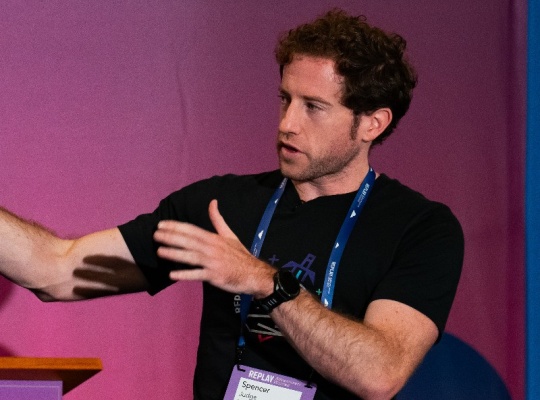
Spencer Judge’s presentation on using Rust as a core for polyglot SDK development hits on a crucial architectural challenge facing modern software development. The increasing demand for cross-platform compatibility and diverse language support necessitates innovative solutions beyond traditional native extensions, which often become brittle and difficult to maintain. Judge’s exploration of Rust's capabilities, informed by his experience with Temporal's SDKs, provides a compelling alternative. This approach echoes the broader trend of modularity and abstraction we’ve seen in cloud orchestration, as detailed in [Building a European Cloud Orchestration Platform within an Enterprise], where managing disparate tools with varying lifecycles demands a robust architectural foundation. Similarly, the need for secure and adaptable AI agent execution, exemplified by Grab’s Palana platform [Grab Builds Secure Agentic AI Workload Platform], highlights the growing importance of isolating core logic and providing flexible interfaces for various components.
The core principle – a shared, performant core written in Rust, with language-specific layers built on top – offers a powerful way to balance performance, safety, and developer experience. Rust’s memory safety guarantees and its ability to interface with other languages through Foreign Function Interfaces (FFIs) make it an ideal candidate for this role. Judge’s discussion of navigating FFI boundaries and bridging asynchronous concepts squarely addresses the practical complexities of this architecture. The limitations of native extensions—the traditional route to cross-language interoperability—often involve significant overhead and potential instability. Moving towards technologies like WebAssembly, as Judge suggests, further streamlines this process, enabling a more portable and efficient architecture. This isn't simply about making SDKs available in more languages; it's about creating a sustainable and maintainable foundation for future growth and innovation.
The significance of this approach extends beyond just SDK development. It represents a broader shift towards building robust, language-agnostic backbones for complex systems. We’re seeing a parallel trend in the development of AI agents, where the ability to adapt and learn independently is critical. As demonstrated in [The Self-Improving Loop in AI Agents: Architecture, Benefits, and How it Outperforms Traditional Agent Workflows], creating a flexible and adaptable architecture—one that can integrate with diverse tools and languages—is paramount to achieving this level of autonomy. Judge’s work provides a potential blueprint for establishing such a foundation, allowing developers to focus on building language-specific features and integrations without being hampered by underlying architectural constraints. The emphasis on safe memory management and clear FFI boundaries directly contributes to the reliability and security of the entire system.
Ultimately, Spencer Judge’s presentation underscores the increasing importance of architectural foresight in the face of rapidly evolving technology landscapes. The move towards a shared core approach, leveraging Rust and technologies like WebAssembly, offers a compelling path towards building more scalable, maintainable, and adaptable software systems. A key question moving forward is how easily this pattern can be generalized across different domains and application types. Will we see this architectural design emerge as a dominant pattern for building complex, polyglot systems, or will it remain a specialized solution for projects with demanding performance and safety requirements?