Presentation: Write-Ahead Intent Log: A Foundation for Efficient CDC at Scale
Our take
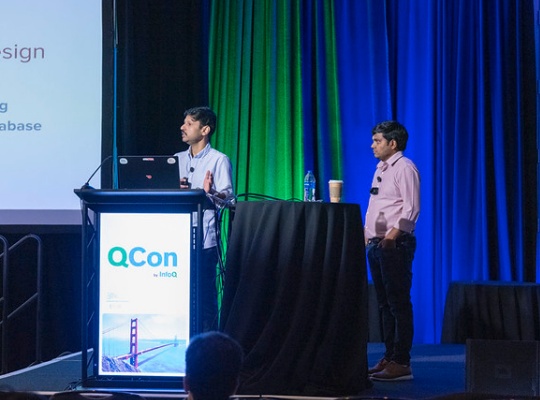
The challenges of Change Data Capture (CDC) at scale are increasingly apparent, particularly as organizations grapple with heterogeneous data landscapes and unpredictable traffic spikes. Vinay Chella and Akshat Goel’s presentation on the Write-Ahead Intent Log (WAIL) highlights a critical bottleneck in many existing CDC solutions. Their experience with Debezium hitting limits under high load underscores a reality for many data engineering teams: traditional approaches struggle to maintain performance and reliability when demand surges. This resonates with the broader architectural considerations discussed in articles like From Camera to Cloud: Netflix’s Scalable Media Processing Pipeline, where Netflix successfully navigated similar scaling challenges through a cloud-based processing pipeline. The WAIL architecture, with its separation of intent and state, offers a compelling alternative, demonstrating the power of rethinking fundamental design patterns to address performance constraints. It’s also worth considering how this approach aligns with the emphasis on efficient prompting and resource utilization explored in Most People Use ChatGPT Wrong: 10 Features and Tips That Changed How I Work, suggesting a broader trend toward decoupling actions from their immediate context to improve overall system responsiveness.
The beauty of the WAIL architecture lies in its simplicity. The "dumb producer proxy" and "smart consumer pattern" are a testament to the idea that elegant solutions don't always require complex technology. By decoupling the intent of a change from the actual data payload, they’ve created a system that can handle high volumes of events without being bogged down by the complexities of data serialization and transfer. This separation allows for more efficient processing and prioritization of changes, particularly valuable in scenarios like peak order traffic where timely data replication is crucial. It’s a pattern that leans into the principles of asynchronous processing, a technique that’s proving increasingly essential in modern, distributed systems. The fact that this was a custom build also speaks to the limitations of off-the-shelf solutions in addressing highly specialized needs. While Debezium is a powerful tool, it’s clear that even robust frameworks can reach their limits when pushed to extremes.
The broader significance of this development extends beyond just CDC. The WAIL architecture exemplifies a shift towards more modular and resilient data pipelines. It reinforces the importance of understanding not just *what* data needs to be moved, but *how* it needs to be processed and prioritized. This approach has implications for real-time analytics, event-driven architectures, and any system that relies on timely data synchronization. The rise of AI-powered security tools, as detailed in Athena Coalition Brings Coordinated Defence to Open Source Security, further highlights the need for scalable and reliable data pipelines to support real-time threat detection and response. Efficient data flow is the foundation upon which these advanced capabilities are built.
Looking ahead, it will be interesting to see if the WAIL pattern gains wider adoption and inspires similar architectural solutions in other domains. Could this approach be adapted to other data integration scenarios, such as streaming data ingestion or microservices communication? The challenge will be to balance the simplicity of the WAIL design with the need for flexibility and extensibility. As data volumes continue to grow and the demands on data pipelines become ever more stringent, innovative approaches like this will be critical for maintaining performance and reliability. The question remains: how can organizations proactively identify and address potential bottlenecks in their data architectures before they impact critical business operations?
Vinay Chella and Akshat Goel discuss the challenges of running traditional CDC across heterogeneous databases during peak order traffic. They explain how Debezium hit limits under high load and share how they built Write-Ahead Intent Log (WAIL) - a custom architecture that utilizes a dumb producer proxy and a smart consumer pattern to cleanly separate the intent from the state payload.
By Vinay Chella, Akshat GoelRead on the original site
Open the publisher's page for the full experience