Self-Hosted LLMs in the Real World: Limits, Workarounds, and Hard Lessons
Our take
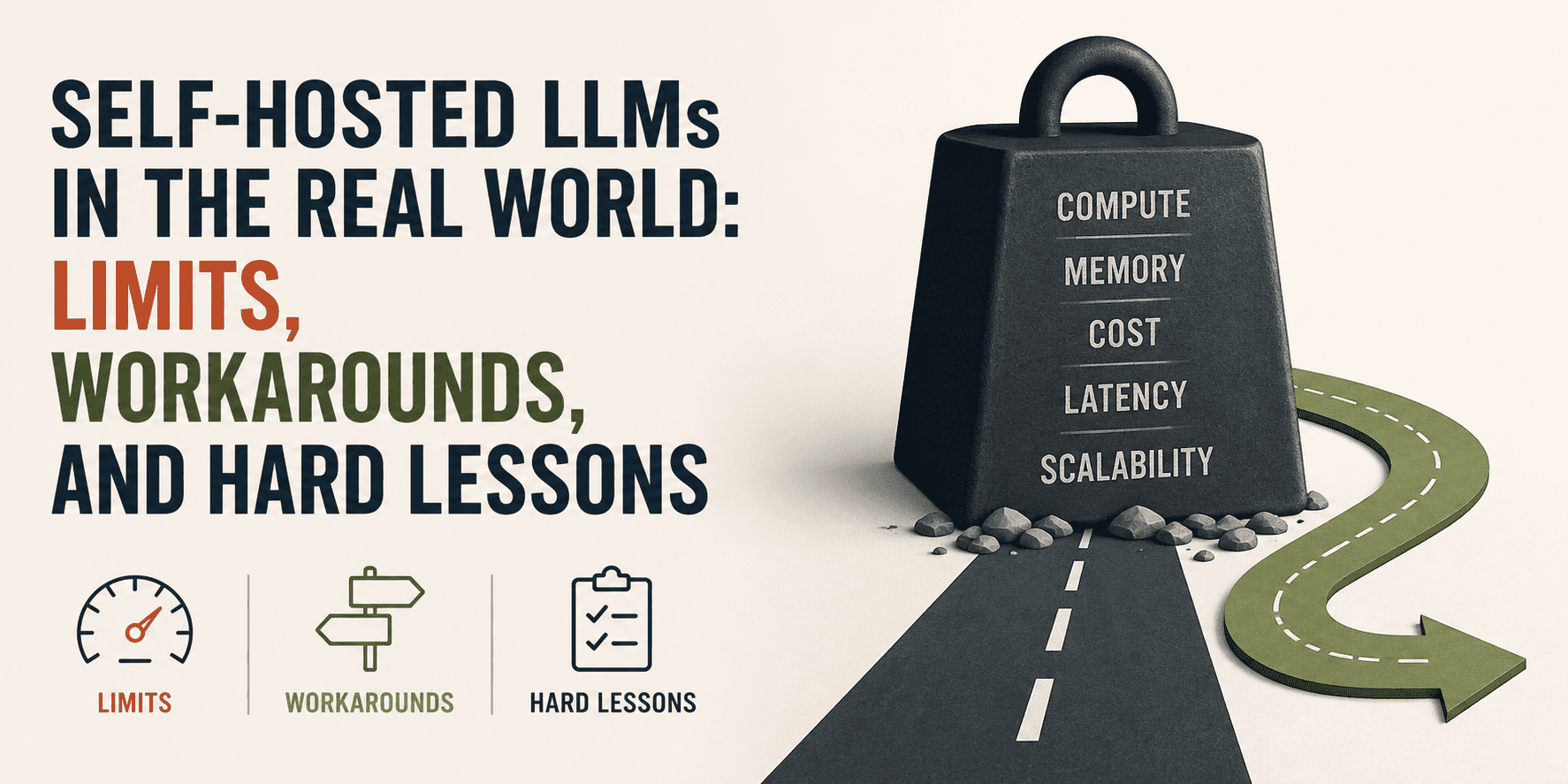
The emergence of self-hosted large language models (LLMs) marks a significant turning point in the landscape of artificial intelligence and data management. While the benchmarks and high-level capabilities of these models are often highlighted, the reality of implementation brings forth a different narrative—one that is grounded in operational friction. The article “Self-Hosted LLMs in the Real World: Limits, Workarounds, and Hard Lessons” provides a much-needed examination of what it truly means to deploy these models in practice. It strips away the hype and reveals the intricate challenges that many tutorials gloss over, offering a more nuanced understanding for users who are eager to explore this innovative technology.
For those considering a self-hosting approach, the insights shared in this article are invaluable. Self-hosting is often framed as a pathway to greater privacy, cost-efficiency, and customization. As discussed in our piece, Self-Hosting Your First LLM, users are drawn to the promise of having complete control over their data and model performance. However, it is crucial to acknowledge the complexities involved in this process, such as the need for robust infrastructure, ongoing maintenance, and the steep learning curve associated with troubleshooting. These operational hurdles can deter even the most enthusiastic adopters, prompting a deeper exploration of how to effectively navigate these challenges.
The article emphasizes that while self-hosted LLMs can indeed empower users, they also come with significant responsibility. The reality of deploying such models often exposes users to unexpected limitations—whether it's the intricacies of model fine-tuning, the demand for computational resources, or the necessity of managing updates and security. These real-world constraints call for a shift in perspective. Rather than viewing self-hosting as a one-size-fits-all solution, users must adopt a more strategic approach, weighing the benefits against the operational realities they may face. This understanding is essential for fostering an environment where users can genuinely harness the potential of AI without falling prey to oversimplified narratives.
As we navigate this rapidly evolving landscape, it is imperative to foster a community that shares knowledge and best practices. The hard lessons learned from implementing self-hosted LLMs can serve as a catalyst for more informed decision-making across the board. Readers should be encouraged to engage in discussions about their experiences, challenges, and triumphs. By doing so, we not only demystify the process but also build a supportive ecosystem where users can thrive.
Looking ahead, the question remains: How will the evolving capabilities of self-hosted LLMs shape the future of data management and user productivity? As more individuals and organizations experiment with these technologies, it will be essential to monitor the balance between innovation and practicality. The insights gained from real-world applications will undoubtedly inform the next generation of AI tools, paving the way for a more empowered and efficient data-driven future.
Read on the original site
Open the publisher's page for the full experience