Stop Wasting Tokens: A Smarter Alternative to JSON for LLM Pipelines
Our take
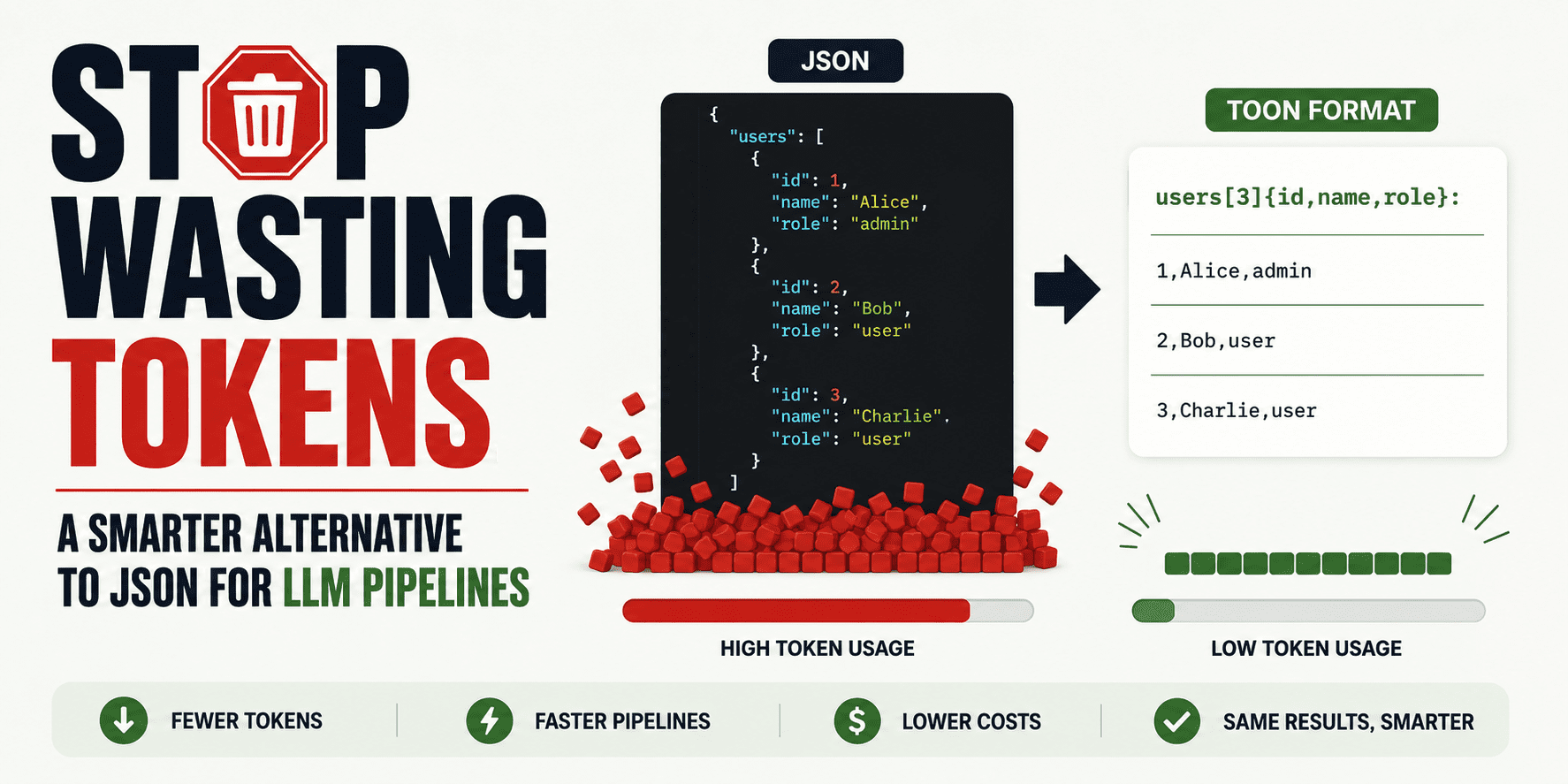
Our Take: The Hidden Cost of JSON in AI Workflows
If you are feeding structured data into an LLM, there is a good chance you are paying a JSON tax. This isn't just about token consumption; it's about architectural friction that slows pipelines and obscures insight. For professionals in fields like population health, where analyzing complex datasets is key to improving patient outcomes, this inefficiency directly impacts productivity. Consider how you would "find missing data" in a system bogged down by verbose serialization—every additional token parsed is a step away from the core analytical task. The problem is systemic: we are forcing a square peg of rigid, human-readable formats into the round hole of machine-optimized inference, creating unnecessary overhead in pipelines that should be about intelligence, not formatting.
The "why" behind this mattering extends beyond mere cost savings on API calls. When your data pipeline is clogged with JSON parsing, you introduce latency, potential points of failure, and a cognitive load on developers who must constantly manage schema translations. This tax is paid in time-to-insight. In practical AI use cases, such as those transforming healthcare insurance or value-based care, the ability to quickly iterate on data queries and model prompts is paramount. A format designed for web APIs is a poor fit for the internal, high-throughput data exchanges that power modern AI applications. It forces a context switch from problem-solving to data-munging, a trade-off that stifles innovation and keeps valuable analytical resources tied up in plumbing rather than discovery.
The search for a smarter alternative is therefore not a niche technical debate but a strategic imperative for any organization looking to operationalize AI effectively. The ideal solution would be native to the data layer, minimizing serialization steps and speaking directly to the LLM in a dense, semantic language. This shift represents a move from viewing data as something to be *transported* to something to be *understood* by the model from the outset. It’s about empowering the pipeline to handle complexity invisibly, so the user can focus on the outcomes—whether that’s identifying a gap in patient care or uncovering a hidden trend in operational metrics. The question evolves from "How do we move this data?" to "How do we make this data instantly comprehensible?"
Looking ahead, the organizations that will lead in AI adoption are those that treat their data infrastructure with the same innovative rigor as their models. The move away from JSON for structured data in LLM contexts is inevitable, driven by the relentless pressure for efficiency and speed. The forward-looking insight is this: the next frontier of AI productivity lies not in larger models, but in smarter, leaner data conduits. We should watch for the emergence of standard, semantic data formats that dissolve the boundary between database and prompt, making the "JSON tax" a relic of a pre-AI plumbing era. The future belongs to systems that make data feel less like a file to be parsed and more like a native language for intelligence.
Read on the original site
Open the publisher's page for the full experience