Structured Language Model Generation with Outlines
Our take
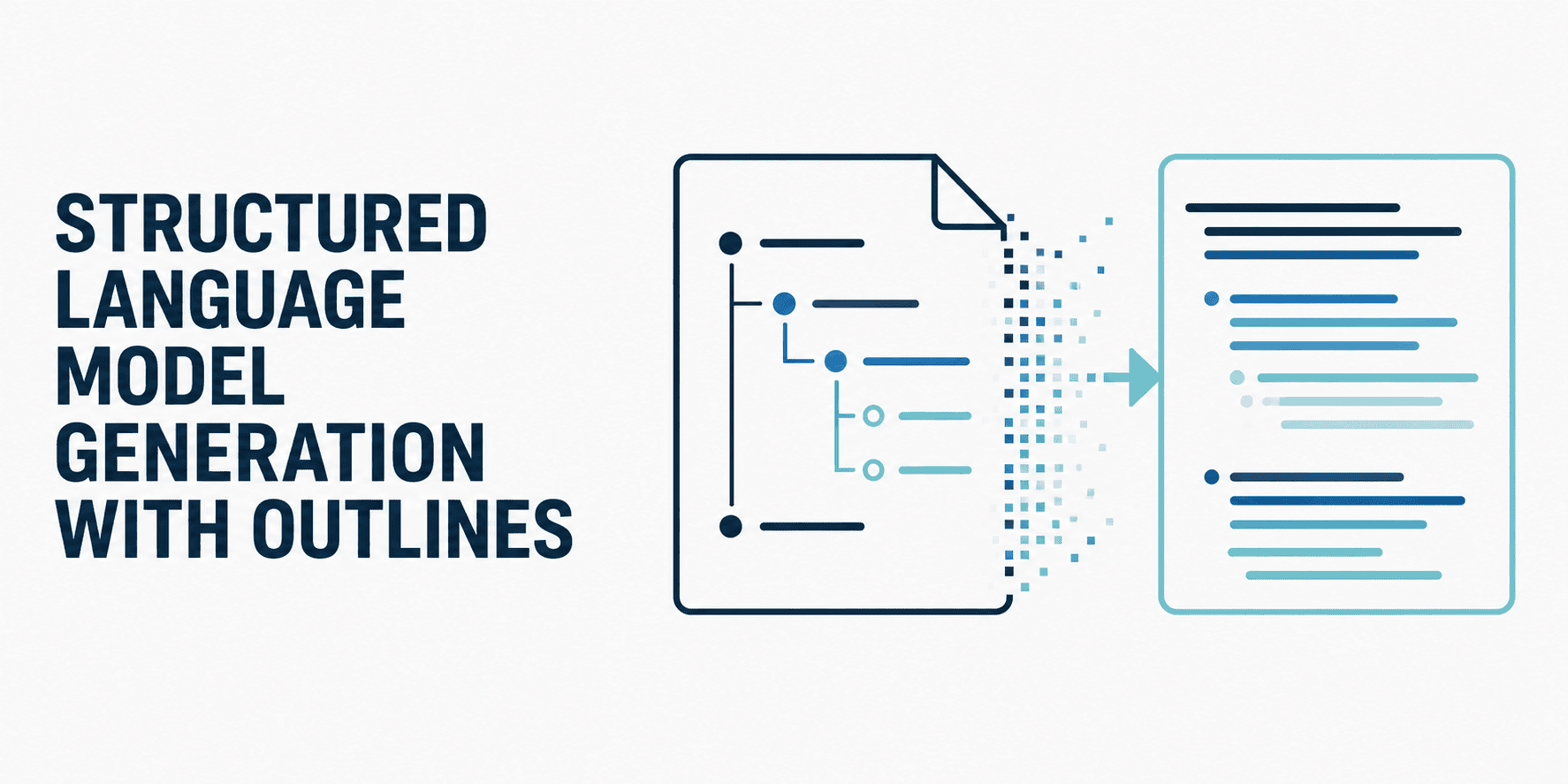
The recent emergence of Outlines, an open-source library focused on deterministic output generation from Large Language Models (LLMs), signals a crucial evolution in how we approach structured data workflows. The inherent randomness of LLMs, while often a source of creative potential, can also be a significant impediment when reliability and consistency are paramount. We've previously explored how researchers are leveraging LLMs to accelerate academic workflows, such as [Fast track through a CS PhD using LLM's for paper writing [D]], yet this very ease can introduce new challenges around reproducibility and verification. Similarly, the need to sift through the overwhelming volume of research highlighted in [Hundreds of papers hit arXiv every day and maybe 3 matter to my research [P]] underscores the importance of tools that can reliably extract and structure relevant information. Outlines addresses this head-on, offering a pathway towards more predictable and controlled outputs, addressing a growing pain point for data professionals and researchers alike.
The core innovation of Outlines lies in its introduction of deterministic certainty into the generation process. Traditional LLMs operate with a degree of stochasticity, meaning that even with the same prompt, outputs can vary. This makes it difficult to build robust applications or automate tasks that require consistent results. Outlines appears to tackle this by providing a framework for guiding the LLM’s generation within pre-defined structures, essentially creating a more rigid and predictable pipeline. This isn't about stifling creativity; it's about harnessing the power of LLMs while mitigating the risks associated with unpredictable output. The rise of latent reasoning techniques, as discussed in [Chain of Thought is a scaling trap...], has shown the complexities of controlling LLM logic. Outlines offers a different approach, focusing on structural constraints rather than attempting to fully unravel the internal workings of these models. This distinction is significant, suggesting a more pragmatic and immediately applicable solution for many users.
The implications of this development are far-reaching. Consider the potential for automating the generation of reports, financial statements, or even legal documents – tasks that demand accuracy and consistency above all else. Outlines could empower businesses to leverage LLMs for these critical processes with greater confidence, reducing the risk of errors and improving efficiency. Moreover, the open-source nature of the library fosters collaboration and allows for community-driven improvements, accelerating its adoption and expanding its capabilities. This aligns with a broader trend towards making advanced AI tools more accessible and customizable, moving away from proprietary black boxes and towards a more transparent and collaborative ecosystem. The ability to specify and enforce output structures isn't merely a technical improvement; it’s a shift in perspective, recognizing that LLMs are tools best wielded with clear purpose and defined boundaries.
Looking ahead, the success of Outlines will depend on its ease of integration and the breadth of structures it can support. Will it become a foundational component of the AI-native spreadsheet infrastructure, enabling users to seamlessly incorporate structured data generation into their workflows? Could this model inspire similar approaches to other areas of LLM application, such as code generation or creative writing, where consistency is valued alongside innovation? The challenge will be balancing deterministic control with the inherent flexibility and adaptability that makes LLMs so compelling. Ultimately, tools like Outlines represent a vital step towards realizing the full potential of LLMs, transforming them from unpredictable creative engines into reliable, data-driven assets.
Read on the original site
Open the publisher's page for the full experience