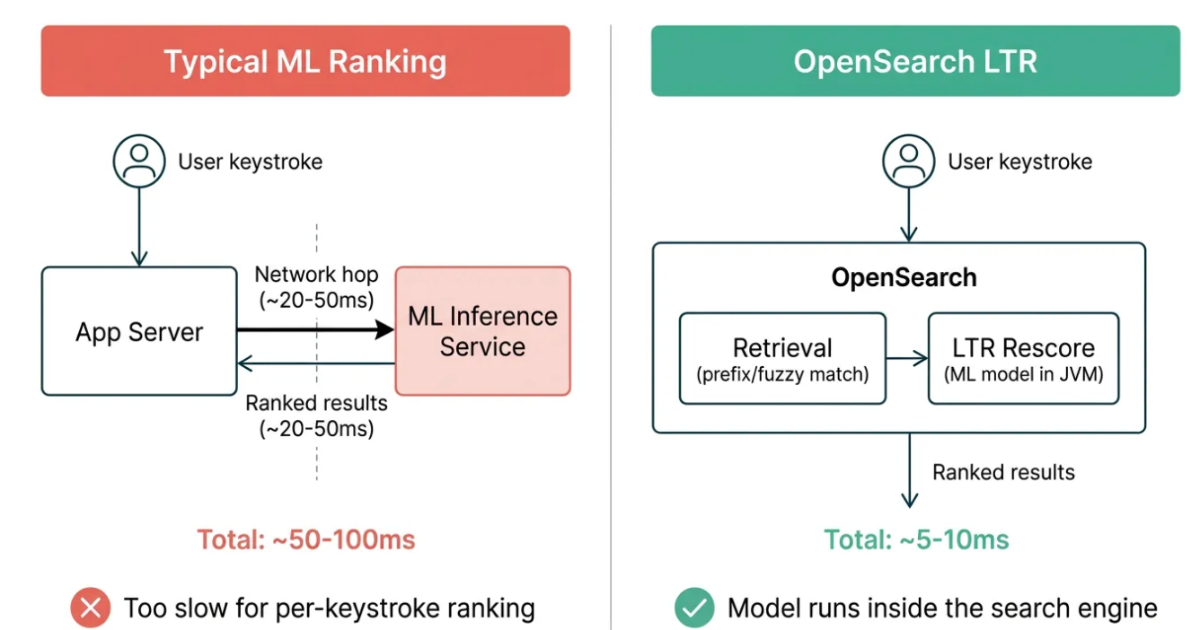
Swiggy's recent advancements in real-time machine learning ranking for its autocomplete feature exemplify a significant shift in how technology can enhance user experience. By leveraging OpenSearch, Swiggy has effectively separated candidate generation from ranking, allowing for a more nuanced approach to delivering relevant search results quickly. This kind of innovation is pivotal in an age where user expectations for speed and accuracy are higher than ever. As we explore the implications of such developments, it’s worth noting that similar innovations are shaping the landscape of AI and data management. For instance, the article Top 10 AI Research Papers of 2025 highlights the evolution of AI beyond traditional applications, reflecting a broader trend in the industry towards more intelligent systems.
The architecture employed by Swiggy—utilizing feature stores for real-time signals and applying learning-to-rank models—illustrates a progressive move away from heuristic ranking methods. This transition is not merely technical; it represents a fundamental shift in how data can be harnessed to create a more personalized and seamless user experience. By maintaining strict latency constraints while continuously updating models based on user behavior signals, Swiggy is not only improving its service but also setting a benchmark for others in the industry. This aligns with the insights presented in The Hidden Skill Gap: Why Knowing SQL + Python Isn’t Enough Anymore, where the need for more sophisticated skills in handling advanced data systems is increasingly emphasized.
For users, this means that searching for their favorite food or services on Swiggy will be more intuitive and efficient, ultimately enhancing their satisfaction. The deployment of such a real-time system not only optimizes the user journey but also empowers Swiggy to stay competitive in a crowded marketplace. The ability to process real-time signals and adapt to user preferences is crucial in an era where businesses must be agile and responsive. This development invites us to consider how other sectors can adopt similar strategies to refine their customer interactions and improve overall service delivery.
Looking ahead, the implications of Swiggy's advancements in machine learning ranking extend beyond the realm of food delivery. As industries increasingly adopt AI-native technologies, we can expect to see a broader transformation in user interfaces and digital experiences across various platforms. Businesses that prioritize real-time data analysis and adaptive learning will likely lead the charge in enhancing consumer engagement. The question remains: how will traditional companies respond to this shift, and what steps will they take to modernize their own systems? As technology continues to evolve, the race to deliver more personalized and efficient experiences will undoubtedly intensify, making it essential for companies to keep pace with innovations like Swiggy's.