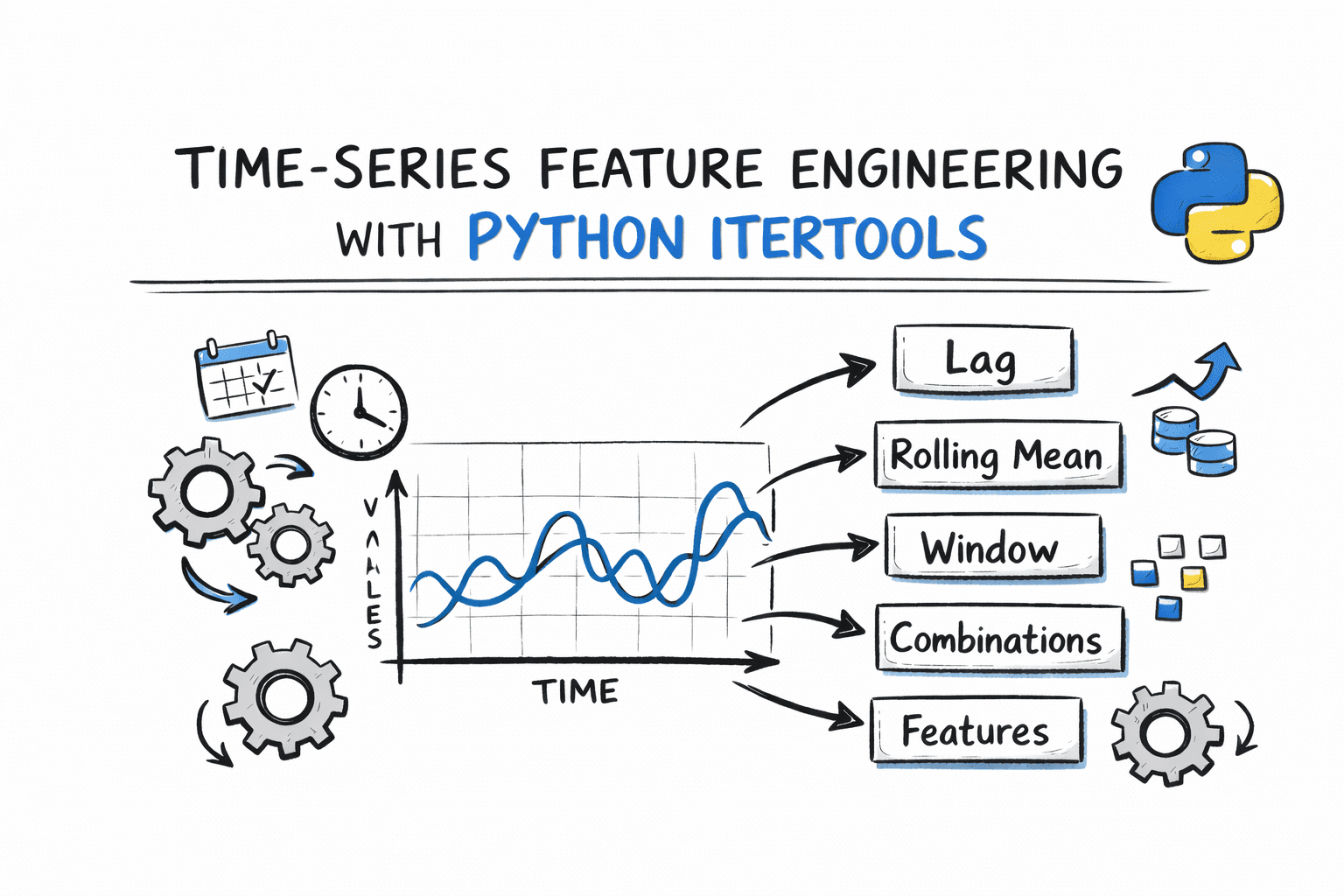
The recent article, "Time-Series Feature Engineering with Python Itertools," highlights an essential skill for data professionals looking to enhance their capabilities in time series analysis. By leveraging Python's itertools library, users can build efficient and scalable features that significantly improve the processing and modeling of time-based data. This is particularly relevant as organizations increasingly rely on data-driven insights to inform their strategies. As we explore this topic, it's worth noting the ongoing evolution of tools that empower users to embrace AI-native workflows, as discussed in our piece on I Let CodeSpeak Take Over My Repository, which emphasizes the shift toward more automated coding solutions.
Understanding time series data is critical across various sectors, including finance, healthcare, and technology. The ability to manipulate and extract meaningful features from this data can lead to more accurate predictive models and better decision-making processes. The focus on itertools is particularly noteworthy. This library provides a set of fast, memory-efficient tools for creating iterators, which can be invaluable when working with large datasets. By efficiently generating combinations, permutations, and other iterable constructs, Python developers can streamline their feature engineering processes. This not only enhances productivity but also allows for more sophisticated analyses that were previously cumbersome or resource-intensive.
Moreover, the increasing accessibility of such powerful tools fosters a more inclusive environment for data science practitioners. As explored in our article about Wirestock's recent funding round, which aims to supply multimodal data to AI labs, the democratization of data manipulation tools is reshaping the landscape. By making advanced techniques like those involving itertools more approachable, users at all levels can contribute to innovative data solutions without being bogged down by complexity. This human-centered approach ensures that individuals can focus on extracting insights rather than getting lost in technical intricacies.
As we contemplate the future of data management, the importance of feature engineering cannot be overstated. The ability to transform raw data into actionable insights is at the heart of successful analytics practices. With advancements in programming libraries and AI-driven solutions, we are witnessing a pivotal shift towards more agile methodologies. Organizations must adapt to these changes to remain competitive, as seen in the recent news about Uber to open 2 campuses in India to support product development, operations. The establishment of these campuses underscores the growing demand for skilled professionals capable of harnessing new technologies for data analysis.
In conclusion, the discussion around time-series feature engineering with Python itertools not only highlights a crucial technical skill but also reflects broader trends in the data landscape. As tools become more user-friendly and powerful, the opportunity for innovation expands. This begs the question: How will emerging technologies continue to shape the future of data analysis, and what new capabilities will they unlock for businesses and individuals alike? As we move forward, it will be essential to keep an eye on these developments and their implications for productivity and data-driven decision-making.