Top 5 Agentic AI Research Papers of 2026
Our take
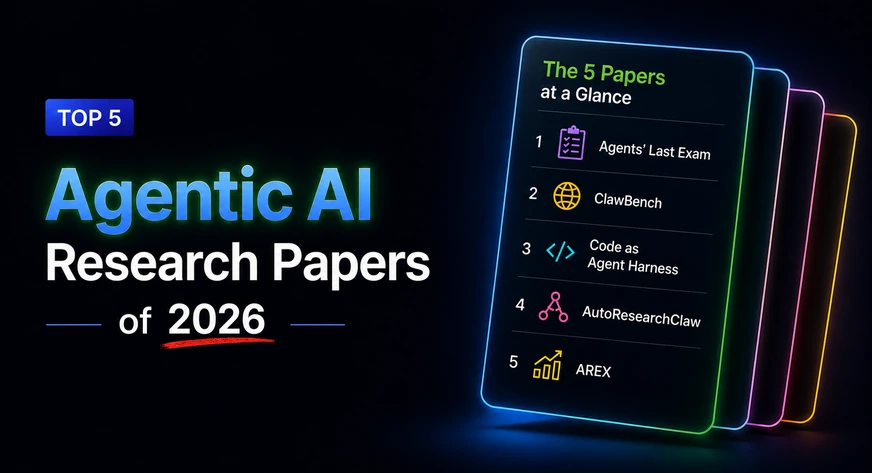
The recent Analytics Vidhya piece highlighting the top five agentic AI research papers of 2026 signals a crucial evolution in the field, moving beyond the initial excitement of simply designating large language models as tools. For those of us working on the future of data management, this shift is particularly compelling. The focus is no longer on *if* AI can assist, but *how* it can reliably and autonomously navigate complex, real-world tasks. It’s a maturation of the technology, a move from proof-of-concept demonstrations to tackling the practical challenges that will determine its widespread adoption. We’ve been following this trajectory closely, and the emphasis on long workflows, live website interaction, self-verification, and iterative improvement resonates deeply with our own vision for AI-native spreadsheets. Consider, for example, our recent exploration of automated data validation techniques, detailed here, and how these advancements directly contribute to the kind of robust agentic behavior these papers describe. This research also builds upon foundational work in areas like reinforcement learning and autonomous agents, providing a tangible roadmap for future development, as discussed in this analysis of autonomous agent frameworks.
The core challenge outlined in the article – ensuring agents can not only execute tasks but also adapt and recover – is paramount. Traditional spreadsheet software often requires meticulous manual intervention to correct errors or adjust workflows. Agentic AI, when properly developed, promises to automate this crucial feedback loop, learning from mistakes and optimizing processes in real time. The ability to “survive live websites” is particularly noteworthy, indicating a move toward agents capable of interacting with dynamic and unpredictable environments, a far cry from the controlled sandbox environments often used in earlier research. This resilience is essential for any AI intended to operate in the messy reality of modern business. The emphasis on self-verification highlights a growing awareness of the need for built-in safeguards against errors and biases, a critical consideration as AI takes on more responsibility for data-driven decision-making. It’s a recognition that trust is earned, not assumed, and that agents must demonstrate their reliability through rigorous self-assessment.
What's truly exciting is the potential impact on data accessibility and productivity. Imagine a spreadsheet that not only performs calculations but also proactively identifies and corrects inconsistencies, automatically updates data from external sources, and refines its own logic based on user feedback. This isn’t science fiction; it’s a direct consequence of the advancements described in these research papers. The move towards agentic AI fundamentally alters the relationship between humans and data. Instead of spending countless hours manually manipulating spreadsheets, users can focus on higher-level analysis and strategic decision-making, empowered by intelligent systems that handle the tedious and error-prone aspects of data management. This shift allows for a more fluid and responsive data ecosystem, where insights are readily available and workflows are continuously optimized. The implications for industries relying heavily on data – finance, healthcare, logistics – are profound.
Looking ahead, the key question becomes: how do we translate these research breakthroughs into practical, user-friendly tools? While the technical challenges are significant, the potential rewards are even greater. The ability to build truly autonomous data agents will reshape how we interact with information, blurring the lines between human and machine intelligence. It will be fascinating to observe how the emphasis on self-improvement evolves – will agents eventually be able to proactively identify and implement entirely new data management strategies, or will their role remain primarily reactive, responding to user prompts and feedback? The next few years promise to be a period of rapid innovation and transformation in the world of AI-powered data management, and the insights gleaned from these 2026 research papers will undoubtedly serve as a guiding light.
Agentic AI research in 2026 has moved past the basic question of whether a model can be called a tool. The harder questions are whether an agent can finish long workflows, survive live websites, verify its own work, recover from failure, and improve its process over time. The five papers below map that shift well […]
The post Top 5 Agentic AI Research Papers of 2026 appeared first on Analytics Vidhya.
Read on the original site
Open the publisher's page for the full experience