Uber Improves Restaurant Recommendations Using Real-Time Signals and Listwise Ranking
Our take
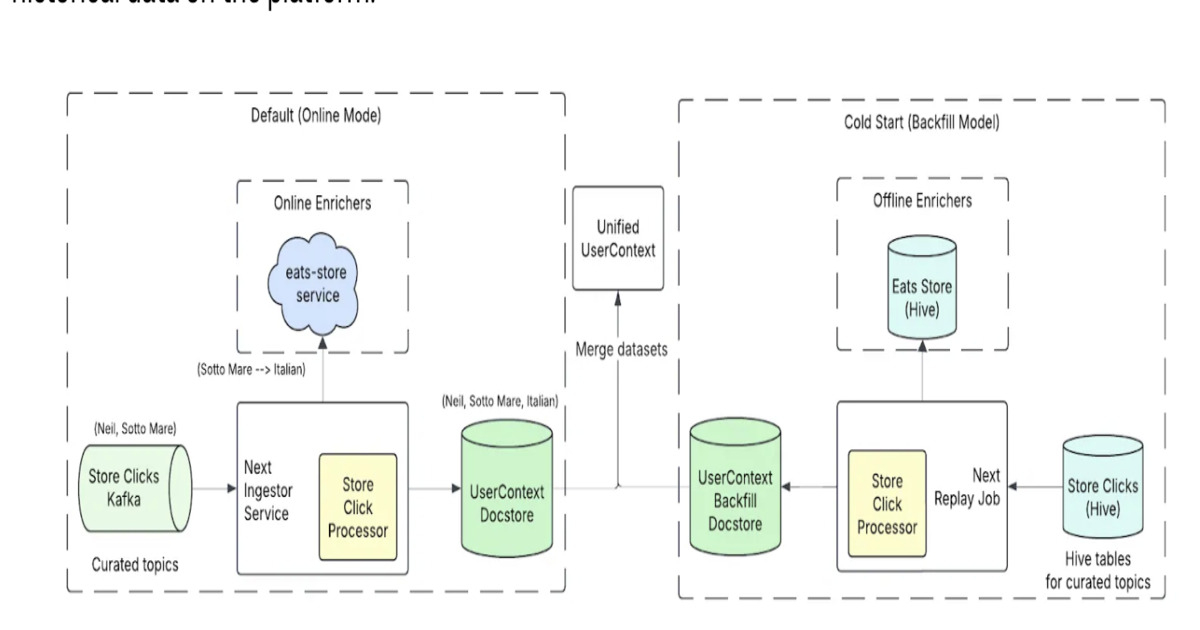
Uber's recent advancements in its Uber Eats Home Feed recommendation system mark a significant leap in how real-time data can enhance user experience. By transitioning from hand-crafted features to a more sophisticated transformer-based sequence modeling, Uber is not just improving the accuracy of its recommendations; it is fundamentally redefining what personalization looks like in the food delivery space. This evolution, which reduces the freshness of features from 24 hours to mere seconds, showcases the growing importance of agility in data-driven decision-making. The shift from pointwise scoring to a listwise Generative Recommender model underscores a commitment to contextual relevance that is essential in today’s fast-paced digital landscape.
This development resonates with broader trends in artificial intelligence and machine learning, particularly in how businesses leverage real-time signals to optimize user interactions. The implementation of a Generative Recommender model signifies a move toward more advanced AI methodologies that can process user behavior and preferences dynamically. This aligns with the insights discussed in other recent articles, such as Lost in Translation: How AI Exposes the Rift Between Law and Logic, which illustrates the complexities AI introduces across various sectors, and Qwen3.7-Max: Alibaba’s New Agent-First LLM for Coding, Reasoning, and Long-Horizon AI Workflows, highlighting the innovative approaches companies are taking to harness AI's potential.
The implications of Uber's new recommendation system extend beyond just improved food suggestions. It signals a shift in how consumers expect their interactions with technology to feel—immediate, relevant, and tailored. In a world increasingly driven by data, the ability to analyze and act on consumer behavior in real-time can provide a competitive edge. Traditional models, which often lag due to outdated data, risk alienating users who seek more intuitive and responsive experiences. This is particularly relevant in the context of food delivery, where user preferences can shift rapidly based on time of day, location, and even weather conditions.
Looking forward, the challenge for Uber—and indeed for all players in the tech and service industries—will be to maintain this momentum in personalization. As user expectations continue to evolve, the demand for seamless and contextually aware interfaces will only grow. Companies must not only refine their algorithms but also ensure they can scale these innovations sustainably. The question remains: how will other platforms adapt to this rapidly changing landscape? Will we see a similar commitment to real-time personalization across industries, or will some fall back on legacy systems, risking obsolescence? The answers to these questions will likely shape the future of user engagement and satisfaction across digital spaces.
Uber updates its Uber Eats Home Feed recommendation system using near real-time user sequence features and a Generative Recommender model. The system evolves from hand-crafted features to transformer-based sequence modeling, reduces feature freshness from 24 hours to seconds, and shifts from pointwise scoring to listwise GenRec for improved contextual ranking and real-time personalization.
By Leela KumiliRead on the original site
Open the publisher's page for the full experience