Uber Migrates 75,000+ Test Classes from Junit 4 to Junit 5 Using Automated Code Transformation
Our take
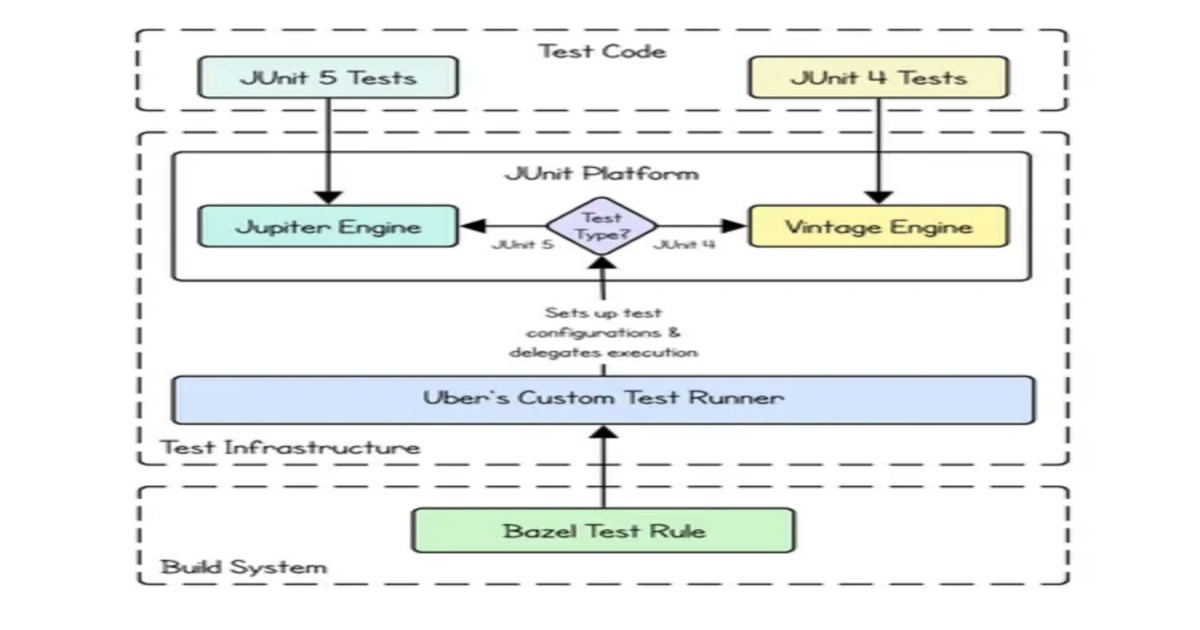
Uber's recent achievement of migrating over 75,000 test classes from JUnit 4 to JUnit 5 using automated code transformation with OpenRewrite is a notable step forward in modernizing their testing infrastructure. This transition not only showcases the technical prowess of Uber's engineering team but also highlights an essential trend in the software development landscape: the need for continuous evolution and innovation. As organizations increasingly rely on robust testing frameworks to ensure software quality, the ability to execute dual versions, as enabled by Bazel and validated through CI processes, speaks volumes about Uber's commitment to maintaining correctness at scale.
The significance of this migration extends beyond mere numbers; it reflects a broader industry movement towards more flexible and powerful testing frameworks. The adoption of JUnit 5 allows for more advanced testing capabilities, such as dynamic tests and improved extension models, which can streamline development processes and enhance productivity. For instance, as teams grapple with the challenges of maintaining vast codebases, transitioning to a more modern framework can alleviate some of the burdens associated with legacy systems. This is a concept echoed in other discussions about productivity, such as in our article on conditional formatting for specific character count, where optimizing existing tools can lead to significant improvements in data management.
Moreover, the automated nature of this transformation underscores a critical shift towards integrating automation in software development practices. By leveraging tools like OpenRewrite, Uber not only expedited the migration process but also set a precedent for other organizations looking to modernize their own infrastructures. This approach minimizes human error and ensures that the transition is both efficient and reliable. As we see in discussions about AI and automation, such as in the article titled Does anyone have issue of stock prices stopped updating?, the integration of automated solutions can address frustrations and inefficiencies that often plague users in their workflows.
As companies like Uber pave the way for innovative practices, it raises an important question for the industry: how can organizations effectively balance the need for modernization with the risks associated with change? While the benefits of adopting a cutting-edge framework are clear, the transition process can also introduce complexities that require careful management. The challenge lies in ensuring that teams are equipped to handle these changes without disrupting ongoing operations. This is particularly relevant as we navigate the complexities of AI integration, highlighted in our article on Your AI Use Is Breaking My Brain: Why 10 Minutes of Prompting Fries Us, where the balance between innovation and cognitive load is critically examined.
In conclusion, Uber's migration to JUnit 5 stands as a testament to the power of embracing change in the ever-evolving tech landscape. As the industry continues to push boundaries, it will be fascinating to see how other companies respond to the call for modernization while managing the inherent challenges of such transitions. The future of software development lies in our ability to adopt innovative practices that enhance productivity while ensuring that teams remain agile and equipped for the journey ahead.
Uber engineers migrated over 75,000 test classes from JUnit 4 to JUnit 5 using automated code transformation with OpenRewrite and internal orchestration. By enabling the JUnit Platform for dual execution with Bazel and validating changes through CI, the team modernized testing infrastructure while maintaining correctness at monorepo scale.
By Leela KumiliRead on the original site
Open the publisher's page for the full experience