Your JSON Is Valid but Your Data Is Wrong: Five Failure Modes LLM Structured Outputs Won't Catch
Our take
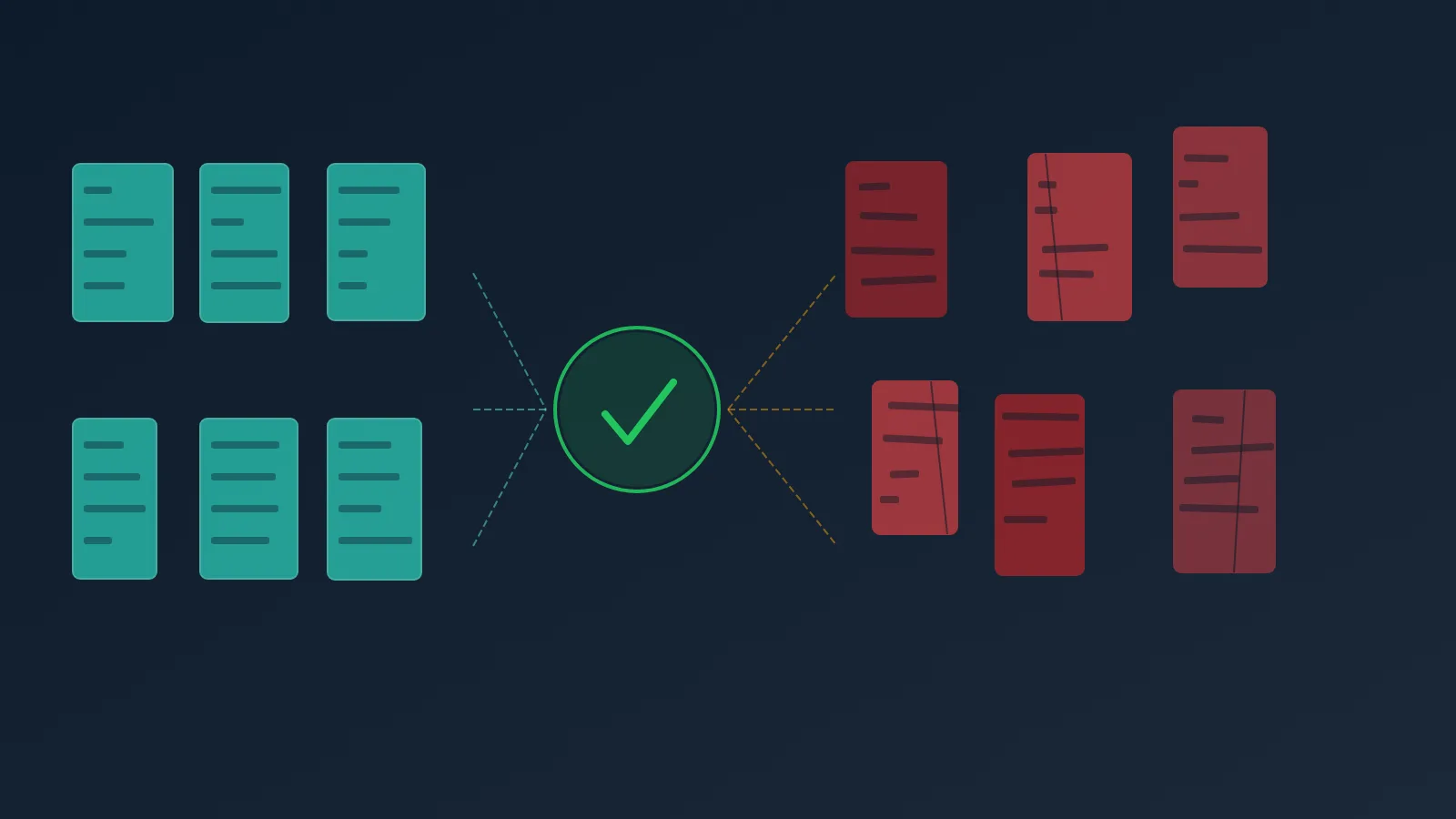
The recent article on Towards Data Science, "Your JSON Is Valid but Your Data Is Wrong: Five Failure Modes LLM Structured Outputs Won't Catch," highlights a critical, and often overlooked, challenge in the burgeoning landscape of Large Language Model (LLM) integration. We’ve all been impressed by the ability of LLMs to generate structured data, particularly in JSON format, and many have confidently relied on schema validation as a safeguard. However, this article persuasively argues that schema validation, while a necessary first step, is simply not sufficient to guarantee data integrity. The five failure modes identified – semantic errors, logical inconsistencies, data type mismatches that still pass type checking, incorrect relationships between fields, and hallucinations masquerading as valid data – expose a fundamental limitation: LLMs are generators of text, not inherently reliable truth-tellers. This is particularly relevant as organizations increasingly look to automate data extraction and transformation pipelines using LLMs, a trend we’re seeing accelerate across industries. For those exploring LLM-powered data solutions, it’s essential to understand that validation isn't a silver bullet; a more holistic approach to data quality is required. Consider, for example, the ongoing debate around prompt engineering and its impact on LLM output, as explored in Prompt Engineering for Data Extraction, demonstrating the fragility of even seemingly controlled generation processes.
The core issue stems from the fact that LLMs operate on probabilities, predicting the next token based on patterns in their training data. While constrained decoding, through schema validation, forces the output to conform to a specific structure, it doesn't prevent the model from generating plausible but factually incorrect information within that structure. The article’s emphasis on the limitations of schema validation resonates strongly with the broader challenges of ensuring data quality in AI systems. We’ve previously written about the need for robust data provenance tracking in AI workflows, as detailed in Data Provenance and AI Trust, highlighting the difficulty of auditing and debugging LLM-generated data. The problem isn't merely academic; inaccurate data fed into downstream systems can lead to flawed decision-making, biased models, and ultimately, significant business risks. The reliance on LLMs to structure data without sufficient verification is a potential vulnerability that organizations must address proactively. Furthermore, the article’s point about LLMs’ inability to detect logical inconsistencies is particularly pertinent, as these errors can be difficult to identify even with human review, especially when dealing with complex datasets.
The implications of this analysis extend beyond simply refining validation techniques. It necessitates a shift in mindset, moving away from a reliance on LLMs as perfect data generators and towards a model of human-in-the-loop validation and quality assurance. This might involve incorporating additional verification steps, such as cross-referencing LLM outputs with external data sources, employing rule-based validation engines that go beyond schema constraints, or leveraging other AI techniques like anomaly detection to identify potentially erroneous data points. The challenge lies in balancing the efficiency gains offered by LLMs with the need to maintain data integrity. Organizations should be evaluating tools and frameworks that facilitate this hybrid approach, combining the generative power of LLMs with robust validation and monitoring capabilities. The discussion around Reinforcement Learning from Human Feedback (RLHF) and its potential to improve LLM accuracy, as discussed in RLHF and Data Quality, offers a glimmer of hope, but it’s still an evolving area with its own limitations.
Looking ahead, the evolution of LLM-powered data pipelines will likely involve a layered approach to data quality. While schema validation will remain a foundational element, it will need to be supplemented with more sophisticated techniques that address the semantic and logical nuances of data. The ability of LLMs to reason and infer will be crucial in mitigating these failure modes, but significant progress is still needed in this area. A key question worth watching is whether we'll see the emergence of specialized LLMs trained specifically for data validation and correction, acting as "data quality guardians" alongside the generative models. The article serves as a valuable reminder that the pursuit of AI-powered automation shouldn't come at the expense of data accuracy, and that a critical, discerning approach is essential as we integrate these powerful technologies into our workflows.
Five failure modes that survive constrained decoding, and why your schema validator will never catch them.
The post Your JSON Is Valid but Your Data Is Wrong: Five Failure Modes LLM Structured Outputs Won't Catch appeared first on Towards Data Science.
Read on the original site
Open the publisher's page for the full experience