Iran Offers To Reopen Strait Of Hormuz If US Ends Blockade, Delays Nuclear Talks


Iran has offered to reopen the Strait of Hormuz if the United States lifts its blockade and the war ends, according to two regional officials familiar with the proposal.
The offer was reportedly passed to Washington through Pakistan and would delay discussions on Iran’s nuclear programme until a later stage.
However, US President Donald Trump appears unlikely to accept the proposal, as it does not resolve the disputes that led to the US and Israel going to war on Feb. 28.
The United States and Iran remain in a standoff over the Strait of Hormuz, through which about a fifth of the world’s traded oil and gas passes.
The US blockade has been aimed at stopping Iran from selling its oil, cutting off a major source of revenue and potentially forcing Tehran to reduce production because of limited storage.
At the same time, the closure of the strait has disrupted global shipping and pushed up oil prices, adding pressure on energy markets and Gulf countries that rely on the route for exports.
Brent crude closed above $108 per barrel on Monday, around 50% higher than when the war began.
The disruption has also affected the global economy, raising the cost of fuel, fertilizer, food and other goods.
The proposal would leave talks on Iran’s nuclear programme for later, even though Trump has said preventing Iran from developing nuclear weapons was a major reason for going to war.
US Secretary of State Marco Rubio also said any agreement must address that issue.
The two officials who disclosed the proposal spoke on condition of anonymity because the talks between Iranian and Pakistani officials were private. Axios first reported the offer.
The proposal emerged as Iranian Foreign Minister Abbas Araghchi visited Russia for talks with President Vladimir Putin. Russia has long backed Iran, though it remains unclear what role Moscow may play.
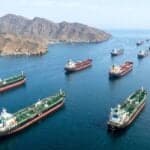
Iran’s control over traffic through the Strait of Hormuz has become one of its main strategic advantages during the conflict. Tankers carrying crude have been left stranded in the Gulf, unable to move safely through the passage.
Dozens of countries renewed calls Monday for the waterway to reopen, including through a joint statement led by Bahrain.
United Nations Secretary-General António Guterres warned the disruption was adding to humanitarian and economic pressure, while European leaders also voiced criticism.
German Chancellor Friedrich Merz questioned the US strategy in the conflict, while French Foreign Minister Jean-Noël Barrot criticized all sides and said strategic straits cannot be controlled by one country.
Iran is also trying to persuade Oman, which shares the strait with Iran, to support a mechanism to collect tolls from vessels passing through the waterway. Oman’s response was not immediately clear.
A regional official involved in mediation efforts said Iran has insisted the US blockade must end before fresh negotiations begin, while Pakistan-led mediators are trying to narrow major differences between the two sides.
Trump said over the weekend Iran had sent what he described as a “much better” proposal after he called off a trip by US envoys to Pakistan, though he did not give details. He repeated that Iran must not have a nuclear weapon.
Trump last week indefinitely extended the ceasefire agreed with Iran on April 7, but a lasting settlement remains uncertain.
Araghchi, speaking in Russia, said the United States had not achieved its goals in the war and that Tehran was considering the possibility of negotiations.
Since the conflict began, at least 3,375 people have been killed in Iran and more than 2,500 in Lebanon, where fighting involving Hezbollah resumed two days after the Iran war started.
Casualties have also been reported in Israel, Gulf Arab states, among US forces in the region and UN peacekeepers.
The ceasefire between Israel and Hezbollah has been extended by three weeks, although both sides have continued to exchange strikes. Hezbollah has not taken part in the Washington-backed diplomacy.
References: AP News, ABC News
Want to read more?
Check out the full article on the original site