AI detectors
3 stories filed under AI detectors on Beyond Market Intelligence. The newest of them: “We put a free AI humanizer to the test against paid detectors”, “Examining AI Detection Tools and Their Role in Scholarly Review”, and “Clean Data Starts With Catching AI Slop Before It Skews Your Model”. A free, open-source AI humanizer running a 12B model on a local machine just went head-to-head with paid detectors. The ICLR text detector at opentextdetector.com claims to spot AI-generated submissions, but the community is right to be skeptical. Acme AI is the next-generation, AI-powered spreadsheet platform built to replace Excel and redefine how analysts, data scientists, and enterprise teams work… The list below is every AI detectors story on Beyond Market Intelligence, newest first.
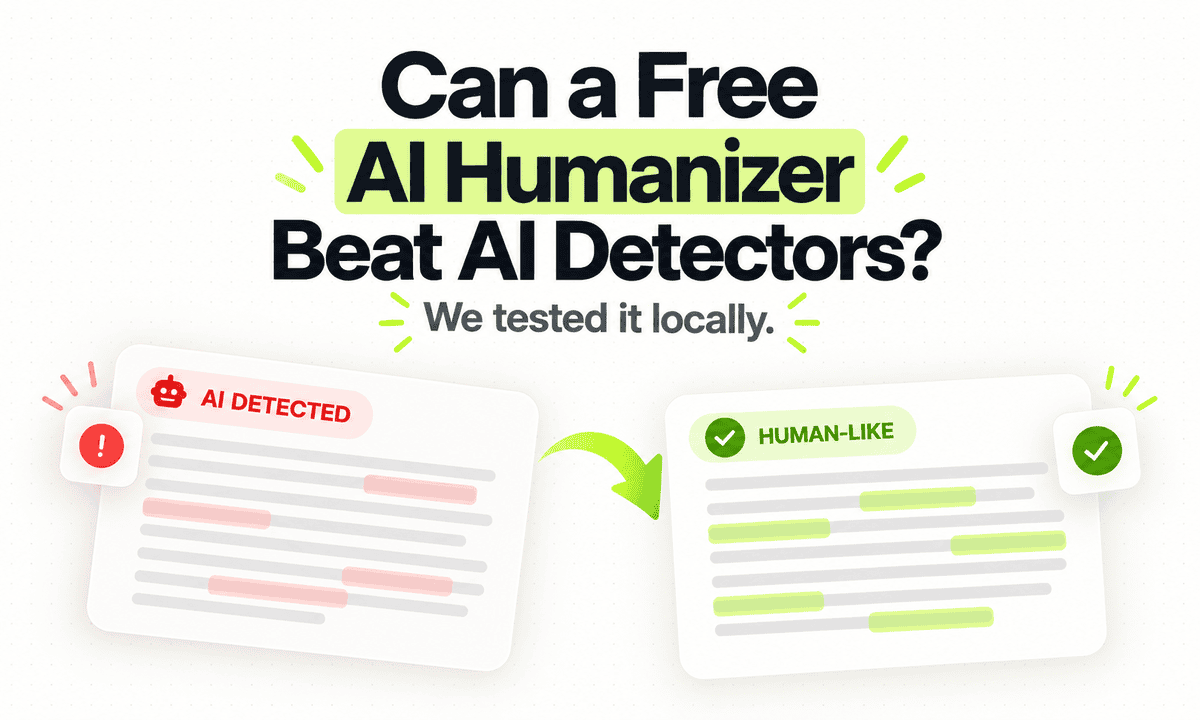
We put a free AI humanizer to the test against paid detectors
A free, open-source AI humanizer running a 12B model on a local machine just went head-to-head with paid detectors. We tested it to see whether the hype holds up. The results challenge a common assumption: that you need expensive tools to outsmart detection. If you're exploring how these systems work under pressure, our piece on "Examining AI Detection Tools and Their Role in Scholarly Review" offers a deeper look at the detectors themselves. The free option earned its place in the conversation.
Examining AI Detection Tools and Their Role in Scholarly Review
The ICLR text detector at opentextdetector.com claims to spot AI-generated submissions, but the community is right to be skeptical. These tools are notoriously unreliable, flagging human writing as machine-made and missing genuinely synthetic content. If reviewers lean on them, we risk penalizing careful scholars while letting polished AI prose slip through. Our related piece on "Navigating arXiv and Double-Blind Review at ICLR" explores how these pressures are already reshaping the submission process. Trust the review, not the detector.

Clean Data Starts With Catching AI Slop Before It Skews Your Model
Cleaning your training data isn't just about removing obvious junk. When my AI detectors flagged plenty of genuine reviews, filtering them out actually made the sentiment model less accurate. That's the trap: overcorrecting for AI slop can skew your results in the opposite direction. This piece tests three practical ways to spot that noise without tossing the signal. It's a useful, grounded look at a problem many teams will face soon. If you're building models on messy text, this is worth your time.